
Best Seasonal Perfumes: Spring, Summer, Fall & Winter Fragrances
Just as you wouldn’t wear a heavy wool coat in July or a linen shirt in January, your fragrance wardrobe should adapt to the changing seasons. Temperature, humidity, and atmospheric conditions dramatically affect how perfumes perform and are perceived. Understanding seasonal fragrance selection elevates your scent game from amateur to expert, ensuring you smell appropriate and captivating year-round.
The science behind seasonal perfumery is fascinating. Heat amplifies fragrance projection and accelerates evaporation, meaning heavy scents become overwhelming in summer while disappearing too quickly in winter. Cold air suppresses scent molecules, requiring stronger concentrations and heavier compositions for adequate presence. Humidity affects how fragrances cling to skin and clothing. These environmental factors make seasonal fragrance rotation not just a luxury, but a practical necessity.
This comprehensive guide explores the best perfumes for each season, helping you build a versatile fragrance wardrobe that performs optimally whether temperatures soar or plummet. From fresh spring florals to cozy winter orientals, we cover everything you need to know about seasonal scent selection.
Why Seasonal Fragrance Rotation Matters
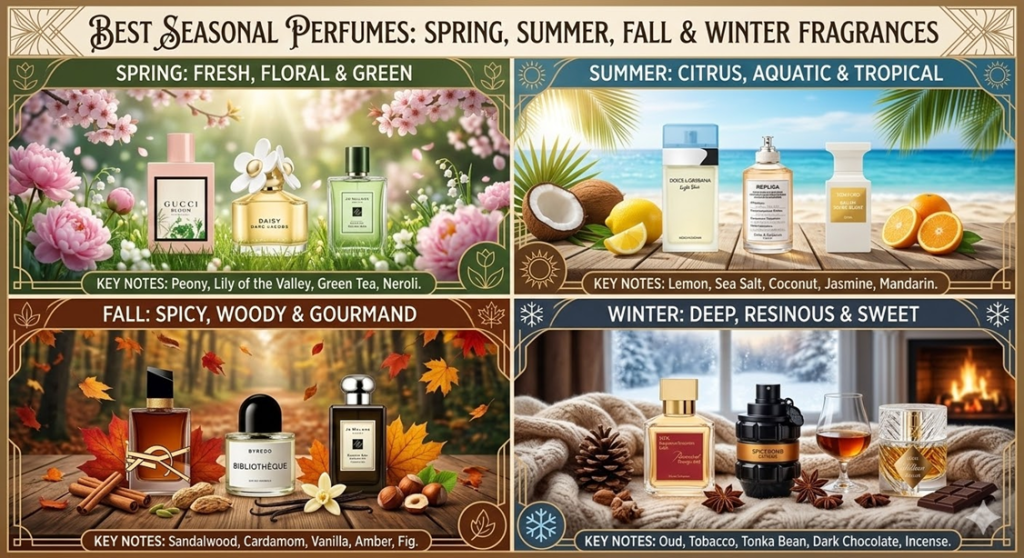
Wearing the same fragrance year-round is like wearing the same outfit regardless of weather—inappropriate and uncomfortable. Seasonal fragrance selection ensures your scent complements rather than competes with environmental conditions.
Summer heat causes fragrance molecules to evaporate rapidly and project more strongly. Heavy orientals and dense gourmands become cloying and overwhelming, potentially causing headaches in the wearer and discomfort in those nearby. Light, fresh compositions perform better, providing refreshment without suffocation.
Winter cold suppresses scent projection and slows evaporation. Light citrus fragrances that sparkle in summer become faint and disappointing in December. Rich, warm compositions with heavy base notes thrive in cold weather, projecting beautifully and providing comforting warmth that contrasts with chilly air.
Transitional seasons—spring and fall—offer the most flexibility, allowing experimentation with fragrances that bridge the gap between extremes. These shoulder seasons are perfect for versatile scents that work across temperature ranges.
Beyond practical performance, seasonal fragrance rotation keeps your scent experience fresh and exciting. Just as you look forward to pulling out favorite sweaters in October or breaking out sundresses in May, anticipating seasonal fragrance transitions adds joy to your daily routine.
Best Summer Perfumes
Summer demands fragrances that refresh, energize, and withstand heat and humidity without becoming overwhelming. The best summer scents emphasize top notes—citrus, aquatic accords, and light fruits—that provide immediate freshness and evaporate appropriately in high temperatures.
Key characteristics of summer fragrances include:
- High volatility ingredients that project well in heat
- Aquatic and marine notes that evoke coolness
- Citrus fruits that provide energizing freshness
- Light florals that avoid heaviness
- Sheer musks that stay close to skin
- Minimal heavy base notes that prevent cloying
Citrus fragrances dominate summer for good reason. Bergamot, grapefruit, lemon, and mandarin provide instant refreshment that feels appropriate in sunshine and heat. These notes evaporate relatively quickly, meaning you’ll need to reapply throughout the day, but their uplifting character makes reapplication enjoyable rather than burdensome.
Aquatic and marine fragrances capture the essence of ocean breezes, cool water, and beach vacations. These synthetic accords (calone, ambroxan) create a cooling effect that complements summer perfectly. Combined with citrus or light woods, they create sophisticated scents that work for both casual beach days and professional environments.
Tropical fragrances featuring coconut, tiare flower, and frangipani transport you to vacation destinations even during everyday activities. These scents feel particularly appropriate for weekends, outdoor gatherings, and warm evenings. However, their sweetness requires careful application to avoid becoming cloying in extreme heat.
Summer fragrance concentrations deserve special consideration. Eau de Toilette and Eau de Cologne formats work better than heavy Eau de Parfums in hot weather. Their lighter nature prevents overwhelming projection while providing appropriate longevity for the season. Consider keeping a travel atomizer for midday refreshers.
Explore our comprehensive guides to summer fragrances:
Top 10 Men’s Summer Fragrances
Best Winter Colognes
Winter calls for fragrances with substance, warmth, and projection power. As temperatures drop, your scent should provide comfort, sophistication, and adequate presence to cut through cold air. The best winter fragrances feature rich base notes—amber, vanilla, woods, spices, and resins—that create lasting impressions and project beautifully when you need them most.
Key characteristics of winter fragrances include:
- Heavy base notes that provide longevity and warmth
- Oriental and woody fragrance families
- Spicy accents that create cozy atmosphere
- Rich gourmand elements for comfort
- Higher concentrations (EDP or Parfum)
- Strong projection to overcome cold air suppression
Oriental fragrances excel in winter, combining resins, spices, and warm base notes into sophisticated compositions. Amber, frankincense, myrrh, and vanilla create enveloping warmth that feels like an olfactory blanket. These scents develop beautifully in cold weather, revealing complexity that might overwhelm in summer heat.
Woody fragrances provide structure and sophistication perfect for winter months. Sandalwood, cedar, oud, and vetiver offer grounding presence that complements heavy coats and formal attire. These notes work beautifully for professional environments and evening events during the colder months.
Spicy fragrances featuring cinnamon, cardamom, nutmeg, and pepper add warmth and energy to winter days. These notes create cozy, inviting atmospheres perfect for holiday gatherings, romantic evenings, and combating winter blues. Combined with vanilla or amber, they become irresistibly comforting.
Gourmand fragrances—those smelling of edible treats like vanilla, caramel, coffee, and chocolate—feel particularly appropriate in winter. These scents provide comfort and indulgence during cold, dark months. However, balance is key; the best winter gourmands incorporate woods, spices, or resins to prevent smelling overly food-like.
Winter fragrance concentrations should lean toward Eau de Parfum or Parfum. The higher oil content provides necessary longevity and projection to overcome cold air’s suppressing effects. EDT concentrations often disappoint in winter, fading too quickly to provide adequate presence.
Find your perfect winter scent in our comprehensive guide:
Fall Fragrances: Transitional Elegance
Fall represents the most exciting fragrance season for many enthusiasts. As temperatures moderate and humidity drops, fragrances that felt too heavy in summer and would disappear in winter find their perfect moment. This transitional season allows for incredible versatility and experimentation.
Key characteristics of fall fragrances include:
- Warm spices that evoke autumn atmosphere
- Woody notes that ground and comfort
- Rich florals that avoid summer lightness
- Subtle gourmand elements
- Moderate concentrations that bridge seasons
- Earthy, grounding compositions
Spicy fragrances come into their own during fall. Cinnamon, clove, nutmeg, and cardamom create warm, inviting atmospheres that complement sweater weather and changing leaves. These notes work beautifully for both daytime and evening, providing energy and comfort as days grow shorter.
Woody fragrances featuring cedar, sandalwood, and patchouli feel perfectly at home in autumn. These grounding notes provide sophistication and warmth without the heaviness required for deep winter. They transition beautifully from office to evening, casual to semi-formal.
Rich florals—those with depth and warmth rather than spring’s airy brightness—excel in fall. Tuberose, gardenia, and deep rose compositions provide elegance and femininity with enough substance for cooler temperatures. These scents feel romantic and sophisticated, perfect for autumn evenings.
Subtle gourmands featuring warm vanilla, caramel, and coffee notes provide comfort without the intensity of winter’s heavy edible scents. These fragrances feel like cozy coffee shops and warm blankets—comforting but not overwhelming.
Fall offers the perfect opportunity to experiment with fragrances that bridge summer and winter. Lighter orientals, woody-florals, and spicy-fresh compositions provide versatility that works across variable autumn temperatures.
Spring Perfumes: Fresh Beginnings
Spring represents renewal, freshness, and lightened moods after winter’s heaviness. The best spring fragrances capture this energy—bright, optimistic, and full of life. As temperatures rise and nature blooms, your scent should reflect this awakening.
Key characteristics of spring fragrances include:
- Fresh florals that capture blooming nature
- Green notes that evoke new growth
- Light citrus for energizing freshness
- Aquatic elements that suggest rain and renewal
- Sheer compositions that avoid winter heaviness
- Optimistic, uplifting character
Floral fragrances dominate spring for obvious reasons. However, unlike summer’s tropical white flowers or fall’s rich blooms, spring florals emphasize fresh, green, and delicate interpretations. Lily of the valley, hyacinth, lilac, and fresh rose capture the essence of gardens coming to life. These scents feel innocent, optimistic, and appropriate for the season of renewal.
Green notes—those smelling of leaves, stems, and fresh-cut grass—provide unique spring appropriateness. Galbanum, violet leaf, and tomato leaf create crisp, natural atmospheres that feel like walking through spring meadows. These notes work beautifully for daytime and outdoor activities.
Citrus fragrances return in spring with renewed vigor. After winter’s absence, bright bergamot, lemon, and grapefruit feel energizing and appropriate. These scents provide immediate mood enhancement perfect for combating spring fatigue and embracing longer days.
Aquatic and rain-inspired fragrances capture spring showers and fresh air. These scents smell clean, renewed, and full of possibility. They work beautifully for professional environments and situations where you want to project freshness and competence.
Spring allows gradual transition from winter’s heavy orientals to summer’s lightest citruses. Start the season with woody-florals and green compositions, then move toward sheerer options as temperatures rise.
Building Your Seasonal Fragrance Wardrobe
Creating a versatile seasonal wardrobe doesn’t require dozens of bottles. Strategic selection of 4-6 fragrances can cover all seasons adequately.
Start with one signature scent for each primary season: a fresh floral or citrus for spring, a light aquatic or tropical for summer, a warm spicy or woody for fall, and a rich oriental or gourmand for winter. These four fragrances provide year-round coverage.
Add transitional options that bridge seasons. A versatile woody-floral works for both spring and fall. A moderate oriental transitions between fall and winter. These flexible scents provide continuity during weather fluctuations.
Consider concentration variations for extreme weather. An EDP version of your summer scent provides better performance on the hottest days. An EDT of your winter fragrance works for milder cold snaps.
Quality matters more than quantity. Invest in fragrances you truly love for each season rather than accumulating mediocre options. A few excellent seasonal scents serve you better than many forgettable ones.
Proper storage extends your seasonal wardrobe’s lifespan. Keep off-season fragrances in cool, dark places to maintain quality. Rotate your collection quarterly, bringing appropriate scents to easily accessible locations while storing others.
Frequently Asked Questions About Seasonal Perfumes
Can I wear the same fragrance year-round?
While possible, it’s not optimal. Fragrances perform differently across seasons, and what works beautifully in spring may disappoint in summer or overwhelm in winter. Building even a minimal seasonal wardrobe enhances your fragrance experience significantly.
How do I transition between seasonal fragrances?
Transition gradually as temperatures change. Start incorporating lighter scents when daytime temperatures consistently reach 60°F (15°C). Move to heavier fragrances when temperatures drop below 50°F (10°C). Trust your comfort level—if a fragrance feels wrong for the weather, it probably is.
Are there fragrances that work year-round?
Some versatile scents transition across seasons, particularly woody-florals, moderate orientals, and certain musks. However, even these perform better in their optimal seasons. Consider these your safety net rather than replacements for seasonal rotation.
Should I buy seasonal fragrances in advance?
Purchase off-season when possible for better prices. Buy winter fragrances in summer sales and summer fragrances in winter clearance. This strategy saves money while building your wardrobe. Just store properly to maintain quality.
How many seasonal fragrances do I need?
Minimum viable wardrobe includes one fragrance per season (4 total). Ideal wardrobe includes 2-3 options per season for variety. Enthusiasts may have 5+ per season, but this isn’t necessary for excellent seasonal coverage.
Can I wear winter fragrances in summer if I apply lightly?
Generally not recommended. Heavy base notes that perform beautifully in winter become cloying and potentially headache-inducing in heat. Even light application of inappropriate compositions rarely works well. Reserve each fragrance for its optimal season.
Embrace Seasonal Fragrance Rotation
Seasonal perfume selection transforms fragrance from a static routine into a dynamic, year-round adventure. By understanding how temperature and environment affect scent, you build a wardrobe that performs optimally and brings joy through every season.
The investment in seasonal fragrances pays dividends in compliments, confidence, and appropriate presence. Whether you’re navigating summer heat with refreshing citruses, embracing autumn with warm spices, surviving winter with rich orientals, or celebrating spring with fresh florals, the right seasonal scent enhances every experience.
Start building your seasonal fragrance wardrobe today. Explore our detailed guides for summer and winter fragrances, and discover scents that will become your signature for every time of year.
Ready to explore seasonal scents? Check out our detailed guides for summer colognes, top summer fragrances, and winter colognes to find your perfect seasonal matches!