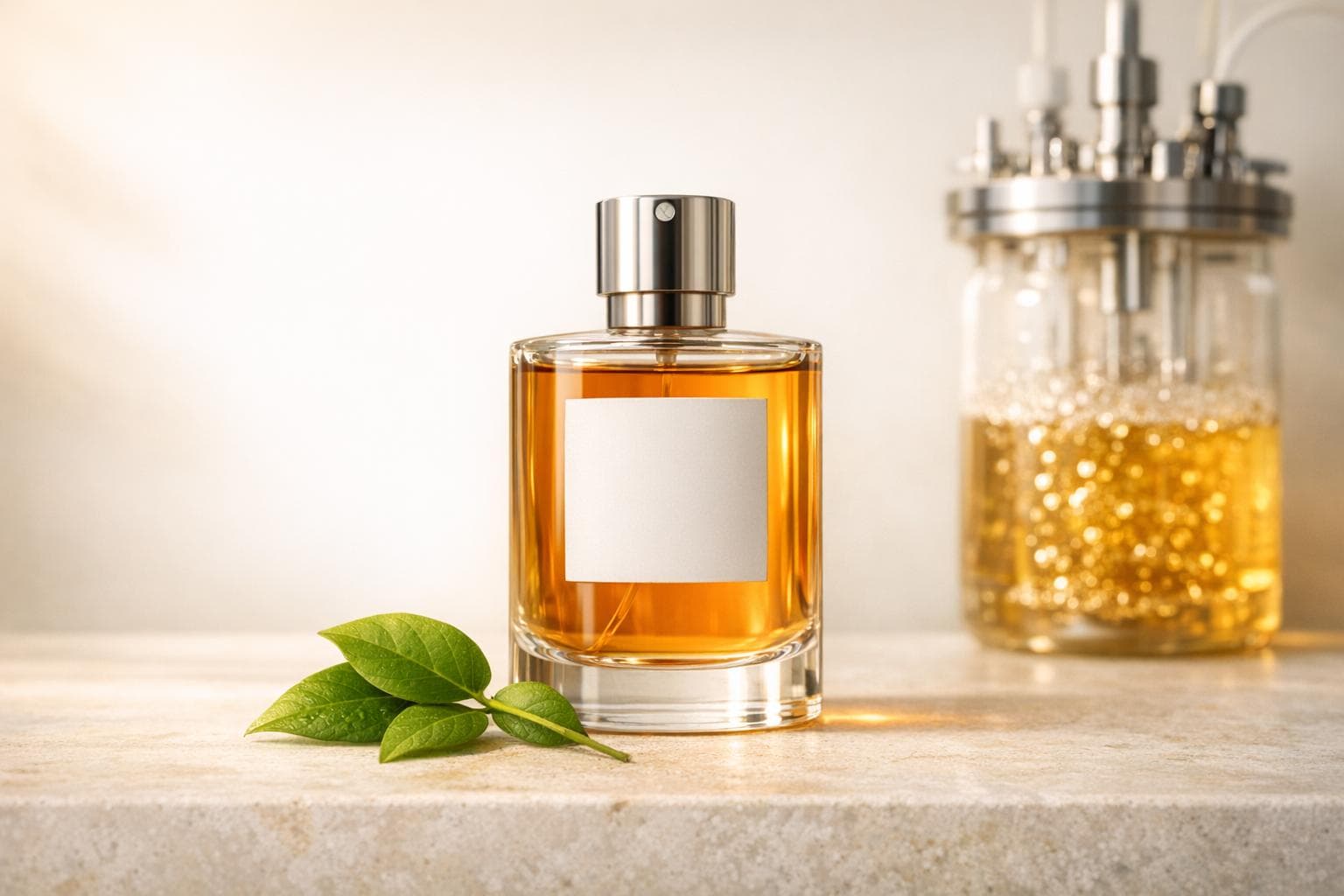
What is “Upcycled Perfume”? How Flower Waste is Becoming Luxury Scent
Upcycled perfume transforms botanical by-products — spent rose petals, exhausted jasmine blossoms, citrus peels from the juice industry, wood chips from furniture factories — into richly aromatic fragrance ingredients of genuine quality. Far from a compromise, upcycled ingredients are increasingly favoured by leading perfumers for their unique olfactory character and are being championed by powerhouse fragrance houses like Givaudan, dsm-Firmenich, IFF, and Robertet. In 2026, WhatScent Magazine identifies “circular perfumery” — refill systems and upcycled ingredients — as a defining luxury norm of the year. This guide explains exactly what upcycled perfume is, how it is made, why it smells extraordinary, and which bottles are worth your attention.
Every year, the global rose harvest produces millions of tonnes of spent flower material. In Grasse — the perfume capital of southern France — fields of jasmine, rose, and tuberose are harvested at dawn, their aromatic oils extracted through steam distillation or solvent processes, and the remaining plant matter discarded. For most of perfumery’s history, those exhausted petals, stripped of their primary oil, went straight to the compost heap or landfill. Nobody gave them a second thought.
Then someone asked: what if we looked closer?
It turned out those “spent” petals still contained aromatic compounds — subtler, deeper, differently faceted versions of the original flower’s scent, unlocked only through a second pass with more refined extraction technology. The result wasn’t a diminished version of rose oil. It was something new: a rose with different facets, unexpected dimensions, and qualities that virgin extraction simply doesn’t produce. What was waste became wonder.
This is the story of upcycled perfumery — and in 2026, it has become one of the most compelling and rapidly growing movements in the entire fragrance industry.
What Is Upcycled Perfume? The Essential Definition
Before diving deep, it helps to understand precisely what “upcycling” means in a fragrance context — because it is frequently confused with recycling, and the distinction matters enormously for understanding why upcycled ingredients can be of the same or even superior quality to their virgin counterparts.
Recycling involves breaking a material down to its base components in order to reform it into something new. The original material is essentially destroyed in the process. Upcycling, by contrast, is the creative transformation of a by-product or waste material into something of equal or greater value without destroying its essential character — it is elevated, not melted down.
As Iberchem’s fragrance science team defines it: upcycling is “creative reuse that involves transforming by-products, waste materials, or useless products into innovative materials or products of better quality that have greater use than before.” In perfumery, this means taking the botanical and industrial by-products that would otherwise be discarded — post-distillation floral water, spent peels, wood chips, food industry waste — and applying advanced extraction science to unlock the aromatic compounds they still contain.
Crucially, a 100% upcycled fragrance does not yet exist at a commercial scale — the technical and logistical challenges are formidable. What exists, and is growing rapidly, are fragrances that incorporate significant proportions of upcycled notes alongside traditionally sourced ingredients, with some pioneering brands pushing toward very high upcycled content in individual compositions.
| Approach | What It Means | Fragrance Example | End Quality |
|---|---|---|---|
| Upcycling | Transforming a by-product into a new, higher-value ingredient | Extracting rose oil from post-distillation spent petals | Equal to or different from (not lesser than) virgin material |
| Recycling | Breaking down a material to reform it as something new | Reclaimed glass for fragrance bottles | Can vary; packaging focus rather than ingredients |
| Sustainable Sourcing | Harvesting virgin materials with minimal ecological impact | FSC-certified cedarwood; fair-trade jasmine harvest | High quality, conventional extraction, reduced footprint |
| Biotechnology | Lab-synthesising rare or endangered aromatic molecules | Lab-grown sandalwood; biotech-derived oud molecules | Identical or near-identical to natural; zero wild harvest needed |
From Waste to Wonder: How Upcycled Fragrance Ingredients Are Made
The transformation of flower waste and botanical by-products into luxury fragrance ingredients is not simply a matter of squeezing leftover petals harder. It requires sophisticated extraction science — and in many cases, the second extraction reveals aromatic dimensions that the first extraction never could.
Step 1: Identifying the Waste Stream
Upcycled fragrance ingredients originate from a remarkably diverse range of botanical and industrial waste streams. The primary sources, as documented by THG Labs’ upcycling research, include:
- Spent floral petals: Rose, jasmine, tuberose, and orange blossom petals after their primary essential oil or absolute has been extracted — still rich in subtler aromatic fractions.
- Floral hydrosol / floral water: The steam condensate produced during distillation. Rich in water-soluble aromatic molecules that are lost in conventional oil extraction. Miller Harris’s Hydra Figue, for example, uses upcycled Hydrolat Sage — the fragrant by-product of sage leaf steam distillation — as a sustainable, characterful ingredient.
- Citrus peel: The single largest fragrance waste stream globally. The global citrus industry produces over 40 million tonnes of waste annually — and citrus peel alone accounts for close to 50% of discarded wet fruit mass from juice production. Through cold-pressing or steam distillation, these peels yield bright, vivid essential oils.
- Wood chips and sawdust: From the furniture, construction, and cooperage industries. Cedarwood sawdust from Virginia cedar closet construction; atlas cedarwood chips from Moroccan furniture manufacturing; cognac barrel oak chips — all yield richly aromatic extracts through distillation or CO₂ extraction.
- Religious and ceremonial flower waste: dsm-Firmenich’s upcycling programme notes that in India, 95% of flowers — including tuberose and jasmine, both among the most expensive materials in perfumery — are used for ornamental purposes or religious ceremonies. Unsold and post-ceremony flowers, which would otherwise be composted or discarded, are purchased for extraction, ensuring both zero waste and fair payment to growers.
- Food and beverage industry waste: Coffee grounds from roasteries; grape pomace and wine lees from wineries; cacao husks from chocolate production; spent grains from breweries — all carry rich, complex aromatic profiles that translate into distinctive fragrance accords.
Step 2: Advanced Extraction Technologies
Standard steam distillation — the most common method for extracting essential oils — is designed for fresh, volatile-rich plant material. Extracting fragrance value from spent or waste botanical material requires more refined approaches. The key technologies used by leading fragrance ingredient houses include:
| Extraction Method | How It Works | Best For | Unique Advantage |
|---|---|---|---|
| Secondary Steam Distillation | A second pass of steam through already-distilled plant material at modified temperatures and pressures | Spent rose petals, jasmine concrete residue, exhausted lavender | Reveals deeper, earthier aromatic fractions invisible in the first distillation |
| Supercritical CO₂ Extraction | CO₂ pressurised to a supercritical state acts as a solvent, extracting aromatic molecules at ambient temperature | Wood chips, bark, seeds, food waste, spent coffee grounds | Preserves heat-sensitive aromatic compounds destroyed by steam; produces highly complex extracts |
| Molecular Distillation | Isolates specific aromatic molecules from complex botanical mixtures under high vacuum conditions | Floral hydrosols, citrus peel residue, fermentation by-products | Precise compound isolation; ensures consistency and purity in the final ingredient |
| Fractional Distillation | Separates a complex botanical mixture into its individual aromatic fractions by exploiting differences in boiling points | Complex plant waste streams; turpentine from paper industry | Enables targeted extraction of the most desirable scent molecules — including rare terpenes like alpha and beta-pinene |
| Cold-Pressing | Mechanical pressing at low temperature to express aromatic oils without heat-induced chemical change | Citrus peels (orange, lemon, grapefruit, bergamot) | Preserves the vivid, “true” citrus character that heat processing destroys |
Step 3: Quality Assurance and Perfumer Integration
A common misconception is that upcycled ingredients are lower quality than virgin-extracted equivalents. The reality, as many perfumers discover, is the opposite. Belinda Smith, founder of sustainable fragrance house St. Rose, described her initial scepticism upon first working with upcycled materials: “At first I was concerned that there would be a diluted quality to them — but it’s exactly the opposite. Instead, the olfactory quality is unique and makes certain facets of the ingredient more intense.” She observed that upcycled wood bioabsolutes, in particular, have a distinctive smokier, drier character that opens entirely new creative directions.
IFF, one of the world’s largest fragrance ingredient companies, confirms this creative dimension. Their perfumers use oak chips salvaged from Cognac barrel production — after precise charring and supercritical CO₂ extraction — to produce an ingredient with a “woody, sweet, smoky scent with notes of vanilla and rum” that simply cannot be achieved with conventionally harvested wood.
Why Upcycled Perfume Is Defining the 2026 Fragrance Landscape
The timing of upcycled perfumery’s mainstream arrival is not accidental. It sits at the convergence of three powerful forces reshaping the luxury industry in 2026.
1. Sustainability Has Graduated from Trend to Core Expectation
By 2026, sustainability is no longer a trend — it is a core expectation. Brands are investing in upcycled materials, ethical sourcing, and transparent ingredient stories, as perfume lovers increasingly want to understand where components come from, how they were harvested, and how their choices impact communities and ecosystems. The consumer who buys a bottle of luxury fragrance in 2026 is, increasingly, also the consumer who reads ingredient origin stories, asks about supply chain transparency, and notices when a brand takes the effort to say “these petals were not wasted.”
2. Upcycled Ingredients Protect Endangered Botanicals
Some of perfumery’s most beloved materials are under genuine ecological threat. Atlas cedarwood, as noted by Takasago VP Sylvain Eyraud, is a protected species in Morocco — its harvesting is government-controlled and strictly managed. Sandalwood and agarwood (oud) have both come perilously close to commercial extinction through decades of overharvesting. By building a fragrance industry that extracts value from the by-products of carefully managed harvests — sawdust and chips from authorised sustainable logging rather than newly felled trees — the industry can maintain access to these essential materials without further depleting their natural populations.
3. The Circular Economy Imperative
In 2026, sustainability in fragrance is no longer about what is left out — no animal musk, no over-harvested woods. It is about what is transformed: upcycled waste botanicals turned into rich accords, and closed-loop extraction methods that leave zero footprint. This is sustainability that feels luxurious rather than apologetic.
The economic case is equally compelling. The refillable perfume bottle market alone reached €1.5 billion in 2025 and is projected to grow at 7% annually through 2033. Refillable fragrance programmes by brands like Sephora and Louis Vuitton reflect broader luxury perfume trends, aiming to reduce waste by allowing customers to bring bottles back to refill for a discount. Upcycled ingredients sit naturally within this circular economy framework — and forward-thinking brands are using them not just as an environmental gesture, but as a genuine point of creative and commercial differentiation.
- 40+ million tonnes of citrus waste generated globally each year — citrus peel accounts for ~50% of discarded wet fruit mass from juice production
- 95% of flowers in India — including tuberose and jasmine — used for ornamental and religious purposes, creating enormous recoverable aromatic waste streams
- Every 1 kg of upcycled eucalyptus oil produced by dsm-Firmenich saves 100 kg of biomass from waste — with the post-distillation residue repurposed as natural fertiliser for eucalyptus plantations
- €1.5 billion — the size of the refillable perfume bottle market in 2025, growing at 7% per year, reflecting consumer appetite for circular beauty products
- 59% of luxury consumers now favour refillable or modular packaging, with 54% willing to pay 8–12% more for products made with recycled or reusable materials
The Upcycled Ingredient Gallery: Waste Sources and Their Fragrance Profiles
One of the most compelling aspects of upcycled perfumery is the sheer diversity of the waste streams being transformed — and the unexpected beauty of the ingredients they yield. Here is a gallery of the key upcycled sources shaping luxury fragrance in 2026.
| Waste Source | Origin Industry | Extraction Method | Fragrance Character | Example Brand Using It |
|---|---|---|---|---|
| Spent rose petals | Fragrance / essential oil industry | Secondary distillation | Deeper, earthier, more complex rose with mineral facets distinct from virgin rose oil | Étal Libre d’Orange, Miller Harris, St. Rose |
| Jasmine post-ceremony flowers | Religious ceremonies (India) | Solvent extraction / CO₂ | Indolic, warm, deeply floral — consistent with premium jasmine absolute | Ellis Brooklyn SALT, dsm-Firmenich |
| Citrus peel | Juice industry | Cold-pressing / distillation | Bright, vivid citrus — limonene-rich, identical in character to virgin peel oils | Miller Harris (Orcanox, green mandarin), IFF |
| Cedarwood sawdust & chips | Furniture / construction / closet industry | Steam distillation / CO₂ | Dry, pencil-shaving cedar with a slightly smokier dimension than conventionally harvested wood | Ellis Brooklyn SUPER AMBER, Burberry Hero, Aftelier |
| Cognac barrel oak chips | Cooperage / spirits industry | Supercritical CO₂ | Woody, sweet, smoky — with natural vanilla and rum undertones from the barrel’s previous life | IFF (used across multiple client perfumes) |
| Floral hydrosol (floral water) | Essential oil distillation | Concentration / molecular distillation | Subtle, watery-fresh version of the parent flower — delicate and clean | Miller Harris Hydra Figue (Hydrolat Sage) |
| Coffee grounds | Coffee / food service industry | CO₂ extraction | Deep, roasted, earthy — with sweet caramel undertones and excellent fixative properties | FIA Collection Eyala, Oo La Lab |
| Wine lees / grape pomace | Wine industry | Fractional distillation | Rich, fermented, slightly fruity — with a complex depth that evolves on skin | Various niche houses exploring circular beauty |
| Eucalyptus twigs & leaves | Timber / paper industry | Steam distillation | Crisp, green, camphoraceous — with 100 kg of biomass saved per 1 kg of oil produced | dsm-Firmenich Eucalyptus Globulus oil |
| Tree stumps & roots (sugi wood) | Forestry / timber industry | Steam distillation / CO₂ | Warm, soft, slightly sweet Japanese cedar — a uniquely delicate woody note | Aftelier Perfumes (forest-inspired compositions) |
Pioneer Brands: Who Is Leading the Upcycled Perfume Revolution?
While the major fragrance ingredient houses — Givaudan, dsm-Firmenich, IFF, Robertet, and Takasago — are building the technical infrastructure for upcycled perfumery, it is the fragrance brands that translate this science into bottles consumers can actually purchase and wear. Here are the most significant pioneers.
Étal Libre d’Orange: The Provocateur Who Started It All
Étal Libre d’Orange holds the distinction of creating the first luxury perfume built on upcycled ingredients. Their 2018 fragrance I Am Trash — Les Fleurs du Déchet (Flowers of Waste), created by Givaudan in collaboration with the Ogilvy Paris creative network, used six upcycled ingredients — most notably Apple Oil, Rose NeoAbsolute, and Cedarwood Atlas NeoAbsolute — alongside bitter orange and gariguette strawberry to create a genuinely beautiful fruity-floral-woody composition. The name was deliberately provocative, confronting the consumer’s association of “waste” with “undesirable” head on. The fragrance itself was the rebuttal: elegant, luminous, and deeply pleasurable.
Miller Harris: Quiet Luxury Meets Upcycled Botanicals
Working closely with French ingredient house Robertet, London-based niche brand Miller Harris has built upcycled ingredients into the heart of several key compositions. Their Myrica Muse uses upcycled rose and patchouli oils extracted from post-distillation plant residue — with the added social benefit that the process provides farmers with year-round purchase commitments rather than the seasonal income spikes that normal harvest-only contracts create. Their Hydra Figue incorporates upcycled oakwood from wine barrel remnants and cedarwood from carpentry chips, while their Soufflot uses Orcanox and green mandarin derived from citrus hydro-distillation by-products.
Ellis Brooklyn: Clean Beauty Meets Circular Fragrance
Founded by New York Times beauty writer Bee Shapiro, Ellis Brooklyn has built its entire brand identity on clean, vegan, cruelty-free fragrance — and upcycled ingredients have become a central pillar of that commitment. Their iconic SALT EDP uses jasmine sourced from leftover ceremonial flowers from India, cedarwood from furniture industry sawdust, and cardamom from spice industry pod waste. Their newer DEAR SKY EDP features upcycled cedarwood prominently in the dry-down, positioned as a brand-wide sustainable standard rather than a one-off gesture.
Sana Jardin: The Beyond Sustainability™ Model
London-based Sana Jardin represents one of the most holistic approaches to upcycled fragrance in the industry. Their Beyond Sustainability™ Movement works with female farmers in Morocco to transform floral by-products — orange blossom, rose, and jasmine waste from the fragrance supply chain — into marketable products including scented candles and orange blossom water. The model creates a closed-loop system in which fragrance production waste generates additional income streams for farming communities, making the economics of zero-waste as compelling as the environmental case.
The Best Upcycled Fragrance Bottles to Buy in 2026
The following four fragrances represent the most accessible, highly regarded, and genuinely beautiful expressions of upcycled perfumery available to buy today. Each uses upcycled ingredients not as a marketing statement, but as a creative foundation.
1. Étal Libre d’Orange — I Am Trash Les Fleurs du Déchet EDP
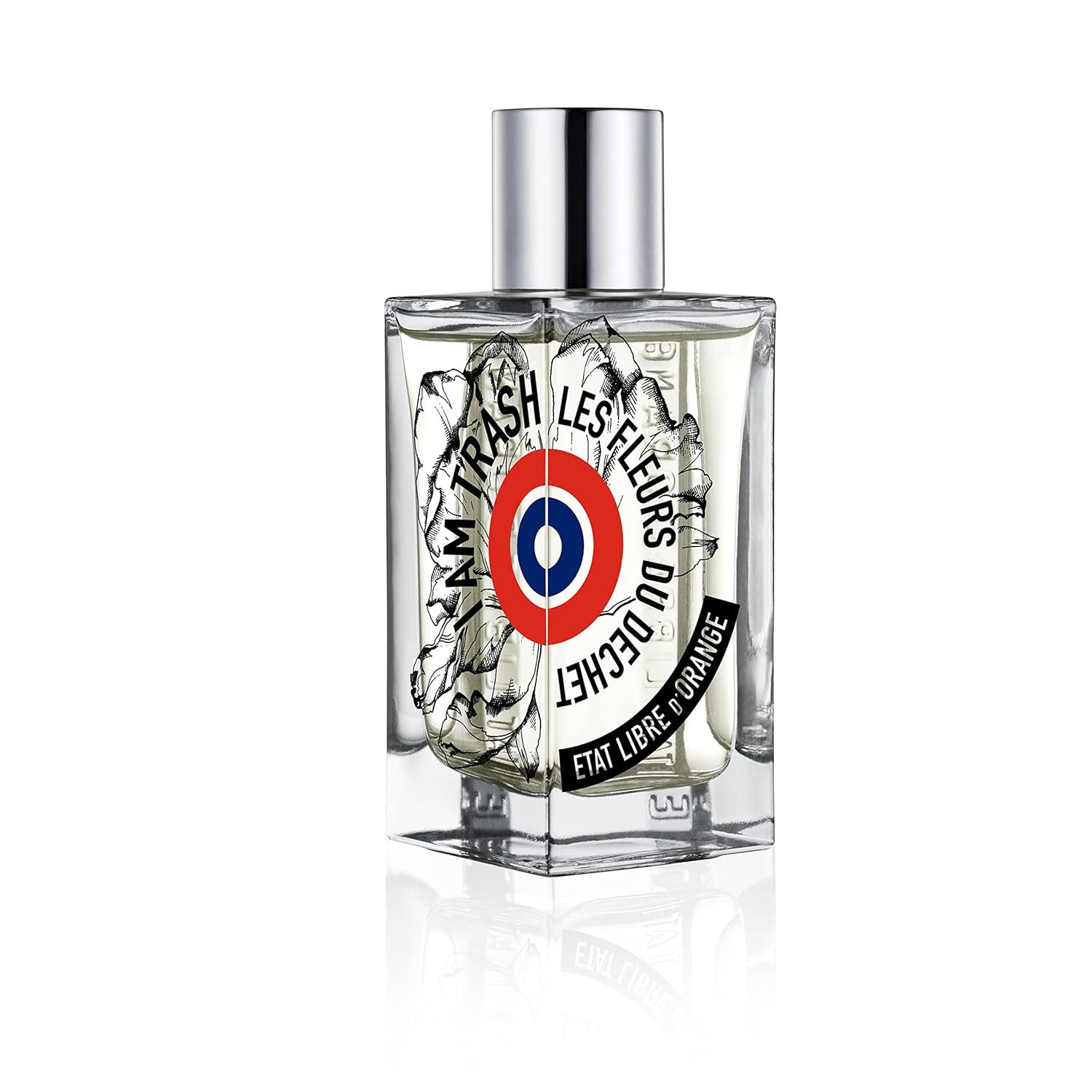
There is no more historically significant bottle in upcycled perfumery than I Am Trash. Created in 2018 in partnership with Givaudan and Ogilvy Paris, it stands as the first luxury fragrance ever built primarily from upcycled ingredients — and a landmark that every subsequent upcycled fragrance brand acknowledges as the catalyst for the movement. Six of its core ingredients are upcycled, most notably the Apple Oil (recovered apple materials), the Rose NeoAbsolute (twice-processed rose petals), and the Cedarwood Atlas NeoAbsolute (extracted from furniture industry by-products). The result — despite its deliberately incendiary name — is a fresh, fruity, luminously floral fragrance built on real olfactory artistry. The opening delivers a crisp, bright green apple alongside bitter orange and green tangerine; the heart blooms into upcycled rose and gariguette strawberry; the base settles into a smooth dry-wood and sandalore accord. It is, without question, proof that waste can be made into something genuinely beautiful.
- Top Notes: Upcycled Apple Oil, Bitter Orange, Green Tangerine, Lemongrass — a vivid, bright citrus-fruit opening that immediately disproves any preconception that “upcycled” means “diminished”
- Heart Notes: Upcycled Rose Absolute, Gariguette Strawberry, Iso E Super — a luminous, naturally sweet floral core that proves twice-processed rose can be as beautiful as virgin extraction
- Base Notes: Upcycled Cedarwood Atlas, Sandalore, Akigalawood — dry, resinous, gently smoky woody depth with excellent skin longevity
- Historic Significance: The first luxury upcycled fragrance ever created — wearing it is a direct participation in the movement’s origin story
- Versatility: Fresh-fruity-woody character suits all genders, seasons, and daytime to early evening wear
- Longevity: 3–6 hours — moderate performance; the bright citrus notes fade fastest, leaving a clean woody-rose dry-down
- Polarising Name: “I Am Trash” requires a brief explanation in gifting contexts — the name is intentionally provocative, not a quality statement
- Character: Light and airy rather than rich or opulent — those seeking deep, heavy projection may want to layer with a woody base
- Price Range: Niche pricing (~$130–$175 for 100ml) — a considered investment for a historically important fragrance
Best for: Fragrance collectors and sustainability-conscious consumers who want to own the original upcycled luxury perfume. Beautiful for spring, summer, and any occasion that calls for fresh, fruity sophistication.
2. Miller Harris Myrica Muse EDP — Upcycled Rose in Luxury Niche Form
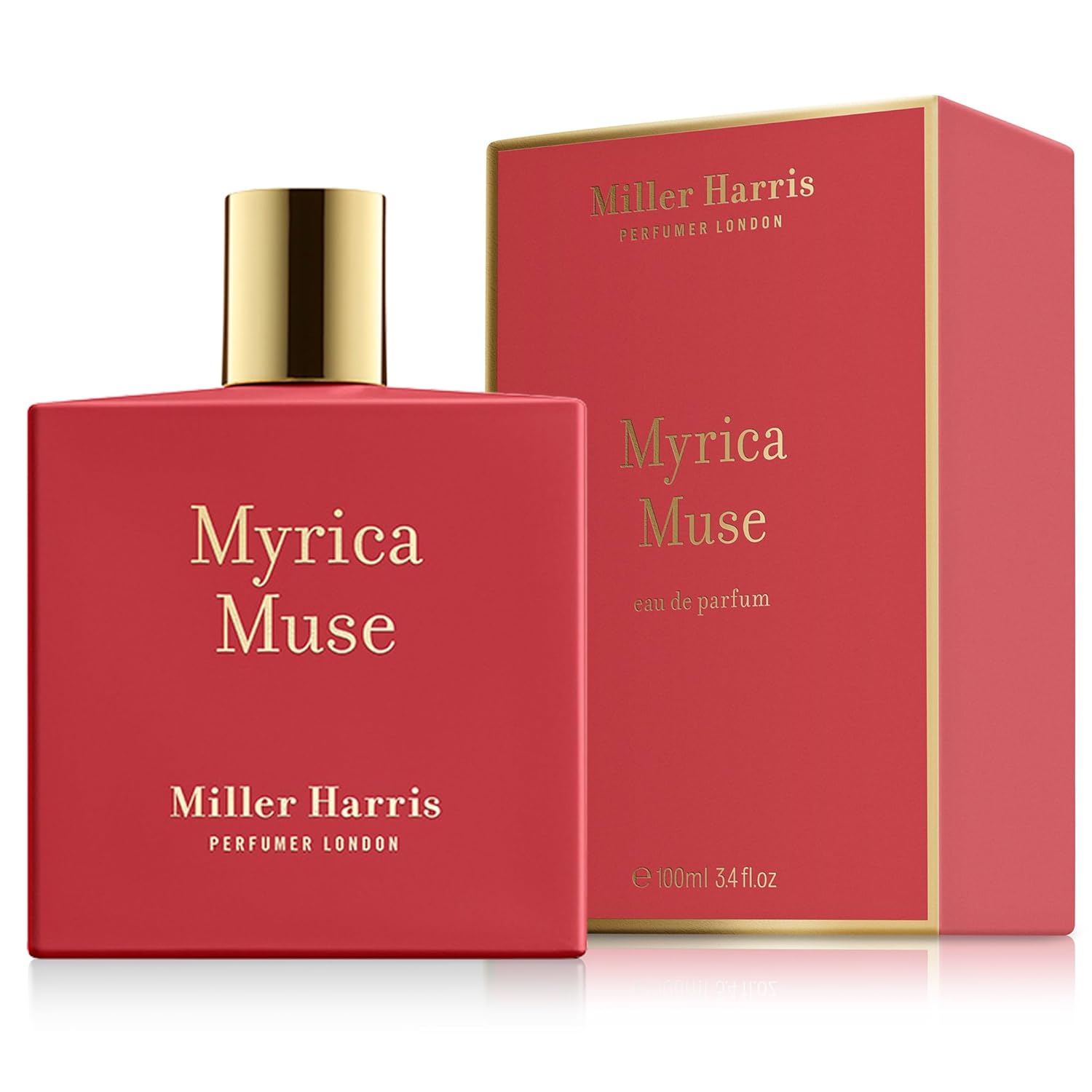
Miller Harris’s Myrica Muse is the most elegant and wearable expression of upcycled floral perfumery currently available at the premium niche level. Created by perfumer Emilie Bouge and built in collaboration with Robertet — one of the world’s most respected natural fragrance ingredient houses — it uses upcycled rose and patchouli oils extracted from the by-products of freshly harvested plant extraction as the beating floral-earthy heart of the composition. The fragrance opens with a vibrant, characterful duo of strawberry, bayberry (myrica), tangerine, and pink pepper — immediately bright and alluring without being sweet. The upcycled rose and patchouli then unfold in a timeless floral musk heart that is warm, spiced, and gently boozy from natural rum from Réunion. The base settles luxuriously into vanilla, benzoin, and sandalwood. It is a genuinely beautiful fragrance that happens to carry a sustainability story — not a sustainability story dressed up as a fragrance.
- Top Notes: Strawberry, bayberry, pink pepper, tangerine — a vibrant, characterful opening that immediately signals artisan niche quality
- Heart Notes: Upcycled Rose*, Upcycled Patchouli*, jasmine, lily of the valley, rum — the upcycled rose here has a depth and naturalness that mass-market rose accords cannot match
- Base Notes: Vanilla, musk, sandalwood, amber, benzoin — luxuriously warm and long-lasting; excellent dry-down comfort
- Sustainability Credentials: Robertet-certified upcycled materials; Butterfly Mark from Positive Luxury for company-wide sustainability; vegan, phthalate-free, paraben-free formula
- Farmer Support: The upcycled sourcing model provides year-round income to farmers who would otherwise only earn during seasonal harvest windows
- Longevity: Light-to-moderate performance; the fruity opening fades within 1–2 hours into a subtle skin-scent dry-down — layers well over a base fragrance
- Projection: Intimate rather than room-filling; wears close to the skin from the midpoint onwards
- Character: Softly feminine-leaning in its rose-fruit-vanilla arc — wearable across genders but strongest in its resonance with traditionally floral preferences
- Price Range: Premium niche pricing (~$120–$165 for 100ml); a significant investment that rewards those who appreciate natural, sustainable perfumery
Best for: Lovers of natural, artisan florals who want a fragrance with genuine sustainability credentials woven into its creative DNA. Outstanding for spring, autumn, social events, and intimate wear.
3. Ellis Brooklyn SALT Eau de Parfum — Upcycled Botanicals in Clean Luxury Form
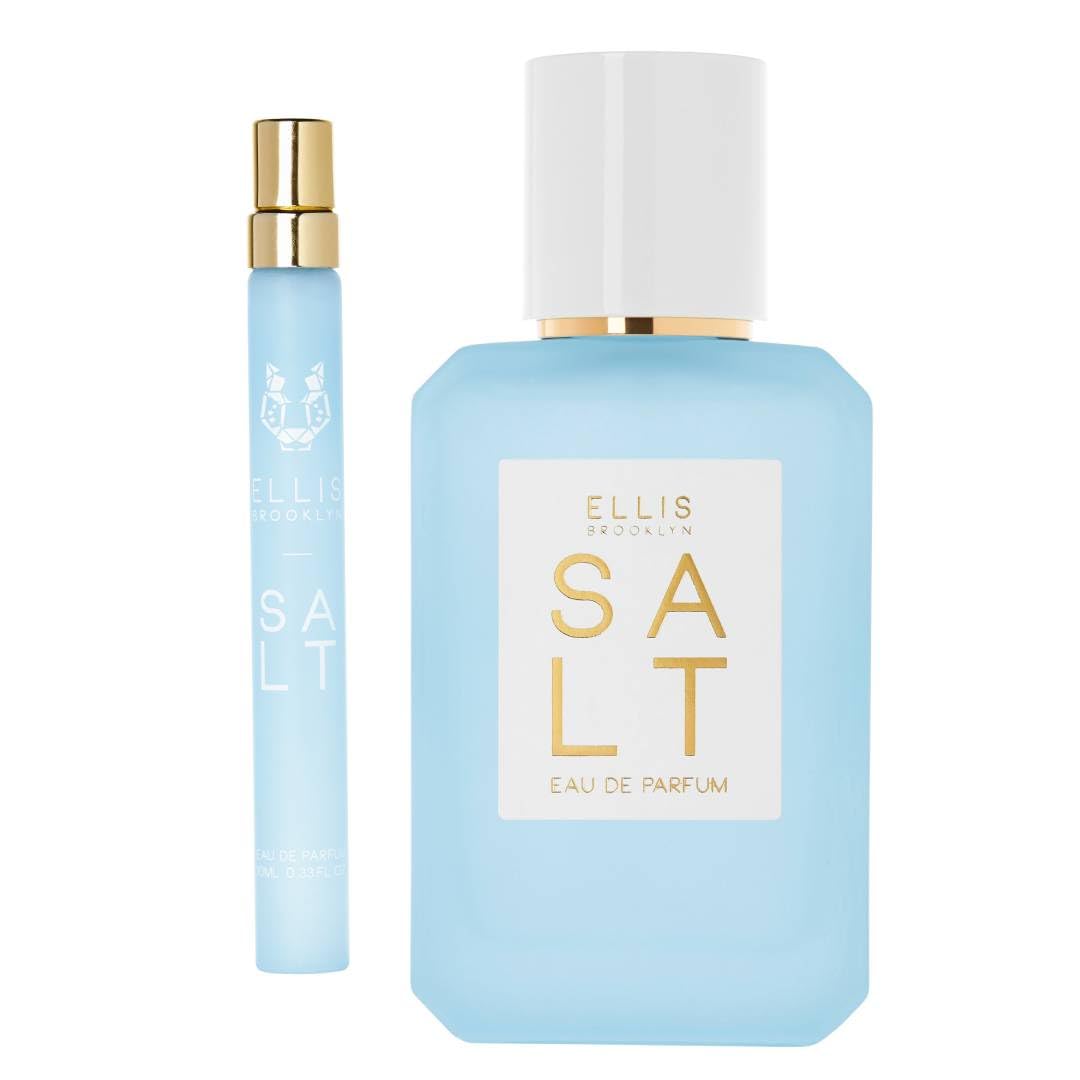
Ellis Brooklyn SALT is one of the most celebrated and repurchased fragrances in the American clean beauty fragrance space — and its remarkable olfactory achievement is built, in significant part, on upcycled botanical ingredients. Founder and former New York Times beauty journalist Bee Shapiro formulated SALT with jasmine sambac sourced from leftover flowers used in religious ceremonies in India, cedarwood essential oil extracted from the sawdust and chips of the closet-building industry, and cardamom essential oil sourced from leftover pods from the spice industry. The result is a warm, salty, tropical floral that captures the sensation of salty skin in afternoon sun — “the creamy heat of the sun, and a whiff of tropical florals,” as the brand describes it. It is sensual, luminous, and deeply wearable. Its clean, vegan, PETA-certified, paraben-free formula makes it one of the most ethically complete fragrance offerings on the market today — and consistently among the most complimented.
- Top Notes: Ambergris accord, cardamom (upcycled spice industry pods), bergamot — an immediately warm, salty, bright opening that is entirely distinctive and deeply appealing
- Heart Notes: Tahitian tiare, ylang ylang, jasmine sambac (upcycled Indian ceremonial flowers) — a richly tropical, luminous floral heart of genuine depth and warmth
- Base Notes: Sandalwood, upcycled cedarwood (furniture sawdust), white musk — smooth, skin-warm, and long-lasting; reviewed as one of the best clean fragrance dry-downs in its category
- Clean Credentials: PETA-certified vegan and cruelty-free; free from parabens, phthalates, and artificial colorants; Made in the USA
- Compliment Factor: Consistently among Ellis Brooklyn’s most-complimented fragrances — high social confidence value alongside its sustainability story
- Longevity: 4–6 hours on skin — moderate; some reviewers note shorter-than-expected wear time, though performance improves significantly on fabric
- Character: Distinctly warm and tropical — those seeking cool, airy, or austere fragrances will find SALT too rich and sun-drenched
- Best Season: Peak performance in spring and summer; can feel slightly heavy in the coldest winter months
- Price Range: Accessible niche pricing (~$68–$88 for 50ml EDP) — excellent value for a clean luxury, sustainably sourced fragrance
Best for: Clean beauty advocates, sustainability-conscious fragrance lovers, and anyone who wants a warm, sensual, tropical scent with a fully documented upcycled botanical supply chain. A perennial favourite for warm-weather wear and travel.
4. Ellis Brooklyn DEAR SKY Eau de Parfum — Upcycled Cedarwood in a Modern Fruity Floral
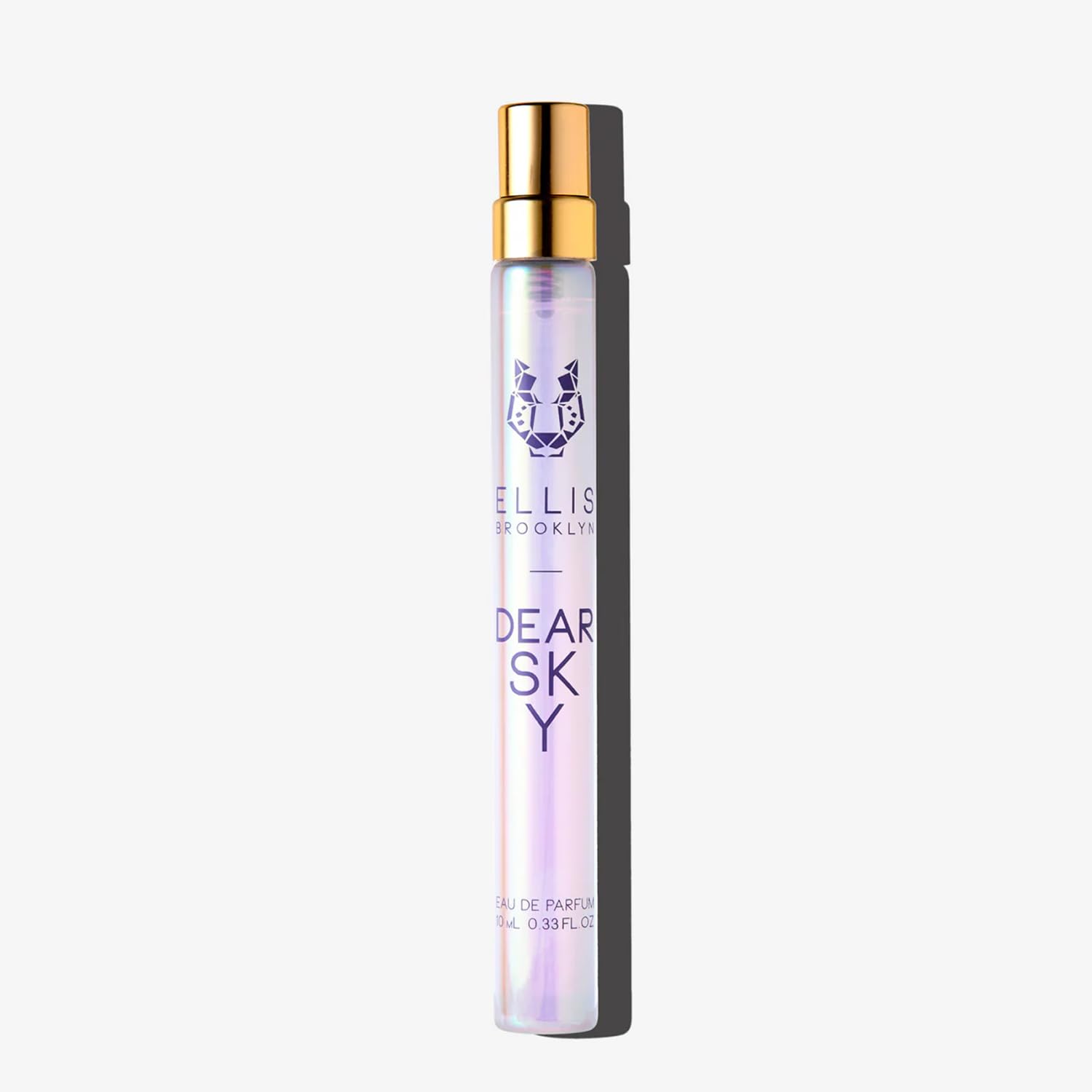
DEAR SKY represents Ellis Brooklyn’s newest articulation of their sustainable fragrance philosophy — and a beautifully optimistic, radiant companion to SALT in the brand’s upcycled lineup. Created by celebrated perfumer Honorine Blanc and personally named for founder Bee Shapiro’s daughter Sky, it opens with a luminous trio of bergamot essence, rhubarb, and honeydew melon — fresh, juicy, and full of forward light. The heart unfolds into a graceful bouquet of tuberose, white peony, and pink pepper, before landing on a grounded, earthy base of ambrette, galbanum, and upcycled cedarwood — the same responsibly sourced furniture-industry sawdust that gives Ellis Brooklyn’s signature compositions their warm, woody sustainability credential. It is a fragrance of radiance and optimism — “creative and full of light,” as Shapiro describes her daughter, and the scent follows faithfully.
- Top Notes: Bergamot essence, rhubarb, honeydew melon, strawberry leaf — an exceptionally luminous, fresh-fruity opening with genuine mood-lifting brightness
- Heart Notes: Tuberose, white peony, pink pepper — an airy, elegant floral heart with the perfect balance of warmth and freshness
- Base Notes: Ambrette, galbanum, upcycled cedarwood — a grounded, natural, earthy dry-down that anchors the brightness with genuine depth
- Perfumer Pedigree: Created by Honorine Blanc, one of the most respected noses in modern fragrance — a guarantee of composition quality
- Clean Credentials: PETA-certified vegan and cruelty-free; free from parabens and phthalates; Made in the USA
- Newer Release: Less community review data than SALT — a slightly unknown quantity in terms of long-term wearer experience and seasonal versatility
- Availability: Currently available primarily as a 10ml travel spray on Amazon — the full-size bottle is more readily found through Ellis Brooklyn’s own website
- Character: Lighter and fruitier than SALT — those wanting rich, warm depth should opt for SALT; those wanting airy, luminous freshness will love DEAR SKY
- Best Season: Spring and summer especially; the bergamot-melon-peony combination is at its most radiant in warm, sunny conditions
Best for: Lovers of clean, modern floral-fruity fragrances who want the emotional optimism of a “bright” scent grounded in genuine sustainability credentials. Ideal for daytime wear, warm months, gifting, and travel.
How to Shop for Upcycled Fragrance: A Consumer Guide
As upcycled perfumery grows, so too does the risk of greenwashing — brands making superficial sustainability claims without the sourcing transparency to back them up. Here is how to shop with confidence.
- ✅ Look for named ingredient houses: Brands that work with Robertet, Givaudan, dsm-Firmenich, IFF, or Takasago for upcycled materials are drawing on industry-leading extraction science and transparency frameworks
- ✅ Check for specific ingredient disclosure: Quality upcycled brands name which ingredients are upcycled and from what source. Generic “sustainable practices” language without specifics is a greenwashing signal
- ✅ Third-party certifications add credibility: Look for Positive Luxury’s Butterfly Mark (Miller Harris), PETA vegan certification (Ellis Brooklyn), Leaping Bunny (cruelty-free), and Ecocert for individual ingredient certification
- ✅ Research the ingredient source story: The best upcycled brands can tell you exactly where their by-product comes from — which industry, which region, which extraction method
- ✅ Consider sample-first: Upcycled ingredients can have unexpected facets — especially second-distillation florals. Sample before committing to a full bottle
- ❌ Avoid: Brands that use terms like “natural” or “eco” without ingredient-level transparency — these are marketing terms, not sourcing guarantees
- ❌ Avoid: Assuming that “upcycled” means “lower quality” — the science consistently shows that second-extraction botanicals can be as complex and beautiful as virgin-extracted equivalents, and sometimes more so
| Brand | Key Upcycled Ingredients | Ingredient Partner | Certification | Price Range |
|---|---|---|---|---|
| Étal Libre d’Orange | Apple Oil, Rose NeoAbsolute, Cedarwood Atlas NeoAbsolute | Givaudan | — | Niche ($$$$) |
| Miller Harris | Rose, patchouli, oakwood, cedarwood, Orcanox, hydrolat sage | Robertet | Butterfly Mark (Positive Luxury) | Premium Niche ($$$) |
| Ellis Brooklyn | Jasmine (ceremonial), cedarwood (furniture), cardamom (spice) | In-house / disclosed suppliers | PETA Vegan & Cruelty-Free | Accessible Niche ($$$) |
| Sana Jardin | Orange blossom, rose, jasmine (Morocco) | In-house Beyond Sustainability™ | BCorp; fair trade model | Premium Niche ($$$) |
Frequently Asked Questions
Q: Does upcycled rose or jasmine smell as good as conventionally extracted versions?
In many cases, yes — and in some ways better. The key insight from perfumers working with upcycled botanicals is that a second extraction doesn’t produce a weaker or inferior version of the original; it produces a differently faceted one. Twice-distilled rose petals tend to yield an oil with deeper, earthier, more mineral qualities than the first extraction’s brighter, more voluptile character. Upcycled jasmine similarly retains the indolic warmth and floral depth that makes jasmine absolute so prized, at an extraction yield that is — depending on the technology used — surprisingly high. Belinda Smith of St. Rose described the discovery as finding that “certain facets of the ingredient become more intense” through upcycled extraction — a creative benefit as much as an environmental one.
Q: Are upcycled fragrances more expensive than conventional perfumes?
Not necessarily. While upcycled extraction technology requires investment in sophisticated equipment and processes, the raw material cost is typically lower (by-products rather than virgin crops) — and the environmental and reputational value added supports premium positioning. The pricing of the upcycled fragrances featured in this guide ranges from accessible niche (~$68 for Ellis Brooklyn SALT) to established niche (~$165 for Miller Harris Myrica Muse) — comparable to, not significantly more expensive than, equivalent quality conventional niche fragrances. The premium is for quality and story, not primarily for the sustainability credential.
Q: What is the difference between an upcycled fragrance and a natural fragrance?
A natural fragrance is one composed primarily of ingredients derived from natural botanical, animal, or mineral sources — as opposed to synthetic aromatic molecules. An upcycled fragrance is one that uses by-products or waste materials from other production processes as its ingredient source. Many upcycled fragrances are also natural, but not all natural fragrances are upcycled. A fragrance could use conventionally harvested, virgin-extracted natural ingredients (natural but not upcycled), or it could use synthetic ingredients derived from upcycled industrial carbon or bio-fermentation (upcycled but not natural in the botanical sense). The two terms are complementary but distinct — and the most interesting fragrances in 2026 increasingly combine both principles.
Q: How do I know if a fragrance truly uses upcycled ingredients, or if it’s just greenwashing?
The most reliable signals are specificity and transparency. Genuine upcycled fragrance brands can name the specific ingredients that are upcycled, the waste stream they come from, the extraction method used, and often the ingredient partner who produced them. Étal Libre d’Orange names its six specific upcycled ingredients and their source materials. Miller Harris identifies the Robertet upcycling programme and explains how the rose and patchouli are obtained. Ellis Brooklyn discloses the Indian ceremonial jasmine and furniture industry cedarwood sources. Greenwashing, by contrast, typically involves broad language like “responsibly sourced,” “eco-conscious formula,” or “sustainable ingredients” without any specificity about which ingredients, which sources, or which extraction processes. Always look for the detail.
Q: Is the upcycled perfume movement a passing trend or a permanent shift?
All the structural evidence points to permanence. The forces driving upcycled perfumery — consumer demand for supply chain transparency, regulatory pressure on waste reduction, protection of endangered botanical species, and the creative opportunities that new extraction technologies unlock — are long-term and structural, not cyclical. By 2026, sustainability in perfumery is no longer a marketing bullet point — it is assumed. The most compelling brands are not loudly natural; they are quietly thoughtful. Upcycled materials are used for olfactive effect, not virtue signalling, with formulas designed to reduce waste while expanding creative range. The conversation has matured — and the fragrance smells better because of it.
The Bottom Line: Waste Is the New Luxury
There is something deeply poetic about the idea that a rose petal, having already given everything it had to a first extraction, still carries something worth finding. That the wood chip left on a furniture factory floor still holds the memory of the forest it came from. That the jasmine left in temple offerings after a ceremony still carries a living fragrance that a skilled nose — and sophisticated chemistry — can restore to luminous life.
Upcycled perfumery is not a compromise. It is not a lesser version of what came before. Perfumers who first approach upcycled materials with hesitation consistently discover that the olfactory quality is unique, and that certain facets of the ingredient become more intense through the process — creating an entirely new avenue for creative direction.
In 2026, buying an upcycled fragrance is simultaneously an act of aesthetic discernment and environmental intelligence. It is the recognition that the most interesting ingredients are sometimes the ones that were already there — waiting, overlooked, for someone to look again with better eyes and better science.
The flowers were never really waste. We just hadn’t learned how to listen to them properly.
Related Posts from PerfumeLead
- Stress-Relief in a Bottle: Why Lavender and Bergamot Are Trending in 2026 — Discover how lavender and bergamot — two of the most common sustainably sourced botanicals — are driving the wellness fragrance movement alongside upcycled perfumery.
- The “Dopamine Dressing” of Fragrance: Bright Notes to Lift Your Spirits — Many of the brightest citrus and fruity notes in dopamine fragrance are now sourced from upcycled citrus peel — combining mood science with sustainable sourcing.
- How to Choose a Confidence Scent: The Science of Citrus and Woods — Cedarwood and citrus — two of the most important upcycled fragrance source materials — are also the foundation of the confidence scent formula.
- A Beginner’s Guide to Perfume Types — New to fragrance? Learn the fundamentals of concentrations, note structures, and fragrance families before exploring the upcycled category.
- Best Vanilla Perfumes — Vanilla — one of the most common upcycled gourmand base notes in sustainable fragrance — explored in its most beautiful expressions here.
Disclaimer: This post contains Amazon affiliate links. If you purchase through these links, we may earn a small commission at no additional cost to you. All recommendations and editorial opinions are our own, based on fragrance research and industry expertise. Product images are for illustrative purposes — always verify current formulations with the brand directly, as upcycled ingredient sourcing can evolve as sustainability programmes mature.