The “Dopamine Dressing” of Fragrance: Bright Notes to Lift Your Spirits
Dopamine dressing — the act of choosing clothes deliberately to uplift your emotional state — has evolved in 2026 into a full lifestyle philosophy. And its most exciting new frontier? Fragrance. Just as a canary-yellow blazer or electric-cobalt dress can trigger a measurable mood shift through enclothed cognition, the right bright scent can stimulate dopamine and serotonin release through your olfactory system — instantly, powerfully, and scientifically. In this guide, we break down the neuroscience of mood-lifting notes, map the key bright fragrance families driving the 2026 wellness-scent movement, and reveal the standout bottles that belong on your dopamine-fragrance shelf right now.
There’s a moment, familiar to anyone who has ever reached for their favourite perfume on a hard day, when a single spray changes everything. The shoulders drop. The jaw unclenches. Something lifts. It isn’t magic — and it isn’t just nostalgia. It’s neuroscience, operating through the most direct sensory pathway in the human brain, and in 2026, the fragrance world has finally caught up with what the science has known for years.
We are living through a cultural moment that DFA Style’s 2026 Dopamine Dressing Report describes as a movement away from “quiet luxury” and beige minimalism toward something psychologically intentional — dressing, living, and scenting for your nervous system. Who What Wear confirms the macrotrend: colour-blocking demand surged 18% between August and September 2025, with purple, yellow, and green leading the way — and the same energy bravery is now threading through the fragrance world as consumers demand scents that do something, not just smell like something.
The term “dopamine dressing” began in fashion — the idea that wearing vibrant, bold, joyful colours could stimulate the brain’s reward pathways and shift emotional state. But its translation into fragrance is arguably more powerful. While colour operates through the visual cortex, scent bypasses the rational brain entirely and fires signals directly into the limbic system — the emotional core. The mood shift from fragrance can be faster, deeper, and more lasting than anything a colourful outfit alone can achieve.
The question isn’t whether fragrance can lift your spirits. The science settled that long ago. The question in 2026 is: which notes deliver the biggest dopamine hit — and how do you build a scent wardrobe that gives you that lift on demand?
The Neuroscience of Fragrance and Mood: How Bright Notes Work on the Brain
Every time you inhale a scent, odour molecules travel through the nasal passage and stimulate olfactory receptors, which fire signals via the olfactory bulb directly to the brain’s limbic system — specifically the amygdala and hippocampus. These structures govern emotional memory, fear and pleasure responses, and the release of neurotransmitters. No other sense has this direct, unfiltered connection to the emotional brain.
As Viti Vinci’s aromachology research documents: approximately 75% of our daily emotions are influenced by scent — more than any other sense — and exposure to a pleasant fragrance can produce up to a 40% improvement in reported mood. These are not trivial numbers. They represent genuine, measurable neurochemical events.
The key neurotransmitters involved in fragrance-induced mood elevation are:
- Dopamine — the reward and motivation chemical, triggered by certain citrus and fruity notes. Associated with pleasure, anticipation, and drive.
- Serotonin — the mood-stabilising “feel-good” neurotransmitter, stimulated particularly by citrus notes like bergamot and lemon, as well as florals like rose and jasmine.
- Endorphins — the brain’s natural pain-relievers and mood elevators, triggered by vanilla, lavender, and certain floral notes.
- Norepinephrine — associated with alertness, focus, and positive arousal. Released in response to citrus aromas, complementing the serotonin lift with mental clarity.
The psychological theory of enclothed cognition — proven in a 2012 landmark study by the University of Hertfordshire — shows that the symbolic meaning and sensory experience of what we wear directly alters our psychological state. A person wearing a white lab coat performs measurably better on attention tasks; a person in a superhero T-shirt reports greater feelings of strength. In 2026, this principle has been extended to fragrance: the deliberate choice to wear a bright, joy-coded scent does not just make you smell good — it actively primes your brain for the emotional state that scent represents. When you spray a vibrant citrus-floral on a gloomy Tuesday, you are not just masking your mood. You are changing it.
The Dopamine Fragrance Pathway: Step by Step
| Step | What Happens | Brain Region | Result |
|---|---|---|---|
| 1. Inhalation | Bright scent molecules enter the nasal passage and bind to olfactory receptors | Olfactory epithelium | Scent signal initiated |
| 2. Signal Transmission | Olfactory bulb fires directly to limbic system — bypassing the thalamus (no rational “filter”) | Olfactory bulb → Amygdala | Immediate emotional response triggered |
| 3. Neurotransmitter Release | Limbic system releases dopamine, serotonin, or endorphins depending on the scent molecule profile | Hippocampus, nucleus accumbens | Mood elevation, pleasure, motivation |
| 4. Cortisol Modulation | Uplifting scents deactivate the HPA axis stress response, reducing cortisol output | Hypothalamus, adrenal glands | Stress reduction, relaxation of tension |
| 5. Memory Association | If worn consistently in positive contexts, the scent becomes a conditioned emotional anchor | Hippocampus | Faster, stronger mood lift over time |
The Bright Note Families: Your Dopamine Fragrance Palette
Not all fragrance notes are created equal when it comes to mood elevation. The “bright” notes that drive dopamine-dressing fragrance are those that activate the brain’s energising and pleasure pathways fastest and most reliably. Here is the complete palette — and what each family does to your brain chemistry.
1. Citrus Notes — The Fastest Dopamine Trigger
Citrus is the undisputed frontrunner of mood-lifting fragrance. Notes like bergamot, grapefruit, yuzu, lemon, mandarin, and orange blossom are extraordinarily rich in limonene — a terpene compound that interacts with the brain to stimulate serotonin production, the neurotransmitter most directly associated with sustained happiness and positive mood. They also trigger the release of norepinephrine, adding mental alertness and focus to the emotional lift.
As fragrance specialist Isabelle Zarokian, quoted in Woman & Home’s 2025 mood-boosting fragrance guide, confirms: “Citrus notes like bergamot, lemon and grapefruit are bright and vibrant, stimulating energy and optimism.” They are the fragrance equivalent of a shot of morning sunshine — immediate, clean, and unmistakeable.
In 2026, yuzu — the Japanese citrus with a sharper, more complex profile than standard lemon — is having its biggest moment yet. Master Perfumer Christophe Laudamiel of Osmo told Who What Wear that 2026 would see “an explosion of solifragrances” built on mononotes like yuzu — single-ingredient compositions that let the mood-lifting power of one ingredient fully express itself without compromise.
2. Bright Florals — Dopamine with Emotional Depth
While citrus notes energise the mind, certain bright florals add a layer of emotional richness — joy, romance, warmth, and connection — that pure citrus cannot achieve alone. The key dopamine-active florals are jasmine, neroli (orange blossom), rose, and peony.
Jasmine, in particular, is one of the most neurochemically significant florals in perfumery. Research shows it stimulates the direct release of dopamine — the reward chemical — and is associated in clinical studies with increased confidence and euphoria. Neroli carries the citrus-floral bridge beautifully: its bitter-orange freshness combined with honey-like warmth creates what fragrance writers consistently describe as a “sunlit” quality. Rose and peony both stimulate endorphin release, adding a dimension of comfort and gentle happiness that anchors bright florals for longer wear.
3. Fruity Notes — Joy in Its Most Playful Form
The fruity-floral genre has taken firm ownership of the “dopamine fragrance” category in 2026, with strawberry, peach, passion fruit, raspberry, and pineapple notes appearing across designer and niche launches alike. These notes tap into what neuroscientists call the brain’s “anticipatory pleasure” system — the same dopaminergic pathway activated by the anticipation of eating something delicious. The result is a scent that feels genuinely joyful and playful rather than simply fresh or clean.
Fragrance Outlet’s 2026 trend roundup notes that “citrus returned with a zesty swagger” while fruity notes delivered “an instant mood boost” across the year’s most-repurchased bottles. The key to a great dopamine-fruity fragrance is balance: the fruit must feel bright and realistic rather than synthetic or candy-like.
4. Green and Herbal Notes — Focus-Linked Joy
Mint, basil, rosemary, thyme, green grass, and fresh herbs occupy a fascinating neurological space: they simultaneously lift mood and sharpen cognitive function, making them the ideal “productive joy” notes. Australian research has confirmed that freshly cut grass releases chemicals that produce measurable feelings of happiness and mental rejuvenation. Peppermint essential oil has been clinically shown to have mood-elevating properties and reduce anxiety while maintaining alertness.
These notes are particularly valuable for workplace fragrance dopamine-dressing: the mental clarity dimension they add prevents the scent from feeling indulgent or distracting, making them ideal for moments when you need to lift your spirits and focus simultaneously.
5. Warm Gourmand Notes — Comfort Dopamine
Vanilla, tonka bean, caramel, and warm amber represent a different but equally valid dimension of dopamine fragrance: comfort and reward. Vanilla, in particular, has been shown to elevate both serotonin and dopamine levels in brain tissue, reduce depression-like behaviours in animal studies, and trigger the brain’s reward system through its similarity to naturally occurring opioid-adjacent sensory experiences. It is the olfactory equivalent of a warm hug — the kind of scent that signals safety, pleasure, and contentment to the deepest parts of the brain.
| Bright Note Family | Key Notes | Primary Neurotransmitter | Emotional Effect | Best Moment to Wear |
|---|---|---|---|---|
| Citrus | Bergamot, yuzu, grapefruit, lemon, mandarin | Serotonin + norepinephrine | Energised, optimistic, alert | Morning, work, pre-event |
| Bright Florals | Jasmine, neroli, rose, peony, orange blossom | Dopamine + endorphins | Joyful, romantic, euphoric | Social occasions, daytime events |
| Fruity | Peach, strawberry, passion fruit, pineapple, raspberry | Dopamine (anticipatory) | Playful, happy, carefree | Casual days, weekends, warmer months |
| Green/Herbal | Mint, basil, green tea, thyme, fresh grass | Serotonin + norepinephrine | Focused, refreshed, mentally clear | Desk work, creative sessions, study |
| Warm Gourmand | Vanilla, tonka bean, amber, caramel, warm musk | Dopamine + serotonin (comfort) | Comforted, rewarded, content | Evening, rest days, self-care rituals |
Why 2026 Is the Year of Dopamine Fragrance
The convergence of several powerful forces has made 2026 the definitive year for mood-forward, bright-note fragrances.
First, the macroeconomic context. As Who What Wear’s Style Report astutely observes, maximalism and emotional dressing historically surge during periods of economic anxiety — designers and consumers alike reaching for brightness and boldness as an antidote to uncertainty. The beige-on-beige “quiet luxury” aesthetic that defined 2024 has given way to what DFA calls “colour bravery” — and in fragrance, this translates directly to bolder, brighter, more emotionally intentional bottles.
Second, the maturation of the informed fragrance consumer. In 2026, buyers know what limonene does. They follow perfumers on social media. They research fragrance notes before purchasing. This intelligence has created demand for scents with a genuine reason for being — and bright, mood-lifting, dopamine-coded fragrances deliver that reason with scientific credibility.
Third, the “skin-ification of scent” — the growing demand for fragrances that provide tangible wellbeing benefits beyond aesthetics. As DSM-Firmenich’s Fragrance Developmental Manager Rachael Larsen told Who What Wear: “In 2026, fragrance will continue moving closer to skincare, with the ongoing skin-ification of scent.” Consumers want their perfume to do something for their nervous system, not just their nose. Bright, mood-lifting notes are the olfactory equivalent of an active skincare ingredient.
The Best Dopamine Fragrance Bottles to Buy in 2026
With the science and trends established, here are the standout bottles that best deliver the bright, spirit-lifting, dopamine-dressing experience in 2026 — from iconic bestsellers to modern niche discoveries.
1. Clinique Happy Eau de Parfum — The Original Dopamine Fragrance
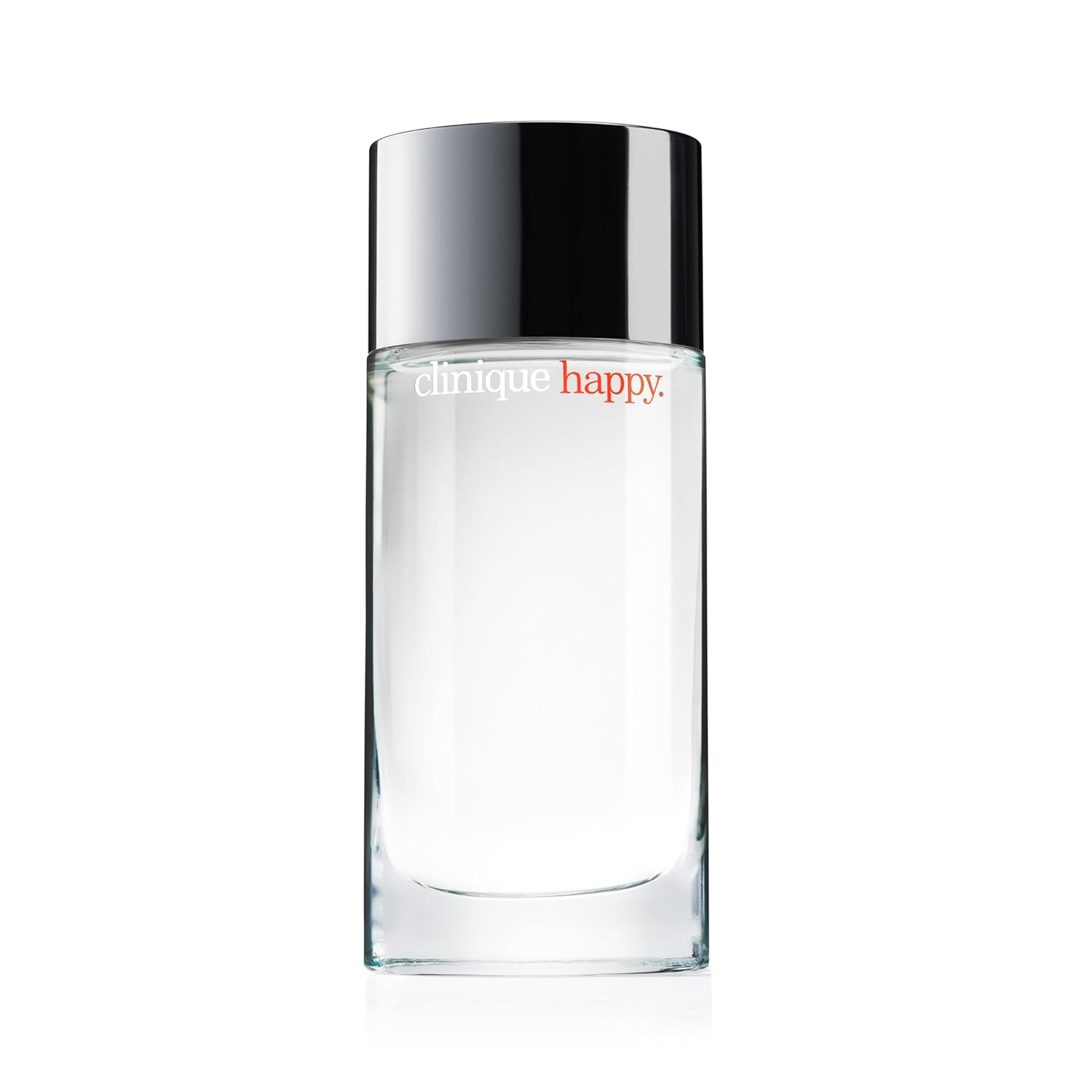
Before “dopamine fragrance” was a category, Clinique Happy was living it. Created in 1997 by perfumers Jean-Claude Delville and Rodrigo Flores-Roux and awarded the FiFi Award in 1998, it was — and remains — one of the most scientifically intentional mood-lifting fragrances ever produced at the designer level. Clinique themselves commissioned a neurosensory study measuring the conscious and subconscious emotional responses of women exposed to the scent — and found that 97% of participants felt happy when smelling it. That is not a marketing claim. That is a repeatable neurological finding. The formula is built on a trio of pure citrus joy — ruby red grapefruit, mandarin, and bergamot — all three of which are among the most potent serotonin-stimulating notes in perfumery. These open into a soft, luminous floral heart of Hawaiian wedding flower and morning dew orchid, before resting on a warm, transparent base of spring mimosa and a clean wood accord. It is sunshine in molecular form.
- Top Notes: Ruby red grapefruit, mandarin, bergamot — a powerhouse trio of serotonin-stimulating citrus notes that deliver an immediate, genuine mood lift
- Heart Notes: Hawaiian wedding flower, morning dew orchid — soft, luminous floral depth that extends the joyful opening beautifully
- Base Notes: Spring mimosa, transparent wood accord — clean, warm, and non-intrusive — keeps the bright character intact throughout the dry-down
- Clinical Backing: Supported by a commissioned neurosensory study — 97% of participants reported feeling happier when exposed to this scent
- Versatility: Works year-round, day or evening, allergy-tested and formulated for all skin types
- Accessibility: Widely available, excellent value for a dermatologist-guided designer formula
- Longevity: EDP version lasts 4–6 hours on skin — moderate rather than exceptional; reapplication may be needed for full-day wear
- Projection: Skin-close rather than room-filling — a personal mood lift rather than a statement projection
- Character: Intentionally light and optimistic — those seeking depth or complexity may want to layer with a base note
- Best Season: Spring and summer are its strongest seasons; can feel slightly thin in very cold weather
Best for: Morning mood rituals, difficult days, spring and summer daily wear, gifting to someone who needs a lift.
2. Marc Jacobs Daisy Eau de Toilette — Effortless Joy in a Bottle
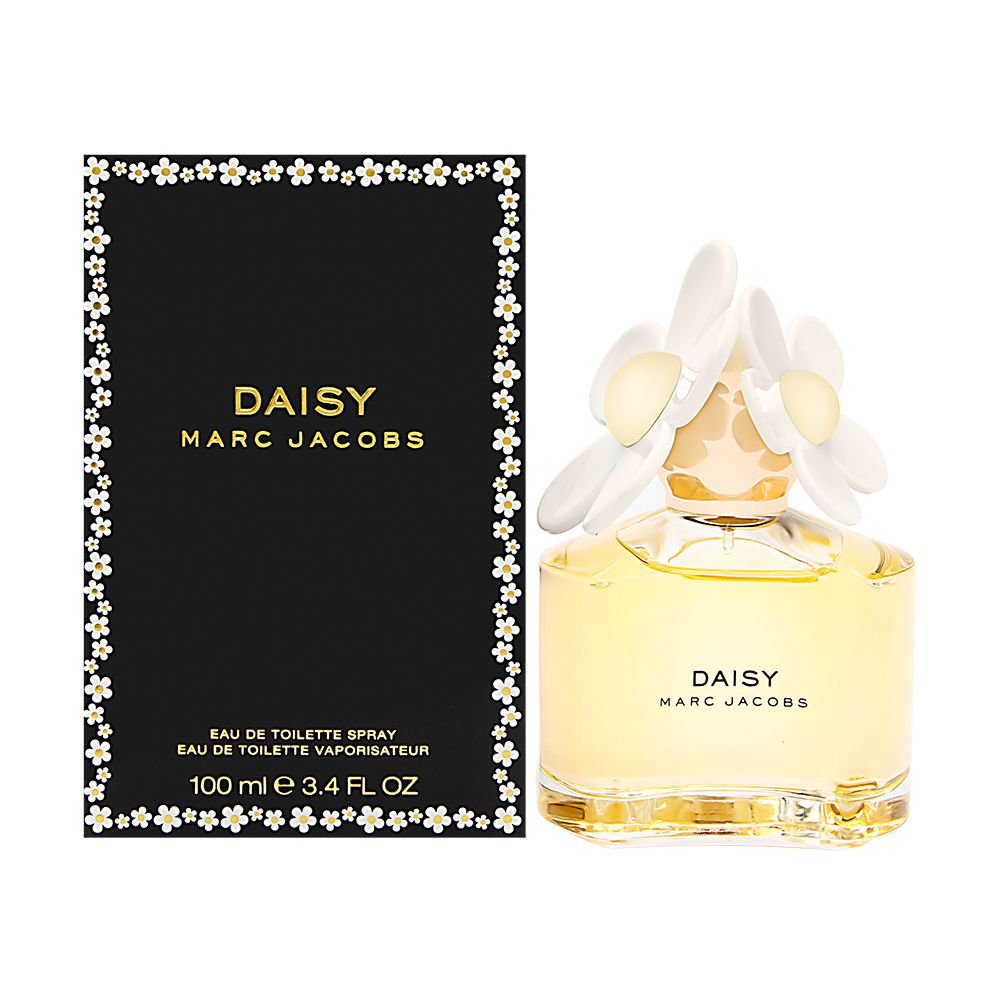
Since its launch in 2007, Marc Jacobs Daisy has earned its place as one of the most beloved dopamine-adjacent fragrances of the modern era — and its staying power is not accidental. Created by perfumer Alberto Morillas, it opens with a sparkling trio of strawberry, violet leaf, and blood grapefruit — an immediately joyful, almost edible brightness — before blooming into a luminous floral heart of violet, jasmine, and gardenia that delivers a pure dopamine punch via jasmine’s proven dopaminergic activity. The dry-down is a creamy, skin-warm musk with sandalwood and white woods, anchoring the brightness with enough depth to avoid feeling one-dimensional. It is the fragrance equivalent of the perfect sunny morning: uncomplicated, radiant, and entirely mood-lifting.
- Top Notes: Strawberry, violet leaf, blood grapefruit — a classic dopamine-triggering opening combining fruity anticipatory pleasure with serotonin-active citrus
- Heart Notes: Violet, jasmine, gardenia — jasmine’s dopamine-stimulating activity gives the heart genuine neurochemical mood-lifting weight
- Base Notes: Musk, vanilla, sandalwood, white woods — warm, comforting, and clean — rounds the brightness with natural comfort chemistry
- Iconic Status: Among the most recognised and loved women’s fragrances of the last two decades — universally associated with happiness and youth
- Wearability: Light, approachable, and non-intimidating — ideal for fragrance newcomers and daily wear alike
- Longevity: EDT concentration means 3–5 hours on skin — lighter wear than EDP alternatives; best reapplied at midday for all-day use
- Complexity: Intentionally simple and joyful — not a complex, evolving scent for fragrance connoisseurs seeking intrigue
- Price Range: Mid-range designer pricing (~$60–$100 for 3.4 oz EDT) — accessible but not inexpensive
- Best Season: Spring and summer primarily, though the vanilla base keeps it wearable year-round
Best for: Everyday joy dressing, spring and summer casual wear, fragrance-gifting, and anyone who wants a guaranteed mood lift without complexity.
3. Jo Malone London Orange Blossom Cologne — Liquid Sunlight
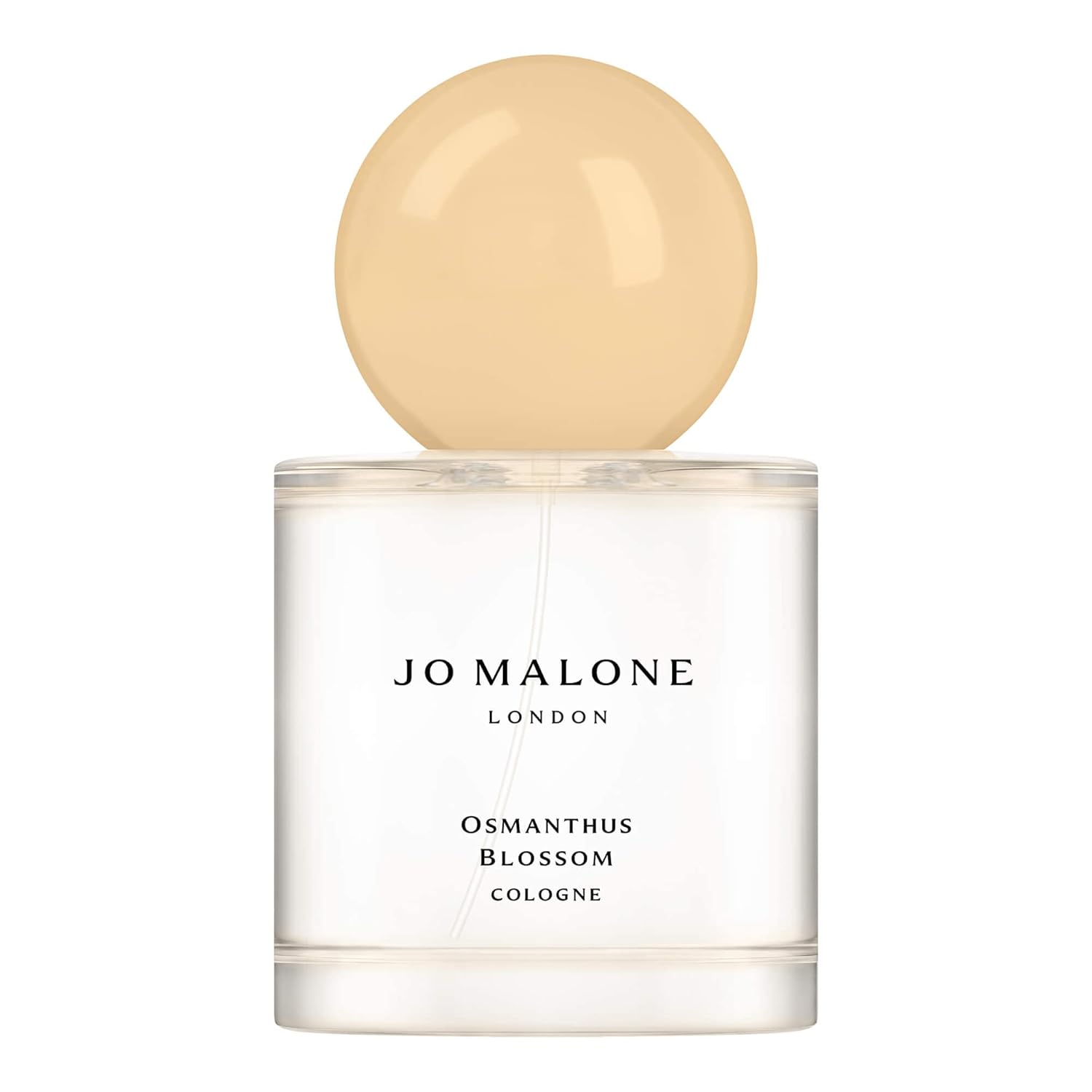
Jo Malone London’s Orange Blossom is one of the house’s most enduringly popular dopamine colognes — and its appeal is rooted in something very specific: it is a direct olfactory simulation of sunlight. Neroli (orange blossom) is one of the most neurochemically potent bright florals in perfumery, sitting at the intersection of citrus freshness and floral depth, stimulating serotonin while carrying the “sunlit skin” quality that is universally associated with happiness, warmth, and wellbeing. This cologne wraps neroli’s brightness in a haze of clementine and tangerine zest, supporting it with a heart of white lily and orris root, and settling on a clean base of light musks. The result is a scent that smells like warm skin on a perfect day — uncomplicated, luminous, and deeply mood-elevating.
- Top Notes: Clementine, tangerine — bright citrus sparkle that immediately activates serotonin-stimulating limonene pathways
- Heart Notes: Orange blossom (neroli), white lily — the neurochemical core of the fragrance; neroli delivers a deep sunlit happiness that is uniquely its own
- Base Notes: Orris root, light musks — soft, skin-close warmth that extends without complicating
- Gender-Neutral: Genuinely unisex — works beautifully on all genders and skin types
- Layering: Jo Malone’s cologne concentration is designed for layering — pairs particularly well with Lime Basil & Mandarin or Wood Sage & Sea Salt for added depth
- Longevity: Cologne concentration — lighter by design; longevity is 3–4 hours on skin (longer on fabric); best reapplied for full-day wear
- Price Range: Premium luxury pricing (~$130–$165 for 100ml) — a considered investment
- Intensity: Intentionally skin-close and understated — not a projection-heavy, room-filling statement scent
- Best Season: Spring and summer are optimal; can feel fragile in very cold weather
Best for: Those seeking a genuinely “sunlit” mood-lift in a refined, unisex luxury format. Perfect as a base for layering dopamine scents.
4. Sol de Janeiro Cheirosa 62 Eau de Parfum — The Playful Dopamine Crowd-Pleaser
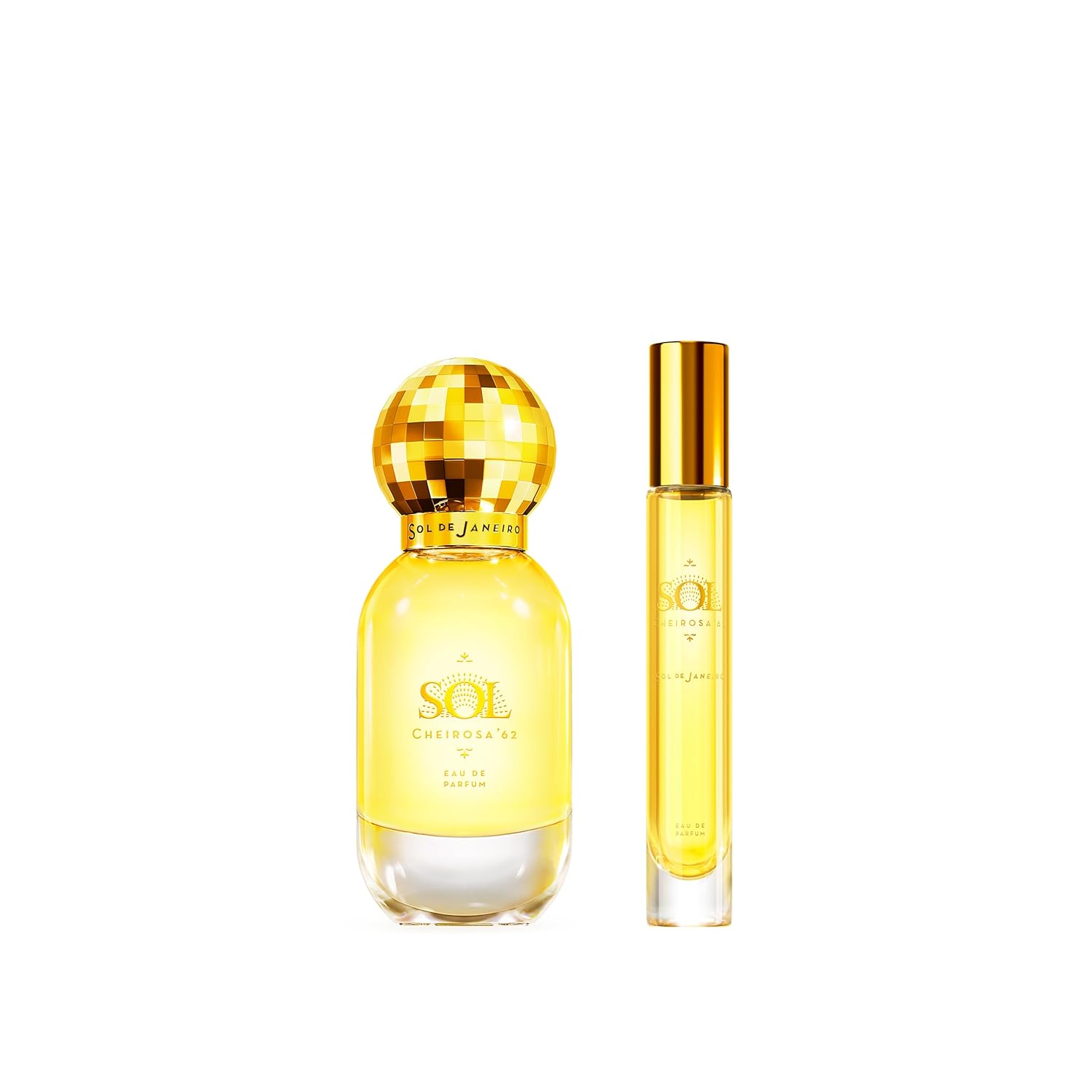
No product better embodies the 2026 dopamine-fragrance energy than Sol de Janeiro’s Cheirosa 62. The Brazilian beauty brand’s first icon fragrance — and the scent behind the globally beloved Bum Bum Cream — Cheirosa 62 EDP is a tropical, warm-gourmand declaration of joy. Its salted caramel, vanilla, and pistachio base reads as a full activation of the brain’s reward system: sweet, warm, familiar, and deeply pleasurable. The bright top notes of pink dragon fruit and Brazilian jasmine bring the required freshness and dopaminergic floral lift, while the heliotrope heart adds a warm, slightly powdery happiness that recalls sunscreened summer skin and carefree beach days. It is, in neurological terms, a direct hit of anticipatory dopamine — the pleasure of something sweet and good. In experiential terms, it is pure, uncomplicated joy.
- Top Notes: Pink dragon fruit, salted caramel, pistachio — a uniquely joyful opening that activates the brain’s reward and anticipatory dopamine pathways immediately
- Heart Notes: Brazilian jasmine, heliotrope — jasmine’s dopamine-stimulating activity layered with warm solar floral happiness
- Base Notes: Vanilla, musk — the comfort and contentment neurochemistry of vanilla, delivered in its most approachable form
- Compliment Magnet: Consistently among the most complimented fragrances across online fragrance communities; high social confidence factor
- Longevity: EDP concentration provides 6–8 hours of wear with warm, radiant sillage
- Character: Very sweet and gourmand — those who prefer fresh, airy, or austere fragrances will find this too rich
- Season: At its very best in warmer months; the sweetness can feel heavy in cold weather for some wearers
- Occasion: A casual, joyful scent — not suited to highly formal or conservative professional environments
- Price Range: Mid-range pricing (~$48–$72 for 50ml EDP) — accessible luxury
Best for: Casual dopamine dressing, weekends, warmer months, social occasions, beach days, and anyone wanting a fragrance that consistently generates compliments and good feelings.
Build Your Dopamine Fragrance Wardrobe: A Practical Guide
Just as the dopamine dressing philosophy encourages building a deliberate wardrobe of emotionally intentional pieces, the smart approach to dopamine fragrance is to curate a small, purposeful collection — each bottle serving a specific mood function. Here’s how to structure yours.
The Three-Bottle Dopamine Fragrance Wardrobe
| Role | Scent Profile | When to Use | Example Bottle |
|---|---|---|---|
| The Morning Energiser | Citrus-dominant: bergamot, yuzu, grapefruit, lemon | Every morning; before important tasks; when you need alertness and optimism | Clinique Happy EDP, Jo Malone Orange Blossom |
| The Social Joy Bomb | Fruity-floral: jasmine, peony, strawberry, orange blossom | Social occasions, dates, weekends, events where warmth and playfulness serve you | Marc Jacobs Daisy EDT, Sol de Janeiro Cheirosa 62 EDP |
| The Evening Reward | Warm gourmand: vanilla, tonka, amber, caramel musk | Self-care evenings, winding down after a long day, intimate occasions | Sol de Janeiro Cheirosa 62 EDP, any warm vanilla-floral EDP |
- ✅ Morning ritual: Apply your citrus-bright dopamine fragrance within 10 minutes of waking — use the spray as a deliberate, intentional mood-setting ritual
- ✅ Before difficult moments: Apply a bright, familiar fragrance 10–15 minutes before a meeting, presentation, or social event — use it as your pre-performance anchor
- ✅ Build your anchor: Wear the same bright scent consistently in positive, high-energy moments — over time, the association deepens and the mood lift accelerates
- ✅ Apply to pulse points: Wrists, neck, inner elbows, and behind the ears — warmth activates the fragrance molecules and sustains the olfactory signal
- ✅ Layer for longevity: Apply an unscented or lightly scented moisturiser first — hydrated skin holds fragrance significantly longer
- ✅ Refresh mindfully: A deliberate mid-day reapplication, with a slow inhale, reinforces the mood-setting ritual and reactivates the neurological response
- ❌ Avoid: Rubbing wrists together after spraying — this crushes the fragrance molecules and alters the scent profile
- ❌ Avoid: Storing bright, citrus-forward fragrances in bathrooms — heat and humidity degrade the mood-active limonene compounds faster
Match Your Mood — Match Your Notes: A Dopamine Fragrance Decision Guide
The most effective way to use fragrance as a dopamine-dressing tool is to match the note profile to the specific emotional state you want to achieve — not just the one you’re currently in. Think of it as dressing for the mood you want, not the mood you have.
| Current State | Target State | Go-To Note Family | Why It Works |
|---|---|---|---|
| Anxious, overwhelmed | Calm and focused | Citrus + green herbs (bergamot, lemon, mint) | Serotonin uplift + cortisol reduction simultaneously |
| Low energy, fatigued | Alert and motivated | Sharp citrus + herbal (yuzu, grapefruit, rosemary) | Norepinephrine and serotonin boost — the neurochemical equivalent of a cold splash of water |
| Flat, unmotivated | Joyful and social | Fruity-floral (jasmine, peach, orange blossom) | Dopamine via jasmine + anticipatory pleasure from fruity notes activates the reward pathway |
| Sad, emotionally low | Comforted and settled | Warm gourmand (vanilla, amber, tonka) | Endorphin and dopamine uplift through the brain’s comfort-and-reward pathway |
| Scattered, unfocused | Sharp and productive | Green herbal (mint, basil, fresh grass, eucalyptus) | Mental clarity compounds + mild mood lift without sedation |
| Confident but wanting to project joy | Magnetic and warm | Bright floral + citrus EDP (neroli, bergamot, rose) | Social approach signalling through dopamine florals with the authority of an EDP concentration |
For the most powerful mood-lifting effect, try layering a citrus note over a warm base. Apply a vanilla or amber body oil or lotion first — this provides a comfort-dopamine foundation and significantly extends the top note longevity. Then spray a bright citrus-floral EDP on top. The result is a multi-layered dopamine fragrance experience: immediate energising uplift from the citrus, sustained warmth and comfort from the base, and a scent that evolves on your skin for 8+ hours. This is the olfactory equivalent of wearing a bold canary-yellow blazer over a perfectly tailored camel coat — the combination delivers more than either element alone.
Frequently Asked Questions
Q: What is the difference between “dopamine dressing” in fashion and “dopamine fragrance”?
Dopamine dressing in fashion uses the visual pathway and enclothed cognition — the psychological mechanism by which the symbolic meaning and sensory experience of clothes alters mental state. Dopamine fragrance operates through the olfactory pathway, which is actually more direct: scent bypasses the rational “filter” of the thalamus and fires immediately into the limbic system’s emotional core. Both approaches work by priming the brain’s reward pathways, but fragrance tends to produce a faster and sometimes deeper neurochemical response because the olfactory-limbic connection is more direct than the visual-cognitive one. Used together, they are extraordinarily powerful as a daily mood regulation toolkit.
Q: Do bright fragrance notes actually trigger dopamine release — or is that just marketing language?
The neurochemical connection is real, peer-reviewed, and increasingly well-documented. Citrus notes rich in limonene are demonstrated to stimulate serotonin production via olfactory-limbic pathway activation. Jasmine has been shown in clinical studies to stimulate dopamine release specifically. Vanilla and related warm notes have been shown to modulate monoamine neurotransmitters — including dopamine and serotonin — in brain tissue. The term “dopamine fragrance” in marketing contexts is sometimes loosely applied, but its scientific basis for citrus, bright floral, and warm gourmand notes is solid. The mechanism is olfactory-limbic neurotransmitter stimulation — which is precisely the same mechanism behind other well-documented mood interventions like exercise and sunlight.
Q: How long does the mood-lifting effect of a bright fragrance last?
The immediate neurochemical response — the first wave of serotonin or dopamine stimulation from inhalation — occurs within minutes and can last 15–60 minutes at peak intensity. However, the conditioned emotional response — where the brain has learned to associate a specific scent with a specific positive state — persists as long as the fragrance is detectable on the skin, which for a quality EDP can be 6–10 hours. The psychological “armour” effect of knowing you are wearing a deliberate, mood-coded scent also sustains the emotional benefit throughout the day. Think of it less as a single neurochemical event and more as an ongoing conversation between your olfactory system and your emotional brain.
Q: Can men benefit from dopamine fragrances the same way women can?
Completely. The neurochemical mechanisms are identical across genders — the limbic system, dopaminergic pathways, and olfactory-emotional connections function the same way in all human brains. The primary difference is cultural: men’s fragrance marketing has historically emphasised strength and authority rather than joy and brightness. However, the citrus-woody genre (bergamot, grapefruit, cedarwood) is firmly established in men’s perfumery and delivers exactly the same dopamine-serotonin uplift. Many of the fragrances listed in this guide are unisex, and the note families described as mood-lifting apply equally regardless of gender or the bottle’s marketing direction.
Q: Is there a “best time of day” to use a dopamine fragrance for maximum effect?
Research suggests morning application offers the highest neurochemical return, for two reasons. First, cortisol levels are naturally high in the morning (the cortisol awakening response) — bright citrus notes work synergistically with this natural hormonal peak to convert cortisol energy into positive motivation rather than anxiety. Second, the olfactory system is freshest in the morning — sensitivity is higher, meaning the mood-lifting signal from the same fragrance is stronger. A deliberate, mindful morning application of a bright dopamine fragrance — slow inhalation, intentional application to warm pulse points — is one of the most effective and underutilised daily mood regulation rituals available.
The Bottom Line: Dress Your Mood From the Inside Out
The genius of applying dopamine dressing principles to fragrance is that it operates invisibly, immediately, and through the most emotionally direct sensory pathway available to the human brain. You cannot see a fragrance. You cannot touch it. But you can feel it — in your limbic system, in your neurotransmitter levels, in the subtle but measurable shift in your emotional state that happens in the seconds after a spray of something bright, beautiful, and deliberately chosen.
In 2026, we are collectively waking up to the idea that scent is not an accessory — it is infrastructure. The right bright note, worn with intention, is not indulgence. It is emotional regulation. It is self-care with a scientific mechanism. It is, in the truest sense of the word, mood medicine.
So the next time you reach for your fragrance, reach deliberately. Choose something bright. Something joyful. Something that speaks — at the molecular level — directly to your brain’s reward system. Because sometimes, the most powerful thing you can do for your spirits is as simple as a single spritz.
Related Posts from PerfumeLead
- Stress-Relief in a Bottle: Why Lavender and Bergamot Are Trending in 2026 — The calming counterpart to dopamine fragrance: discover how lavender and bergamot use the same olfactory-limbic pathway to soothe rather than energise.
- How to Choose a Confidence Scent: The Science of Citrus and Woods — Many of the same bright citrus notes that drive dopamine fragrance anchor the ultimate confidence formula. Read about the citrus-woody duo here.
- Best Summer Colognes — Warm weather is when bright, mood-lifting citrus notes reach their peak performance. Find the best summer expressions here.
- Best Vanilla Perfumes — Explore the comfort-dopamine dimension further with a deep dive into the best vanilla-anchored fragrances for mood, warmth, and happiness.
- A Beginner’s Guide to Perfume Types — New to building a fragrance wardrobe? Start with the fundamentals: EDT vs EDP vs Parfum, and how concentration affects your dopamine fragrance experience.
Disclaimer: This post contains Amazon affiliate links. If you purchase through these links, we may earn a small commission at no additional cost to you. All recommendations are our own, based on research and fragrance expertise. This article is for informational and entertainment purposes and does not constitute medical or psychological advice.

:quality(85):extract_cover()/2022/12/12/951/n/1922153/620868d86397a1f6a2f190.46411164_.jpg "5 Top TikTok Viral Perfumes You Need to Try")