

Top 5 American Niche Perfume Brands Redefining “Raw” Scents in 2026
- American niche is leading the “raw” movement: Memories & Scents’ 2026 Niche Perfume Trend Report confirms that American niche brands are “less constrained by traditional European structures” and tend to be “bolder, more personal and sometimes deliberately raw” — making the US the most exciting territory in global perfumery right now.
- Raw doesn’t mean rough: In 2026 fragrance language, “raw” means unmediated — scents built on the direct, visceral character of real botanical materials rather than polished, sanitised mass-market accord work. It is a philosophy of honesty over elegance.
- The niche market is growing fast: The global niche perfume market is projected to reach $4.85 billion in 2026, growing at 9.1% CAGR — far outpacing mass-market fragrance growth — with 58% of high-income buyers now preferring niche over designer brands.
- Storytelling is the new luxury: The brands on this list don’t sell fragrance — they sell experiences, narratives, and emotional states. Every bottle tells a story that a department store counter simply cannot replicate.
- Sampling is essential: Raw, unconventional niche fragrances are the highest-risk blind buys in all of perfumery. Every brand featured here offers discovery sets or sample packs — always sample before committing to a full bottle.
Walk into a Sephora, scan the fragrance wall, and you will find no shortage of beautiful things to smell. You will find polished citrus openings and clean woody base notes and floral hearts assembled with impeccable technical skill. You will find bottles that smell good on nearly everyone who tries them. What you will not find — or find only rarely — is a fragrance that smells like something you have never smelled before. Something that stops you cold and makes you ask, out loud: What is that?
That question is the territory of American niche perfumery in 2026. And it is a territory that is, right now, producing some of the most exciting olfactory work in the world.
The “raw” scent movement — fragrances built on the unmediated, visceral character of real materials rather than the smoothed-out, crowd-tested pleasantness of commercial blends — is not a reaction against quality. It is a reaction against blandness. These are bottles created by perfumers who would rather make you feel something intensely specific than make you smell good generically. A forest floor after rain. The pages of a paperback left in the sun. A Pacific Northwest old-growth grove in November. The August heat through the radio speaker.
These are the five American niche brands defining what “raw” means in 2026 — and the signature bottles from each that are worth your time, your money, and your skin.
Why American Niche Perfumery Is Leading the Raw Movement in 2026
Europe — specifically France and Italy — has dominated fine fragrance for centuries. The institutional weight of Grasse, the heritage houses of Paris, the established vocabulary of chypres and fougères and orientals: European perfumery carries enormous cultural authority. It also carries enormous institutional constraint.
American niche perfumers don’t have that weight. They don’t have the obligation to smell “French.” They didn’t train at ISIPCA under the same traditions that shaped the same aesthetic. As Memories & Scents observes: “American niche perfumery continues to gain momentum in 2026, largely because these brands are less constrained by traditional European structures. They tend to be bolder, more personal and sometimes deliberately raw.” The brands on this list are all proof of that proposition.
They are also, in many cases, one-person or very small-team operations — perfumers who are making fragrance the way a novelist writes a book: alone, from personal experience, without a committee deciding whether the result is commercially viable. This creative freedom produces fragrances that could not exist inside a corporate structure. Sometimes they are challenging. Sometimes they are polarising. Almost always, they are unforgettable.
| Brand | Founded | Location | Raw DNA | Defining Philosophy |
|---|---|---|---|---|
| D.S. & Durga | 2007 | Brooklyn, NY | Music, memory, literary humidity | “Fragrance as autobiography — every bottle is a song someone heard once and never forgot” |
| Imaginary Authors | 2012 | Portland, OR | Literary fiction, the Pacific Northwest | “Scent as art and art as provocation — these are fragrances that might change the course of your story” |
| Pineward Perfumes | 2020 | Colorado | Rocky Mountain conifers, raw earth, resin | “Not forest accords — actual forests. Proceed only if you would like to smell like a pine tree” |
| Commodity | 2013 (relaunched 2021) | Los Angeles, CA | Modern American minimalism, everyday raw | “Fragrance without pretension — named after the things that make up real life” |
| Rogue Perfumery | 2016 | California | Vintage materials, oakmoss, bold naturals | “Created for the individual seeking presence over trends — when a batch is gone, it’s gone” |
What “Raw” Actually Means in Niche Perfumery in 2026
Before exploring the brands, it helps to understand what “raw” means as a creative and philosophical category — because it is frequently misunderstood as simply meaning “challenging to wear” or “avant-garde for its own sake.” Neither is accurate.
In 2026 fragrance culture, “raw” describes a specific quality of encounter between a fragrance and its wearer. A raw scent does not smooth its edges for commercial palatability. It does not soften its most distinctive quality to avoid dividing opinion. It does not fill itself with safe, crowd-pleasing bridge notes that catch the people who don’t love the core accord. Instead, it commits fully to a specific material reality — pine resin smells like pine resin, oakmoss smells like oakmoss, fig smells like fig — and trusts the wearer to meet it where it is.
This is the central tension of the raw fragrance movement: the same quality that makes these scents so extraordinary for those who love them is the same quality that makes them polarising for those who don’t. As Fragrance Lord’s guide to indie perfumery captures it, the best indie perfumers “are free to take risks with strange, beautiful notes and bold compositions, resulting in scents that are genuinely unforgettable” — and unforgettable, by definition, means not universally beloved.
A simple way to identify whether a fragrance is genuinely raw versus just marketed that way: does it smell like the thing it claims to smell like? Raw pine fragrances smell like pine trees, not pine-scented cleaning products. Raw fig fragrances smell like ripe figs being split open, not fig-flavoured yoghurt. Raw oakmoss fragrances smell like the floor of an old forest, not a detergent “forest accord.” If the fragrance makes you feel like you have been transported to a specific, real place — without safety nets or crowd-pleasing compromises — it is raw in the truest sense. Apply this test to every bottle on this list.
The Top 5 American Niche Brands Redefining Raw in 2026
1. D.S. & Durga — Debaser EDP
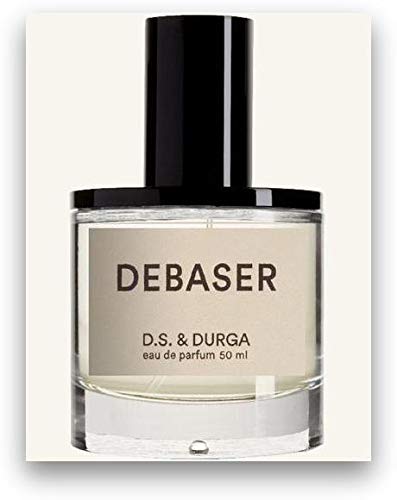
The Brand: Founded in Brooklyn in 2007 by musician and self-taught perfumer David Seth Moltz and his wife, visual artist Kavi Moltz, D.S. & Durga is one of the most respected and creatively ambitious niche fragrance houses in America. Every fragrance in the collection is built around a specific, highly personal memory, cultural reference, or sensory experience — often rooted in music, history, or literature. The brand’s philosophy is that a fragrance should work like a great song: the first time you smell it, you feel something you can’t quite name. The second time, you’re home.
Debaser is D.S. & Durga’s most iconic and beloved creation — and the bottle that best encapsulates everything the brand stands for. Named after the Pixies song, it was born from a very specific autobiographical memory: perfumer David Seth Moltz at summer camp at nine years old, August humidity, the raw, green smell of fig trees split open in the heat. The fragrance captures that with disarming precision. It opens with a vivid, almost aggressive burst of green fig stem — not the sweet, jammy fig of mainstream perfumery, but the raw, sappy, slightly sharp smell of the actual plant — alongside bergamot and pear. The heart is deep purple fig and coconut milk, humid and slightly indolic, before settling into a base of precious blond woods, tonka bean, and dry moss. Every wearer who loves it loves it unconditionally. Every reviewer who encounters it says some version of the same thing: it smells exactly like being under a fig tree in the summer heat — and nothing else smells like this.
- Top Notes: Green stems, bergamot, pear — a startlingly raw, photorealistic green opening that announces immediately this is not a department store fragrance; smells like plants, not perfume
- Heart Notes: Ripe fig, coconut milk, iris — deep purple fig ripeness with a humid, slightly creamy quality that is entirely original; iris adds just enough refinement to keep it from tipping into abstract territory
- Base Notes: Precious woods, tonka bean, oakmoss — warm, dry, slightly sweet; the blond woods and tonka bring the raw green opening into wearable, extended harmony
- Storytelling: One of the most genuinely autobiographical fragrances in American niche — wears like a specific summer memory you didn’t know you had
- Longevity: 8–12+ hours on skin; reviewed as one of D.S. & Durga’s strongest performers
- Unisex: Genuinely gender-neutral; worn with equal conviction across all genders in the fragrance community
- Character: The raw, green fig stem opening is polarising — those expecting sweet fig or floral-adjacent fragrances will be surprised by how “plant-like” and uncompromising the opening is
- Price Range: Accessible niche pricing (~$225–$300 for 100ml EDP) — a significant investment; the 50ml bottle is a more cautious entry point
- Blind Buy Risk: High — this is a fragrance that divides opinion strongly; a sample is essential before committing to a full bottle
- Best Season: Spring and summer; the raw green character is at its most beautiful in warmth
Best for: Fragrance enthusiasts seeking a genuinely original, autobiographical, raw botanical scent. One of the most beloved and universally recognised examples of American niche perfumery at its best.
2. Imaginary Authors — Cape Heartache EDP
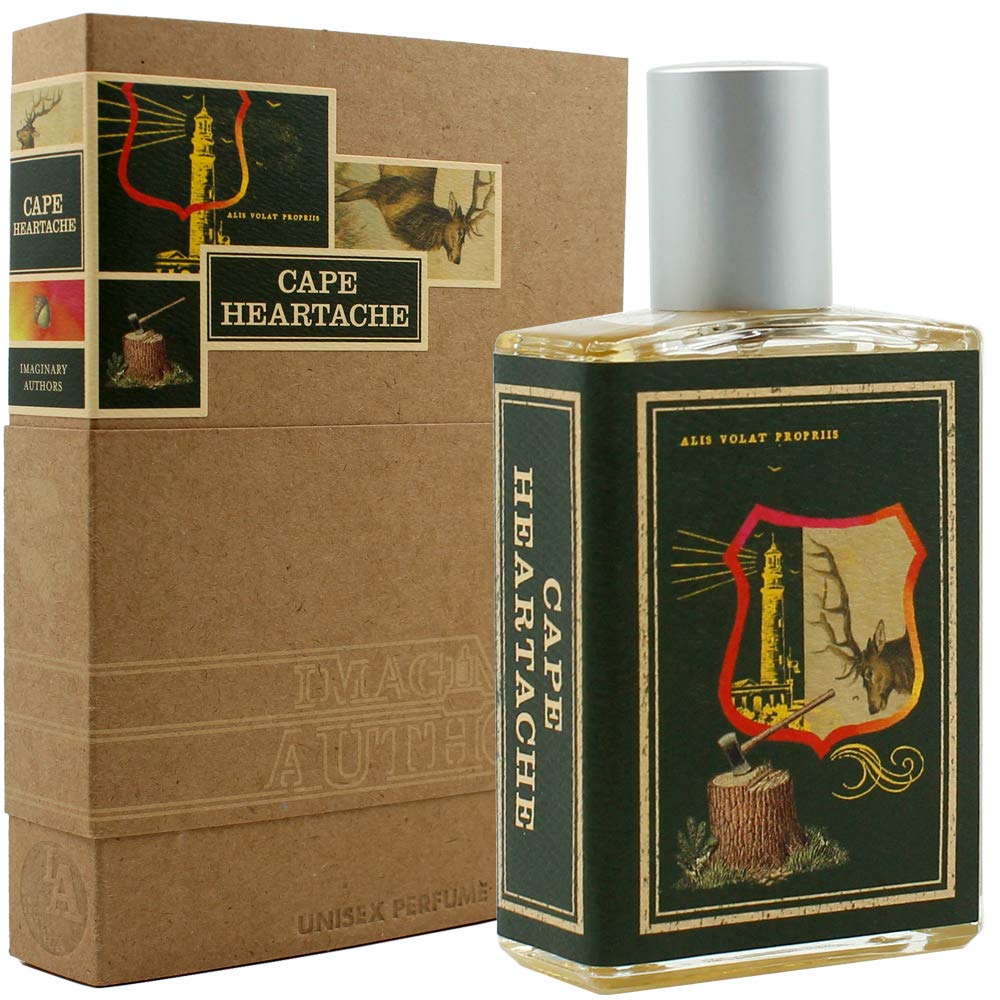
The Brand: Portland, Oregon-based perfumer Josh Meyer founded Imaginary Authors in 2012 on a concept so simple it is almost unreasonable: fragrances inspired by books that have never been written, by authors who never lived. Each bottle comes wrapped in what appears to be a book cover, complete with a fictional author biography, plot synopsis, and excerpt. The concept is not a gimmick — it is the entire creative framework. Meyer began his career in perfumery in 2010 after a life spent loving “whiskey, literature, cuisine, cigars, and music, balanced with a strong aversion to pretentious over-extravagance.” He taught himself by seeking out the finest raw materials in the world and spending countless hours in his laboratory, not following a brief but following curiosity. As Fragrantica’s feature on the brand describes: he is “endlessly fascinated by materials” — not for their preciousness, but for their ability to tell stories.
Cape Heartache is the Imaginary Authors fragrance that most fully embodies the brand’s raw, literary, Pacific Northwest identity. Its fictional backstory concerns an 1881 expedition to a coastal grove of old-growth trees in the Pacific Northwest, a homestead, and a romance — and the fragrance delivers the setting with remarkable fidelity. It opens with a genuinely raw accord of Douglas fir, pine resin, and western hemlock — dense, resinous, bracingly green, with the sticky sap-quality of actual conifer needles rather than any softened “forest” accord — before an unexpected, disarming note of strawberry and vanilla leaf emerges. The contrast is the whole point: the cold, old-growth forest and the warmth of human feeling inside it. The base settles into old growth, mountain fog, and a soft, slightly damp musk that smells — as one reviewer memorably described it — “exactly like a forest-floor autumn walk and everything you learned from your last heartbreak.” It is among the most emotionally specific fragrances available in American niche.
- Top Notes: Douglas fir, pine resin, western hemlock — among the most photorealistic conifer openings in any wearable fragrance; smells like actual Pacific Northwest old-growth rather than a “forest accord”
- Heart Notes: Strawberry, vanilla leaf — the emotional counterpoint to the cold, raw opening; the contrast is what makes this fragrance great and entirely unlike anything else
- Base Notes: Old growth, mountain fog, vanilla leaf — a uniquely atmospheric dry-down that evokes damp earth, cold sea air, and the warmth of shelter; no other fragrance quite achieves this specific olfactory place
- Storytelling Quality: Among the most narratively successful fragrances ever produced — wears like a complete short story about a specific place and a specific emotional state
- Longevity: 6–8 hours; Fragrantica community rates performance as above average for an indie natural-leaning composition
- Polarising Opening: The raw conifer opening is intense and very specifically “forest” — not universally wearable in professional or formal settings; best for casual or outdoor-coded occasions
- Strawberry Dynamic: Some reviewers find the strawberry note can be too prominent on certain skin types, leaning slightly sweet; test on skin before committing
- Price Range: Accessible niche pricing (~$160–$185 for 50ml) — fair for indie craftsmanship of this quality
- Best Season: Autumn and winter emphatically; the cold-forest-with-warmth character finds its fullest expression in cooler conditions
Best for: Fragrance lovers who want a scent that tells a story — specifically, a story about wild nature and quiet emotion in the Pacific Northwest. An outstanding choice for autumn, outdoor occasions, and anyone who values olfactory originality above all else.
3. Pineward Perfumes — Discovery Sample Set
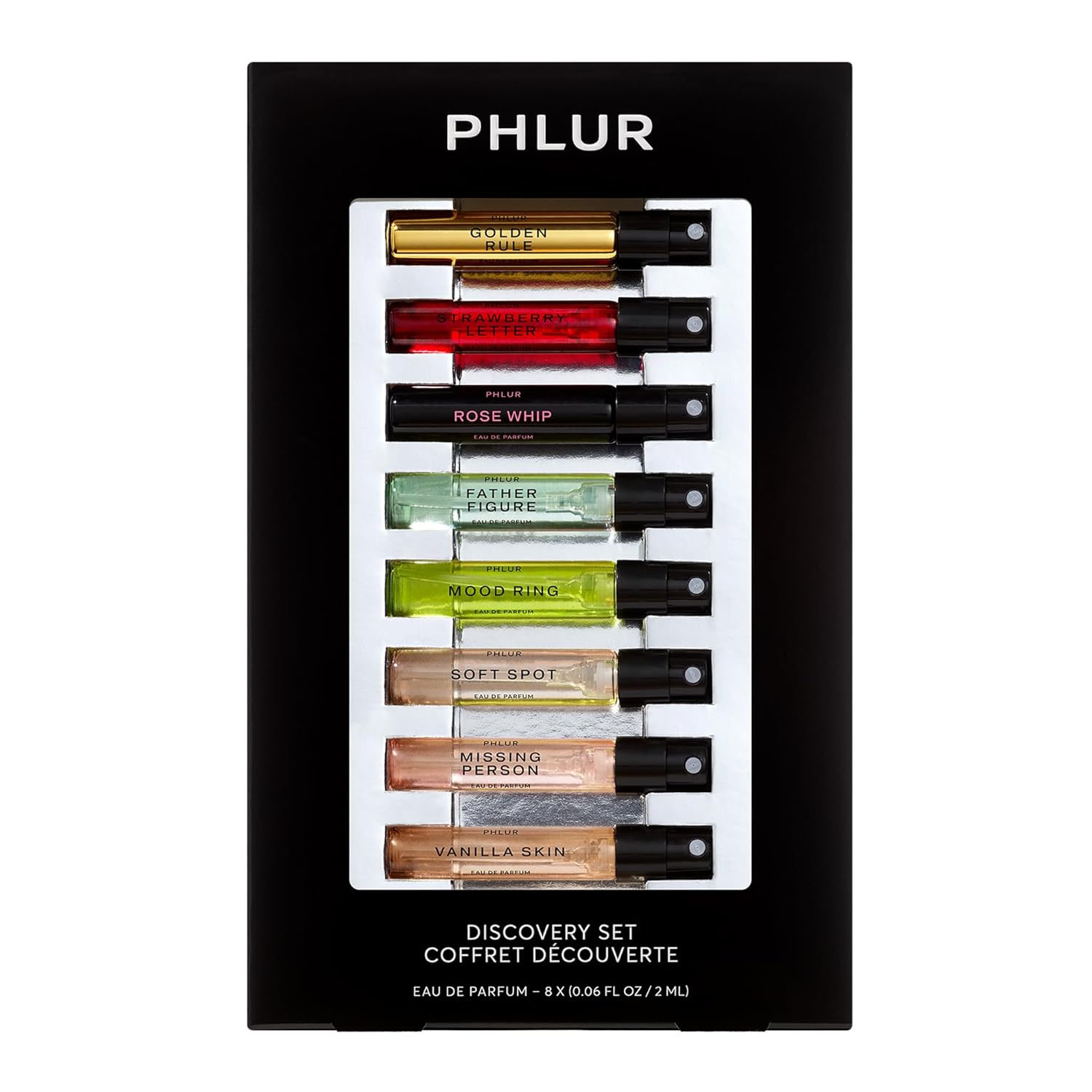
The Brand: Of all the brands on this list, Pineward Perfumes is the one that most aggressively refuses to make concessions to wearability for its own sake. Founded in 2020 by Nicholas Nilsson — a young Colorado-born perfumer who grew up in the Rocky Mountain forests and studied kinetics, genomics, and biotechnology before turning to fragrance — Pineward operates from a singular, almost manifesto-like premise: “Proceed only if you would like to smell like a pine tree.” Its website doesn’t list accords, designer inspirations, or occasion suggestions beyond that. It offers you fir, spruce, pine, sap, roots, soil, earth, moss, smoke. It asks whether you want to smell like a literal forest and not a “forest accord” — and if the answer is yes, it delivers with a ferocity and botanical honesty that is unmatched anywhere in American niche perfumery.
Pineward releases 50+ fragrances, many seasonally, all built on the same core philosophy: concentrated botanical absolutes and pure ingredients used in high proportions, creating what the fragrance community consistently describes as “visceral, a little raw, experimental, and more atmospheric” than anything comparable in the market. Standouts include Waxen — a pale, haunting accord of beeswax, white florals, and cool conifer — and Boreal, which is as close to a perfect olfactory document of a boreal forest at night as any fragrance in any price category has ever achieved. The most responsible way to discover Pineward is through their discovery sample set: each of the brand’s current-season releases in small spray vials, allowing you to build a personal map of which raw forest character speaks most directly to your specific olfactory nature. Every serious fragrance collection in 2026 should include at least one Pineward bottle.
- Material Honesty: Uses high concentrations of actual conifer and botanical absolutes rather than synthetic “forest accords” — the result is an olfactory experience that genuinely places you inside a specific forest environment
- Range: 50+ fragrances across seasonal collections means there is almost certainly a Pineward that precisely fits your specific forest preference — dark and damp, bright and alpine, smoky and resinous, cool and misty
- Indie Integrity: A true one-person operation; every fragrance reflects the singular vision of a perfumer who grew up in these forests and knows exactly what he is trying to capture
- Value: Sample sets starting at approachable prices; full bottles are significantly cheaper than equivalent-quality European niche houses for comparable botanical concentration
- Community: One of the most actively enthusiastic and knowledgeable fragrance communities in American niche — discovering Pineward is discovering a whole subculture
- Wearability: The most challenging of all five brands on this list for conventional everyday wear — these fragrances are most at home outdoors, in private, or on very casual occasions; not office or event fragrances
- Longevity: Some reviewers note moderate-to-short longevity on skin for the more natural, essential-oil-forward formulations — performance improves significantly on fabric
- Availability: Full bottles primarily available direct from pinewardperfume.com — the Amazon sample set is the easiest accessible entry point
- Niche Specificity: Pineward’s entire palette is conifer and forest — this is not a brand for someone looking for floral, citrus, or gourmand experiences
Best for: Fragrance enthusiasts who love the natural world, raw botanical materials, and the specific olfactory language of evergreen forests. The discovery sample set is essential; at least one full bottle will follow.
4. Commodity — Book Expressive EDP
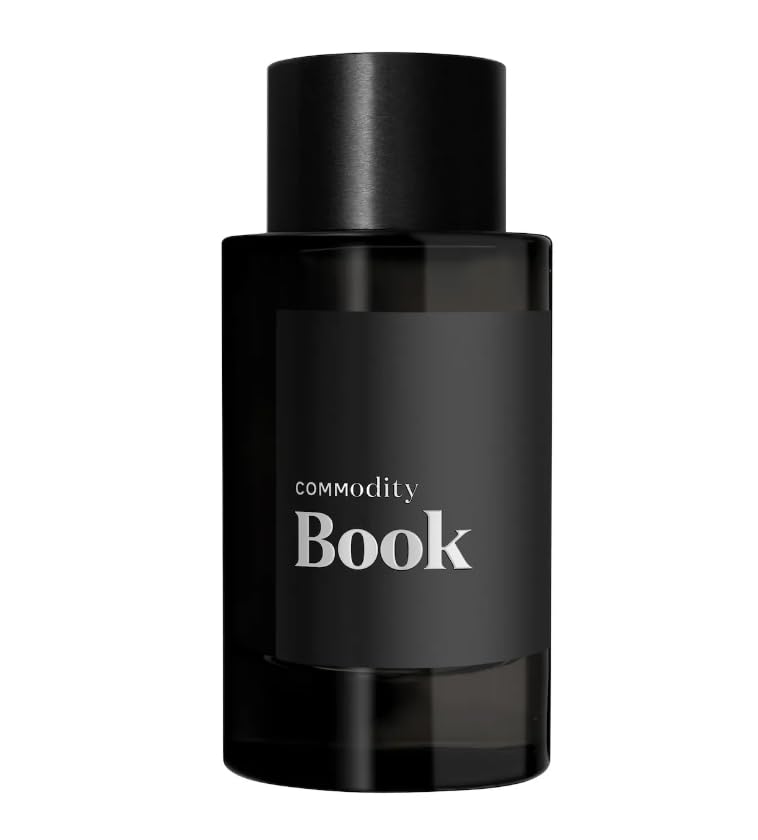
The Brand: Commodity occupies a unique position among the brands on this list: it is the most accessible, the most broadly wearable, and the most commercially sophisticated — and yet its commitment to raw, concept-driven fragrance creation is entirely genuine. Founded in 2013 via Kickstarter, reacquired and relaunched in 2021, Commodity describes itself as “the modern, American perfumery that’s rethinking fragrance.” Its naming philosophy is its most distinctive feature: every fragrance is named after a raw material or everyday object — Book, Milk, Gold, Moss, Wool, Paper — and asks a simple but powerful creative question: what does this thing actually smell like, approached without compromise? The brand’s “Scent Space” concept, where each fragrance is available in three projection intensities (Personal, Expressive, Bold), is a genuinely innovative structural idea that gives the wearer unusual agency over their olfactory presence.
Book is Commodity’s most celebrated fragrance and its clearest statement of the brand’s raw material philosophy. It was conceived as a direct olfactory translation of what a book actually smells like — “turning the pages and breathing in the smell of dry paper mingling in with the open fresh air” — and it achieves this by leading with Virginia cedarwood, eucalyptus, and bergamot: the clean, woody, slightly green and herbaceous accord that does, almost uncannily, evoke the smell of dry paper and woody shelves. The heart develops through cypress and amyris — adding a slightly Mediterranean dryness — before landing on a base of creamy sandalwood, velvet musk, and amber. It is understated, intelligent, and quietly beautiful: the raw material approach applied not to challenging territory but to the nostalgic, specific warmth of a place most people love — a good library on a quiet afternoon. Leaping Bunny certified, genderless, and produced with a Leaping Bunny cruelty-free commitment throughout.
- Top Notes: Virginia cedar, eucalyptus, palisander rosewood, bergamot — a clean, crisp, slightly herbal-woody opening that delivers the “dry paper and open air” concept with genuine fidelity
- Heart Notes: Cypress, amyris, amber — dry, slightly resinous, naturally woody warmth; no sweetness or floral softening; the raw material commitment is maintained through the heart
- Base Notes: Sandalwood, musk, velvet — a creamy, skin-warm base that is among the most satisfying and long-lasting dry-downs in accessible niche fragrance
- Accessibility: The most broadly wearable raw fragrance on this list — suitable for professional environments, daily wear, gifting, and any occasion that calls for clean, woody, intelligent refinement
- Ethics: Leaping Bunny certified cruelty-free; genderless; Commodity’s green chemistry standards apply across the line
- Longevity: Some reviewers note lighter-than-expected performance even in the Expressive level; for all-day wear, the Bold version or layering over a moisturiser is recommended
- Polarising Note: A small percentage of wearers detect a dill-like facet from the sandalwood on their specific skin chemistry — sample strongly recommended before a full-bottle purchase
- Restraint: Book is deliberately understated and intellectual rather than bold or projecting — those seeking a room-filling statement fragrance should look at the Bold version or the Expressive Bold tier
- Price Range: Accessible niche pricing (~$100–$130 for 100ml EDP) — very fair for the quality and concept
Best for: Anyone who wants a raw, concept-driven American niche fragrance that is actually wearable anywhere and everywhere. The ideal entry point into the Commodity universe and a strong candidate for a long-term daily signature scent.
5. Rogue Perfumery — Mousse Illuminée EDP
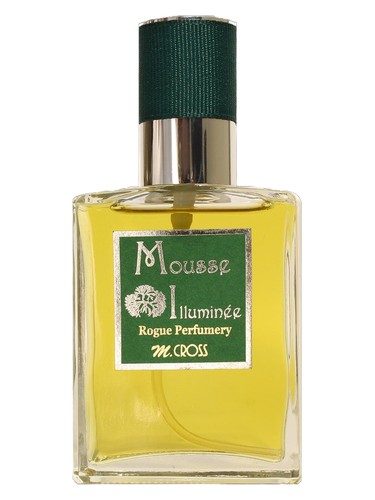
The Brand: California-based perfumer Manuel Cross founded Rogue Perfumery in 2016 with an agenda that could not be clearer from the name alone: everything this house does is a deliberate refusal of the commercially safe. Rogue makes fragrances for “the individual seeking presence over trends.” It produces each creation in small batches; when a batch is gone, it is gone — no reformulations, no re-bottles, no commercial compromise to extend the run. Cross works primarily with bold naturals, vintage-style materials, and ingredients that the mainstream industry has largely abandoned due to regulatory pressure or sheer commercial inconvenience: real oakmoss, dense treemoss, vintage musks, labdanum, and earthy chypre-adjacent structures that reference a much older tradition of perfumery. In 2026, Rogue launched its new Reserve Collection with Mousse Illuminée as its flagship release — an all-natural interpretation of the brand’s core oakmoss-and-treemoss philosophy, built with champaca, rose, frankincense, patchouli, and Siberian musk.
Mousse Illuminée is the purest expression of Manuel Cross’s commitment to raw, mossy, vintage-style naturals in 2026. Built on a foundation of dense treemoss and champaca — the magnolia-family flower that carries an intensely rich, tea-like, slightly fruity warmth — it layers frankincense, rose, patchouli, and Siberian musk to create a composition of extraordinary depth and presence. The “raw” quality here is not green or botanical in the Pineward sense — it is earthy, dark, and almost ancestral: the smell of very old forests, very old perfumery, and the materials that modern commercial fragrance has been quietly retiring for two decades. It is challenging in the best possible sense: deeply rewarding for those willing to spend time with it, and completely unlike anything in the mainstream fragrance market at any price point. The Reserve Collection’s limited-production model means that acquiring Mousse Illuminée before the batch is gone is not a cliché of niche marketing — it is a genuine practical consideration.
- Top Notes: Champaca, frankincense — a rich, warm, almost devotional opening that signals immediately this is a fragrance for serious olfactory enthusiasts rather than casual wearers
- Heart Notes: Dense treemoss, rose, patchouli — the beating, raw earth heart of the fragrance; the treemoss accord is among the most botanically honest moss treatments in any contemporary fragrance
- Base Notes: Labdanum, Siberian musk — deep, animalic-adjacent, long-lasting; the kind of base that wears for 10+ hours and leaves a trail in a room
- All Natural: Built entirely from natural materials — no aromachemicals, no synthetic shortcuts; the raw material commitment here is absolute and total
- Limited Production: Small-batch integrity means every bottle reflects the perfumer’s full attention; no batch has ever been reformulated for cost reduction
- Challenge Level: The highest-challenge fragrance on this list — the earthy, mossy, frankincense-dominated profile is deeply rewarding but requires genuine openness to very unconventional raw materials
- Availability: Limited production means stock can disappear; the Amazon listing reflects third-party and existing stock — direct purchase from rogueperfumery.com is the most reliable option for new releases
- Price Range: Premium niche pricing (~$175–$250 for 50ml) — reflects both the quality of natural materials and the small-batch production model
- Best Occasion: Evening wear, special occasions, private wear — the raw intensity of Mousse Illuminée is not a fragrance for timid or conventional settings
Best for: Fragrance connoisseurs, chypre and oakmoss lovers, natural fragrance devotees, and anyone who wants to experience what perfumery smelled like before commercial compromise removed its most interesting materials. A defining bottle of American raw niche perfumery in 2026.
How to Navigate American Raw Niche Perfumery: A Buyer’s Guide
The raw, unconventional nature of the fragrances on this list means they carry the highest blind-buy risk in all of perfumery. Here is a practical framework for discovering these brands intelligently.
- ✅ Always sample first: Every brand on this list offers discovery sets, sample vials, or travel sizes. There is no excuse for blind-buying a $200+ niche fragrance — it is simply unnecessary given the options available
- ✅ Test on skin, not paper: Raw botanical fragrances interact with skin chemistry in ways that paper strips simply cannot reveal. Wear the sample for a full day before making a judgement
- ✅ Give it time: Raw fragrances often have challenging or unusual openings that settle into extraordinary dry-downs. Don’t judge a Rogue or a Pineward in the first 20 minutes
- ✅ Consider occasion before purchase: Not every raw niche fragrance is appropriate for every setting. Pineward is for outdoors and private wear; Commodity Book is for everywhere; Rogue is for evenings and special occasions
- ✅ Buy discovery sets for brands, not just bottles: For Pineward especially, the range is so broad and seasonally variable that a sample set is a much better first purchase than any single bottle
- ❌ Don’t dismiss on first spray: The best raw fragrances often require a second or third sampling before their full complexity reveals itself — return to a sample that confused or challenged you before writing it off
- ❌ Don’t compare to designer benchmarks: These fragrances are not trying to be Dior Sauvage or Bleu de Chanel. Evaluating them against designer fragrance standards is a category error that will misrepresent what makes them remarkable
| Brand | Best For | Challenge Level | Discovery Set Available? | Price Range (Full Bottle) |
|---|---|---|---|---|
| D.S. & Durga | Music lovers, literary types, fig/green scent fans | Medium — distinctive but wearable | Yes — 6 x 10ml Deluxe Box Set | $$$$ ($$225–300/100ml) |
| Imaginary Authors | Book lovers, outdoor types, Pacific Northwest devotees | Medium-High — raw conifer opening not for everyone | Yes — discovery sets available on brand site | $$$ ($160–185/50ml) |
| Pineward Perfumes | Forest devotees, natural fragrance purists, home and private wear | High — uncompromising botanical rawness | Yes — Full Sample Set (strongly recommended) | $$ ($65–95/30ml) |
| Commodity | Daily wear, gifting, professional settings, fragrance newcomers to niche | Low — the most accessible raw niche on this list | Yes — Scent Space Explorer discovery set | $$$ ($100–130/100ml) |
| Rogue Perfumery | Chypre/moss lovers, natural fragrance connoisseurs, evening and special occasion wear | Very High — challenging, bold, vintage-referenced | Yes — samples available on rogueperfumery.com | $$$$ ($175–250/50ml) |
Frequently Asked Questions
Q: What makes a fragrance “raw” in the niche perfumery sense?
In 2026 niche fragrance language, “raw” describes a fragrance that commits fully to the unmediated character of its core materials without softening, bridging, or crowd-pleasing compromises. A raw pine fragrance smells like actual pine resin, not a “forest accord.” A raw fig fragrance smells like the plant itself — green stems, sap, and all — not a sweet fig confection. The key quality is material honesty: the willingness to let ingredients be exactly what they are rather than what the broadest possible audience might find most comfortable.
Q: Are raw niche fragrances harder to wear in professional settings?
Some are, some are not. Commodity’s Book is completely appropriate for any professional environment — it is understated, intelligent, and easy to wear. D.S. & Durga’s Debaser is wearable in most settings once the raw fig opening settles. Pineward and Rogue, by contrast, are better suited to private wear, outdoor occasions, or social settings where a bold, unconventional scent is a conversation rather than a statement. The practical rule: if the fragrance is strongly raw in its opening (Pineward, Rogue), apply conservatively and give it 15 minutes before you encounter other people.
Q: How is American niche perfumery different from French or European niche?
European niche, even at its most adventurous, tends to operate within an inherited vocabulary of structure and tradition. The chypre accord, the oriental family, the aldehyde florals — even brands like Serge Lutens or Comme des Garçons are in dialogue with a French fine fragrance tradition. American niche brands, particularly the ones on this list, feel no obligation to that tradition. They are more likely to be inspired by a Pixies song, a Pacific Northwest forest, or the smell of a paperback book than by any classical perfumery structure. The result is a different creative register: more personal, more emotionally specific, more willing to be genuinely strange.
Q: Is the niche fragrance market actually growing, or is it a bubble?
The data is unambiguous on this. The niche perfume market is growing at 9.1% CAGR — far outpacing mass-market fragrance growth of 2.69% CAGR — and is projected to reach $4.85 billion in 2026 and $7.6 billion by 2032. With 58% of high-income buyers now preferring niche over designer brands, and social media creating an entirely new generation of fragrance-educated consumers who research note structures before purchasing, the structural drivers of niche growth are durable, not cyclical. The more interesting question for 2026 is not whether niche will grow, but which niche brands will maintain genuine creative integrity as commercial success scales their operations.
Q: What is the single best entry-point bottle for someone new to American raw niche?
Commodity Book Expressive is the strongest recommendation for a first purchase: it is the most accessible, most broadly wearable, and most immediately comprehensible of the raw fragrances on this list, while still being genuinely concept-driven and distinct from anything in the mass market. For someone ready for a more demanding introduction, D.S. & Durga Debaser is the second recommendation — its Fragrantica community support is enormous, its storytelling is extraordinary, and it is available in smaller sizes that make the initial investment manageable. Both are available on Amazon with the affiliate links above.
The Bottom Line: Smell Something You Have Never Smelled Before
There is a specific pleasure available only in niche fragrance, and it is not available at any designer counter at any price. It is the pleasure of encountering a scent that was not made for you in the generic sense, but was made — possibly by a single person, in a small Colorado workshop or a Brooklyn studio or a Portland laboratory — for someone exactly like you. A person who wants to smell like a specific forest, or a specific emotional memory, or a specific song heard through a radio speaker in August heat.
The five brands on this list are the clearest, most confident articulations of that pleasure in American perfumery right now. They are raw in the truest sense: made with materials that were not chosen because they were safe, compositions that were not tested on focus groups, stories that could not have been told any other way. In 2026, when the fragrance industry is simultaneously growing more sophisticated and more saturated with pleasant nothingness, that is a precious and necessary thing.
Smell something you have never smelled before. Start here.
Related Posts from PerfumeLead
- What Is “Upcycled Perfume”? How Flower Waste Is Becoming Luxury Scent — Several American niche brands featured here, including D.S. & Durga, are exploring upcycled and ethically sourced ingredients as part of their raw material philosophy.
- The Rise of Biotech Sandalwood: Why Ethical Fragrance Is the Future — The raw material movement in American niche and the biotech revolution in fine fragrance ingredients share the same underlying values: honesty, transparency, and refusal to compromise on ingredient quality.
- How to Choose a Confidence Scent: The Science of Citrus and Woods — Many of the raw woody and botanical notes in American niche perfumery overlap with the confidence-building citrus-woody formula. Discover the neuroscience behind wearing woody notes with authority.
- The “Dopamine Dressing” of Fragrance: Bright Notes to Lift Your Spirits — American niche houses like D.S. & Durga and Imaginary Authors are increasingly exploring the intersection of raw botanical notes and mood-lifting fragrance design.
- A Beginner’s Guide to Perfume Types — New to niche fragrance? Understand the fundamentals of concentration, note structures, and fragrance families before diving into the raw niche territory explored in this guide.
Disclaimer: This post contains Amazon affiliate links. If you purchase through these links, we may earn a small commission at no additional cost to you. All editorial recommendations and opinions are our own, based on fragrance research and community expertise. Niche fragrance availability can change rapidly — always verify current stock and formulation with the brand or retailer before purchasing.


