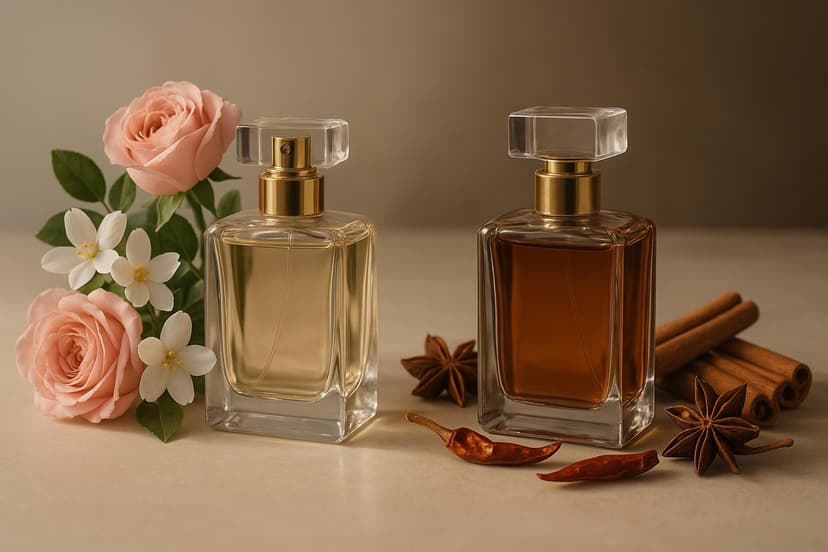

The Rise of Biotech Sandalwood: Why Ethical Fragrance is the Future
- Sandalwood is in crisis: Over 90% of wild Indian sandalwood has disappeared since the 1950s due to decades of intensive harvesting — making it one of perfumery’s most endangered raw materials.
- Biotech is the solution: Through precision fermentation and plant cell biotechnology, companies like dsm-Firmenich can now produce nature-identical santalol — the key compound responsible for sandalwood’s signature creamy, warm scent — without felling a single tree.
- Quality is not compromised: Modern biotech techniques produce santalol at 98% purity — matching or exceeding the consistency of conventionally harvested sandalwood oil, which varies significantly by region, season, and harvest year.
- Dreamwood® changed everything: dsm-Firmenich’s Dreamwood® — 100% natural, 100% renewable carbon, and ultimately biodegradable — is now used by perfumers worldwide as the new standard for sustainable, luxury sandalwood notes.
- Ethical fragrance is no longer niche: From Le Labo’s use of Australian ethically farmed sandalwood to Diptyque’s Goa-sourced Tam Dao, leading houses are making sourcing stories central to their brand identity — and consumers in 2026 are demanding nothing less.
In the forests of Karnataka, in the southern Indian state once known as Mysore, something quietly catastrophic has been unfolding for the better part of a century. The sandalwood trees — Santalum album — that once perfumed temples, funeral pyres, and the hands of rulers from the Mughal empire to the British Raj, have been disappearing. Taken not just by legitimate commerce but by decades of intensive exploitation, illegal poaching, and the relentless pressure of an industry that has, for centuries, treated sandalwood as an infinite resource.
It was not infinite. IRFE’s detailed analysis of sandalwood in perfumery confirms what specialists have known for years: over 90% of wild Indian sandalwood stocks have been lost since the 1950s. The trees that remain are government-protected, their harvesting nationalised, their poaching a criminal offence. And yet, demand for the ingredient — one of the most beloved base notes in the entire history of perfumery — has never been higher.
This crisis is the origin story of one of the most exciting and consequential developments in modern fragrance: biotech sandalwood. Through the genius of white biotechnology — precision fermentation, plant cell science, and advanced enzymatic processes — the fragrance industry has discovered that it can produce the key aromatic molecules of sandalwood from renewable sugar feedstocks, without cutting down a tree, without touching a forest, and without the seasonal variability and quality inconsistency that has plagued conventional sandalwood sourcing for generations.
The result is not a compromise. It is, as leading perfumers are increasingly discovering, an upgrade — in consistency, in sustainability, and often in the creative possibilities it opens. Welcome to the age of ethical fragrance, where the best version of a classic ingredient might just be the one that never touched the earth it was named for.
Why Sandalwood Is Perfumery’s Most Important — and Most Vulnerable — Ingredient
To understand why biotech sandalwood matters so profoundly, you first need to understand what makes the ingredient so irreplaceable — and what makes its scarcity so alarming.
Sandalwood occupies a unique position in the fragrance pyramid. Unlike citrus top notes that evaporate within an hour, or floral heart notes that fade by midday, sandalwood is a base note — one of the most important fixatives in perfumery. It anchors a fragrance on the skin, extends the longevity of every other note it is blended with, and adds a dimension of creamy, warm, almost lactonic depth that is simultaneously calming to the nervous system and deeply sensual in its character.
Its primary aromatic compounds, alpha-santalol and beta-santalol, are responsible for this distinctive profile. Modern biotechnology techniques now produce nature-identical santalol at 98% purity, which lowers the pressure on vulnerable sandalwood stocks and preserves traditional ingredients. But to get there, the industry first had to fully understand what it was trying to replicate — and that understanding took decades of research.
Sandalwood also carries profound cultural and spiritual weight. It has been used in Hindu, Buddhist, and Islamic ceremonial contexts for over four thousand years. Its oil is prescribed in Ayurvedic medicine. Its wood has been carved into temple panels, religious statuary, and royal objects across the Asian subcontinent. It is, in many senses, the most historically significant aromatic material ever used by human civilisation.
The combination of its irreplaceable olfactory profile, its deep cultural significance, and its precarious conservation status makes sandalwood the perfect case study for why ethical sourcing and biotech innovation are not optional for the fragrance industry’s future — they are existential necessities.
- 30+ years — the time a Mysore sandalwood tree must grow before it yields harvestable aromatic heartwood. Most demand-driven harvests happen far too early, yielding inferior oil and permanently depleting the forest stock.
- 90%+ — the proportion of wild Indian sandalwood lost since the 1950s through harvesting, poaching, and habitat destruction.
- 1792 — the year sandalwood was first given royal protection in Mysore, India, reflecting how long its scarcity has been recognised by governing authorities.
- Government nationalisation — India nationalised all sandalwood plantations to prevent individual exploitation, yet illegal poaching has continued to threaten remaining stocks.
- Australian and New Caledonian alternatives — Santalum spicatum (Australian sandalwood) and Santalum austrocaledonicum (New Caledonian sandalwood) now serve as more sustainably managed substitutes, though their olfactory profiles differ meaningfully from Mysore Santalum album.
- EU Vigilance Law 2024 — new global rules, such as the EU Vigilance Law of 2024, push perfume makers to check their suppliers for ethical practices, adding regulatory pressure to the moral imperative for ethical sandalwood sourcing.
What Is Biotech Sandalwood? The Science Explained
Biotech sandalwood is the production of sandalwood’s key aromatic molecules — primarily alpha-santalol and beta-santalol — through biological processes rather than the harvesting and distillation of sandalwood trees. In practical terms, this means using microorganisms (engineered yeast and bacteria), plant cell cultures, or enzymatic reactions to synthesise the precise chemical compounds responsible for sandalwood’s scent, using sustainable renewable feedstocks like sugarcane or agricultural waste as the starting material.
As MAIR Fragrance’s biotech research documents: notes like rose, jasmine, sandalwood, and vanilla can now be created reliably through bio-fermentation, which reduces pressure on natural ecosystems while offering consistency and better availability for perfumers.
The key production pathways used in biotech sandalwood today are:
1. Precision Fermentation (White Biotechnology)
This is the most commercially advanced and widely adopted biotech pathway for sandalwood molecules. Microbes are reprogrammed to act as “living factories,” converting sustainable feedstocks (like agricultural waste) into fragrance molecules. Santalol — sandalwood’s key compound — is now produced by engineered yeast, preserving wild sandalwood forests.
The process mirrors how the living sandalwood tree produces its own aromatic compounds: identifying the enzyme pathways responsible for santalol biosynthesis, encoding those pathways into a host microorganism (typically Saccharomyces cerevisiae — baker’s yeast), and cultivating those organisms in bioreactors fed with renewable sugar. As Nez Magazine’s detailed account of Dreamwood’s development explains, the process at Firmenich began with identifying beta-santalol as the key olfactory compound, then conducting biochemical analysis to understand precisely which enzymes catalyse its natural production in the tree — before engineering the same pathway in the laboratory.
2. Plant Cell Biotechnology
Rather than using microorganisms as factories, this approach cultures the actual plant cells of Santalum album in controlled laboratory bioreactors — growing the woody tissue that produces sandalwood oil without needing to grow a full tree. Plant cell biotechnology focuses on growing plant cells in controlled laboratory bioreactors, which plays a crucial role in protecting biodiversity, as ingredients sourced from endangered plants can now be synthesized without disrupting wild populations. As Bell Flavors & Fragrances Marketing Director David Banks summarises with characteristic directness: “I don’t have to cut down another tree — to me, that’s a win.”
3. Enzymatic Biotransformation
Enzymes transform raw materials into specific aroma molecules with precision, reducing energy use. Rather than full fermentation, this approach uses isolated enzymes as precision biological catalysts — converting a simpler, more abundant terpene precursor into santalol through a controlled enzymatic reaction. It is faster and more energy-efficient than full fermentation, and particularly suited to producing specific santalol isomers at high purity.
| Method | How It Works | Feedstock | Key Advantage | Commercial Example |
|---|---|---|---|---|
| Precision Fermentation | Engineered yeast converts sugars into santalol via biosynthetic pathway | Renewable sugarcane; agricultural waste | Scalable, consistent, 100% renewable carbon source | Dreamwood® (dsm-Firmenich) |
| Plant Cell Biotechnology | Sandalwood cells grown in bioreactors without growing a full tree | Cell culture media; no tree harvesting | Produces a full molecular profile — not just key compounds | Debut’s cell culture platform |
| Enzymatic Biotransformation | Isolated enzymes catalyse conversion of precursor terpenes to santalol | Turpentine by-products; terpene waste streams | High precision, low energy, targeted isomer production | Various ingredient houses |
Dreamwood® — The Ingredient That Proved Biotech Could Be Luxury
No single ingredient better illustrates the potential — and the achievement — of biotech sandalwood than Dreamwood®, launched by Firmenich (now dsm-Firmenich) in 2020 after over fifteen years of fundamental research.
The development began with a clear scientific goal: understand precisely how Santalum album produces beta-santalol in its heartwood, and then replicate that biochemical pathway using white biotechnology. As Andreas Taglieber, Director of Biochemistry at Firmenich, explained in the landmark Nez Magazine feature: the team first conducted a full chromatographic olfactory assessment of sandalwood essential oil to identify beta-santalol as the key olfactory contributor, then mapped the complete enzyme pathway responsible for its natural biosynthesis in the tree, then encoded those enzymes into a fermentation host to produce the compound from renewable sugar.
The result was extraordinary. Dreamwood® is the successful result of Firmenich’s deep understanding of natural product pathways, advances in computing power, and expertise in purification — designed to open up new creative applications and allow natural formulation with a high sustainability profile.
Critically, Dreamwood® is not merely a synthetic substitute — it carries official natural status. It is 100% natural (because it is produced by biological organisms from natural feedstocks), uses 100% renewable carbon (sugarcane-derived), and is ultimately biodegradable. By being sustainable and affordable, Dreamwood is reviving natural sandalwood notes for modern perfumery creations. Dreamwood reveals its full naturalness and deep creaminess especially in heart and base notes. It was also the first fragrance ingredient ever to carry documented cosmetic benefits — its antimicrobial and skin-soothing properties have been confirmed through rigorous laboratory testing.
Dreamwood® completed dsm-Firmenich’s biotech ingredient portfolio: Dreamwood is Firmenich’s latest white biotech innovation, after leading the industry with the successful launches of Clearwood® in 2014, Ambrox® Super in 2016 and Z11 in 2018. Each of these ingredients — Clearwood® for patchouli, Ambrox® Super for ambergris, Z11 for a unique woody-amber note, and now Dreamwood® for sandalwood — represents a chapter in the most ambitious sustainability transformation programme in fragrance ingredient history.
| dsm-Firmenich Biotech Ingredient | Year Launched | Replaces / Inspired By | Character | Sustainability Credential |
|---|---|---|---|---|
| Clearwood® | 2014 | Patchouli | Creamy amber warmth, dark woody character | Responsibly sourced sugarcane; reduces patchouli farming pressure |
| Ambrox® Super | 2016 | Ambergris (whale) | Extremely powerful ambery odour with musky and woody tonalities | Eliminates all association with whale-derived ambergris |
| Z11 | 2018 | Woody-amber accord | Novel woody-amber, uniquely biotech-derived | 100% renewable carbon, biodegradable |
| Dreamwood® | 2020 | Mysore sandalwood (Santalum album) | Creamy, warm, woody, comfortable — “the scent that dreams are made of” | 100% natural, 100% renewable carbon, biodegradable, skin-beneficial |
Biotech Sandalwood vs Conventional Sandalwood: How Do They Compare?
The most common question fragrance enthusiasts ask about biotech sandalwood is the obvious one: does it actually smell as good? The answer, based on both scientific analysis and the lived experience of master perfumers, is a resounding yes — with important nuances.
| Attribute | Conventional Mysore Sandalwood | Australian/NZ Sandalwood | Biotech Sandalwood (Dreamwood®) |
|---|---|---|---|
| Olfactory Profile | Richest, creamiest, most complex — the benchmark; soft, milky, slightly smoky warmth | Woodier, slightly drier, less lactonic; excellent but different character from Mysore | Nature-identical to Mysore; “full naturalness and deep creaminess especially in heart and base notes” |
| Consistency | Highly variable — depends on tree age, harvest region, extraction year, and storage | More consistent than Mysore; still subject to seasonal and regional variation | Exceptionally consistent — batch-to-batch variation virtually eliminated through controlled fermentation |
| Availability | Severely restricted; government-controlled; significant black market activity | Growing supply but still subject to farming and climatic constraints | Scalable, year-round, not subject to weather, harvest seasons, or geopolitical restrictions |
| Price | Extremely expensive; one of the costliest raw materials in perfumery | Moderate-to-high; accessible luxury rather than extreme luxury tier | Affordable; democratises access to high-quality sandalwood notes for all fragrance tiers |
| Environmental Impact | Devastating at scale; responsible for 90%+ depletion of wild Indian stocks | Low if managed sustainably; at risk if poorly regulated | Minimal — biotech rose oil uses 93% less water than traditional extraction; similar efficiencies apply to sandalwood biotech processes |
| Natural Status | 100% natural (IFRA) | 100% natural (IFRA) | 100% natural (IFRA-recognised when produced via fermentation from natural feedstocks) |
One of the most persistent misconceptions in ethical fragrance is that “biotech” and “synthetic” are interchangeable terms. They are not. A synthetic fragrance molecule is produced through chemical reactions, typically from petroleum-based precursors. A biotech fragrance molecule is produced through biological processes — living organisms converting natural feedstocks into aromatic compounds, following the same biochemical pathway the plant uses in nature. When Firmenich’s Dreamwood® produces beta-santalol via fermentation from sugarcane, that beta-santalol is chemically and structurally identical to the beta-santalol in a Mysore sandalwood tree. The IFRA recognises fermentation-derived ingredients as “natural” under its classification framework. Consumers who are committed to natural fragrances should understand that biotech sandalwood is not a synthetic substitute — it is nature’s own chemistry, replicated in a bioreactor.
Beyond Biotech: The Broader Ethical Sourcing Landscape
While biotech represents the most technologically advanced expression of ethical fragrance, it is part of a broader movement reshaping how the industry thinks about ingredient provenance, environmental stewardship, and social responsibility.
Australian Sandalwood Farming
Australia has emerged as the fragrance industry’s most important source of legitimately and sustainably farmed sandalwood. Santalum spicatum (Western Australian sandalwood) and Santalum album grown in certified Australian plantations (notably in Western Australia and the Northern Territory) are now widely used by brands that want natural sandalwood with a fully traceable, ethical supply chain. Le Labo’s iconic Santal 33 uses Australian sandalwood sourced through such programmes — a sourcing decision that reflects the brand’s commitment to ingredient integrity alongside olfactory quality.
The Naturals Together Programme
dsm-Firmenich’s #NaturalsTogether programme works directly with farming communities to establish and maintain sustainable sandalwood plantations that provide secure, long-term livelihoods for growers while replenishing regional sandalwood populations. This model addresses both the ecological and economic dimensions of sandalwood sourcing — recognising that without economic alternatives to illegal harvesting, conservation alone cannot succeed.
The 2024 EU Vigilance Law and Its Impact
The European Union’s 2024 Corporate Sustainability Due Diligence Directive (CSDDD) — sometimes called the EU Vigilance Law — now legally requires fragrance companies operating in EU markets to conduct and document full supply chain due diligence for their ingredients, including auditing for environmental impact and human rights compliance. This has accelerated the shift toward documented ethical sourcing across the entire sector, as brands can no longer rely on informal supply chain assurances when legal liability attaches to sourcing failures.
As “ethical” and “sustainable” fragrance marketing grows, so does the risk of greenwashing — vague claims made without documented sourcing transparency. Here is how to spot the difference between genuine ethical fragrance credentials and marketing language:
- ✅ Genuine: Named sandalwood source species (Santalum album, Santalum spicatum), named farming region, named certification (Australian Sandalwood Network, Rainforest Alliance, Ecocert)
- ✅ Genuine: Named biotech partner and named ingredient (Dreamwood® from dsm-Firmenich; specific fermentation-derived santalol)
- ✅ Genuine: Third-party certification visible on packaging or brand website (COSMOS Natural, ECOCERT, Leaping Bunny, Positive Luxury Butterfly Mark)
- ❌ Greenwashing: “Sustainably sourced sandalwood” with no named source, species, region, or certification
- ❌ Greenwashing: “Natural and ethical” claims without supply chain transparency documentation
- ❌ Greenwashing: Green packaging and botanical imagery without any ingredient-level sustainability data
The Best Ethically Sourced Sandalwood Fragrances to Buy in 2026
The following four fragrances represent the finest expressions of ethically sourced and biotech-enabled sandalwood perfumery available today — each offering a different articulation of the same elemental ingredient, from iconic niche status symbols to approachable luxury sensory experiences.
1. Le Labo Santal 33 Eau de Parfum — The Ethical Sandalwood Benchmark
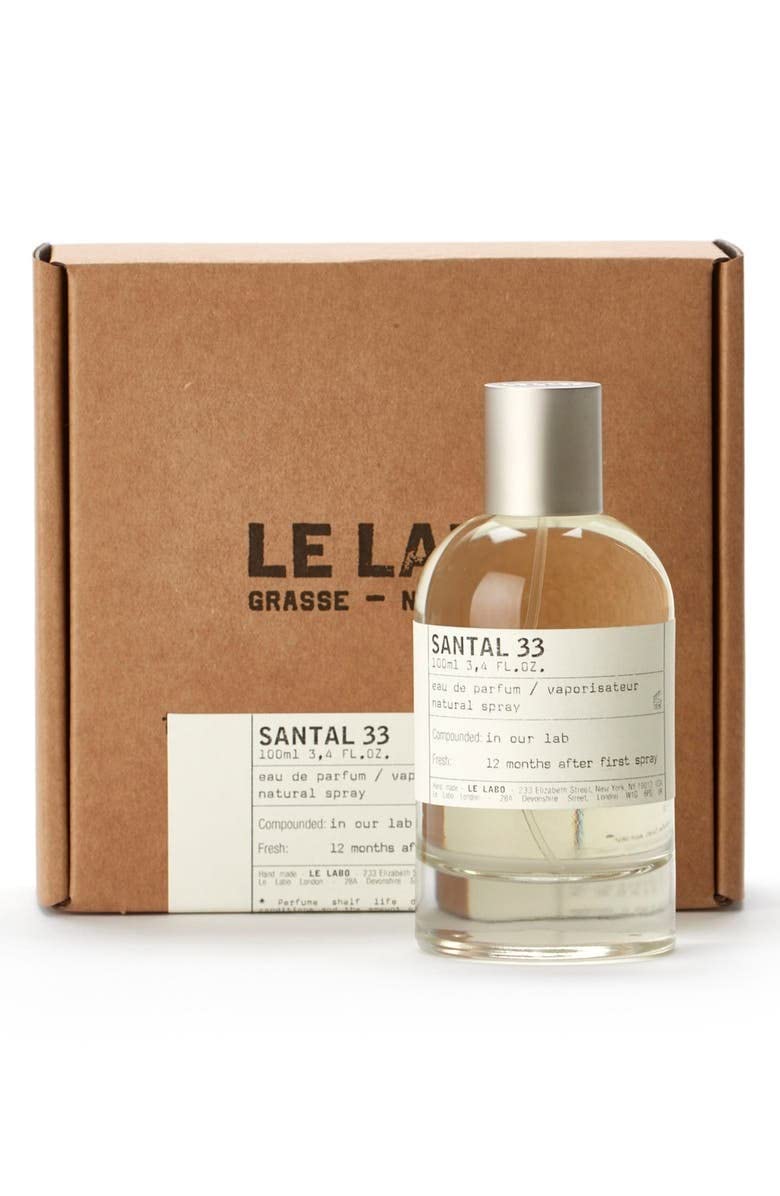
No fragrance has done more to bring ethical sandalwood into mainstream luxury consciousness than Le Labo’s Santal 33. Created in 2011 by perfumers Frank Voelkl and Christine Nagel, it was inspired by a specific cultural image — a man alone in the American West, firelight on his face, the desert wind around him — and translated that image into one of the most distinctive, addictive, and culturally resonant fragrances of the modern era. Its use of Australian Santalum album rather than increasingly scarce Mysore sandalwood was both an ethical and an olfactory choice: Santal 33 has strong wood notes, including Australian sandalwood, papyrus, cardamom and cedarwood, which give it hints of spice, leather and musk, balanced with sweeter notes of violet and ambrox. The result is a smoky, leathery, creamy wood composition that smells simultaneously like the outdoors and like warm, expensive skin — entirely addictive, genuinely unisex, and one of the most recognisable fragrance signatures of the 2010s and 2020s.
- Top Notes: Violet accord, cardamom — a warm, spiced, slightly floral opening that immediately signals the composition’s unisex character and woody depth to come
- Heart Notes: Iris, Ambrox — iris adds powdery softness; Ambrox (dsm-Firmenich’s biotech-derived ambergris molecule) adds a skin-close, musky warmth that anchors the sandalwood beautifully
- Base Notes: Australian cedarwood, leather, Australian sandalwood, white musk — the iconic dry-down: smoky, creamy, leathery, warm — one of the most recognised base note signatures in all of contemporary perfumery
- Ethical Sourcing: Uses Australian ethically farmed sandalwood and dsm-Firmenich’s biotech-derived Ambrox — two pillars of the ethical fragrance movement in a single bottle
- Cultural Status: Arguably the most culturally significant niche fragrance of the last 15 years; wearing it carries genuine cultural cachet
- Longevity: 8–12 hours with robust sillage — one of the longer-lasting sandalwood-based EDPs in the niche category
- Ubiquity: Its cultural success means it is now one of the most widely recognised fragrances in the world — some wearers find it too ubiquitous for a “signature” scent
- Price Range: Significant niche investment (~$220–$320 for 50ml EDP) — one of the more expensive fragrance purchases at the designer-niche tier
- Character: The smoky, leathery quality is distinctive and beloved by many — but equally polarising for those who prefer creamy or sweeter sandalwood interpretations
- Best Season: Autumn and winter primarily; the smokiness can feel heavy in very hot summer conditions
Best for: Collectors and fragrance enthusiasts who want to own the defining ethical sandalwood fragrance of the modern era. A statement of olfactory intelligence as much as a scent.
2. Diptyque Tam Dao EDP — The Purest Expression of Sandalwood in Perfumery
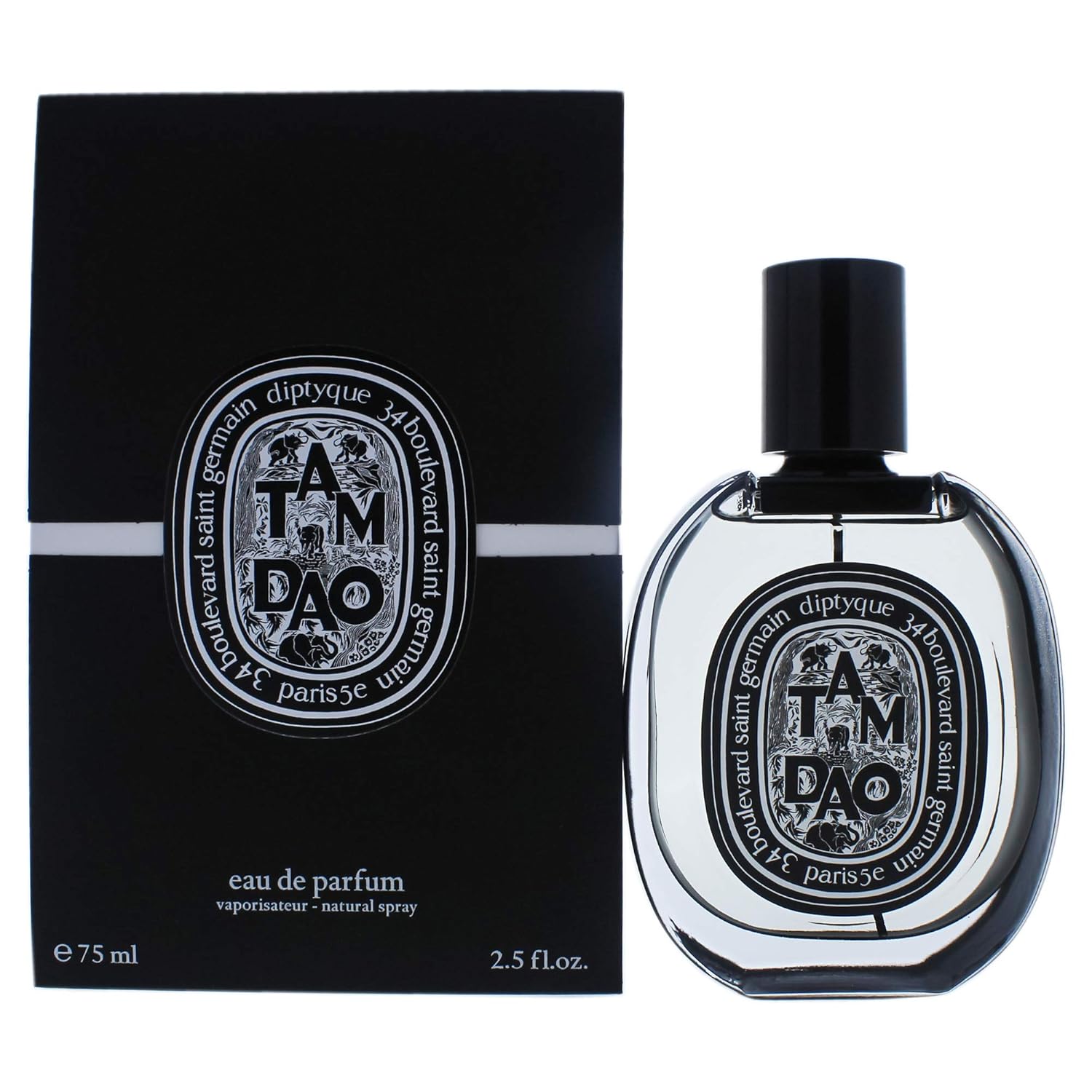
If Santal 33 is sandalwood filtered through the lens of the American West, Diptyque’s Tam Dao is sandalwood experienced in its most sacred, unmediated form. Created by perfumer Daniel Molière for Diptyque’s EDP relaunch in 2013, it was inspired by the dry forests of Indochina — specifically the temples of Vietnam where the perfume of sandalwood, mixed with incense smoke and the brittle dryness of cypress and cedar, creates an atmosphere of quiet, profound reverence. The sandalwood from Goa selected for Tam Dao has an incomparable mellowness, exhaling the wood’s deepest and richest aspects. The composition opens with Italian cypress and myrtle — vivid, aromatic, and slightly camphoraceous — before the sandalwood emerges in the heart as the central, fully dominant note: creamy, warm, slightly milky, and suffused with an almost meditative calm. The base deepens with cedar, rosewood, amber, and musk to create a dry-down of remarkable naturalness and longevity. Fragrance community reviewers consistently describe it as “the most realistic and beautiful sandalwood scent” in mainstream perfumery — a description that speaks to both its artistic achievement and the quality of its botanical sourcing.
- Top Notes: Italian cypress, myrtle, rose — a vivid, aromatic, slightly green opening that contextualises the sandalwood as a forest ingredient rather than an abstract luxury note
- Heart Notes: Sandalwood (Goa), cedar — the full, creamy, warm heart of the composition; widely regarded as one of the most authentic sandalwood expressions in designer-niche perfumery
- Base Notes: Brazilian rosewood, spices, amber, white musk — rounded, warm, and long-lasting; the rosewood adds an exotic softness that complements the sandalwood beautifully
- Naturalistic Quality: Consistently praised by fragrance experts and enthusiasts as smelling “truly natural” — a quality that reflects both the sourcing and the perfumer’s restraint
- Unisex: Genuinely wearable across all genders; the meditative, earthy quality transcends conventional gendered fragrance categories
- Longevity: Even the EDP version can feel fleeting on some skin types — the naturalistic quality that makes it so beautiful also means it wears closer to the skin than synthetic-heavy alternatives
- Opening: The cypress and myrtle top notes can feel dry and austere in the first minutes — give it 10–15 minutes before judging; the sandalwood heart is worth waiting for
- Price Range: Premium niche pricing (~$150–$195 for 75ml EDP) — a significant investment; sample strongly recommended before committing
- Projection: Intimate and skin-close by design — not a room-filling statement scent; its beauty is discovered up close
Best for: Fragrance purists and sandalwood devotees seeking the most naturalistic, meditative, and artistically refined sandalwood expression available. Outstanding for quiet occasions, contemplative wear, and anyone who wants to smell like they actually understand what sandalwood is.
3. Maison Margiela Replica By The Fireplace EDT — The Biotech Woody Experience
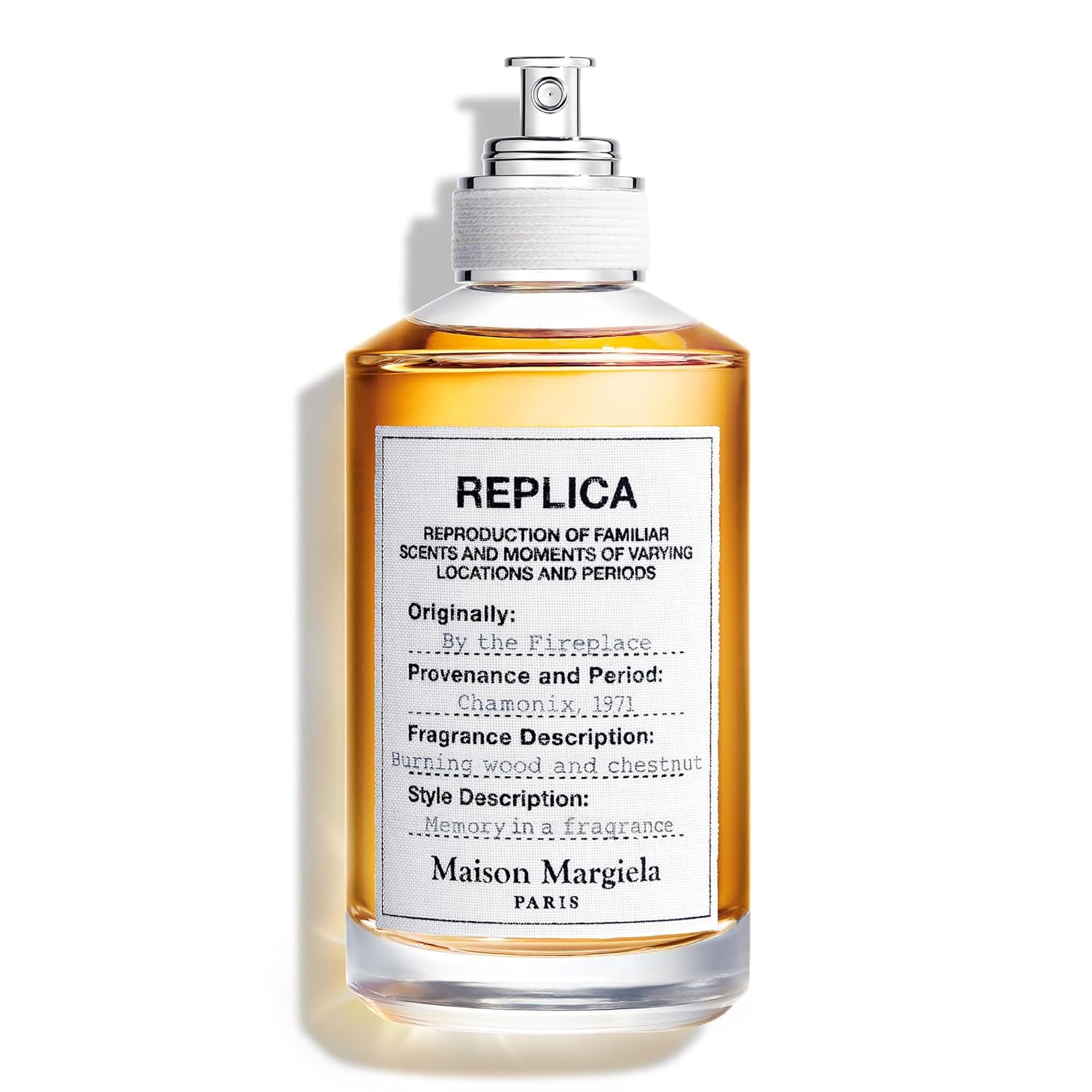
Maison Margiela’s Replica By The Fireplace represents a different but equally compelling dimension of the ethical fragrance movement: the use of advanced synthetic and biotech-derived woody molecules to create an experience of extraordinary warmth, comfort, and complexity — without touching a single threatened botanical species. At its core, By The Fireplace is built around Cashmeran, a biotech-derived woody-musky molecule that provides the fragrance’s signature enveloping warmth, alongside guaiac wood oil (sustainably sourced) and cade oil — smoky, birch-like, and irreplaceable. The genius of the composition is its ability to recreate a deeply wood-adjacent experience — crackling fire, roasted chestnuts, warm smoke — using a palette of ethically produced molecules that impose virtually zero pressure on forest ecosystems. Launched in 2015 and a consistent bestseller since, it remains one of the most compelling demonstrations of what responsible, ingredient-conscious woody fragrance can achieve.
- Top Notes: Pink pepper, orange flower, clove oil — a warm, spiced, slightly smoky opening that immediately evokes the fireplace setting with remarkable sensory precision
- Heart Notes: Chestnut accord, guaiac wood oil, cade oil — the unique creative heart; the chestnut accord is the perfumer’s own creation and is entirely original, while guaiac wood and cade provide the smoky-woody structural core
- Base Notes: Vanilla accord, Peru balsam, Cashmeran — Cashmeran’s biotech-derived woody-musky warmth anchors the entire composition in a deeply comfortable, skin-warm embrace that lasts for hours
- Ethical Ingredient Profile: Built primarily on sustainably sourced and biotech-derived woody molecules rather than threatened forest botanicals — a model for how woody fragrance can evolve ethically
- Accessibility: Mid-range designer pricing (~$80–$120 for 3.4 oz) — makes ethical woody fragrance accessible without requiring a niche-level investment
- Seasonality: By The Fireplace is a deeply autumnal, winter-coded fragrance; its smoky warmth can feel incongruous in warm summer conditions
- Longevity: EDT concentration — lighter by design; 4–6 hours on skin, though the Cashmeran base extends significantly on fabric and clothing
- Sweetness: The chestnut and vanilla notes add a gourmand sweetness that some wearers find slightly confectionery — those preferring purely dry woody profiles may find it slightly rich
- Best Season: Autumn and winter emphatically; this is not a warm-weather fragrance
Best for: Anyone seeking the emotional warmth of woody fragrance with a responsible, predominantly biotech-derived ingredient profile. An outstanding daily autumnal or winter signature that demonstrates ethical fragrance and sensory pleasure are not mutually exclusive.
4. Clean Reserve Sel Santal EDP — Accessible Ethical Sandalwood for Everyday Wear
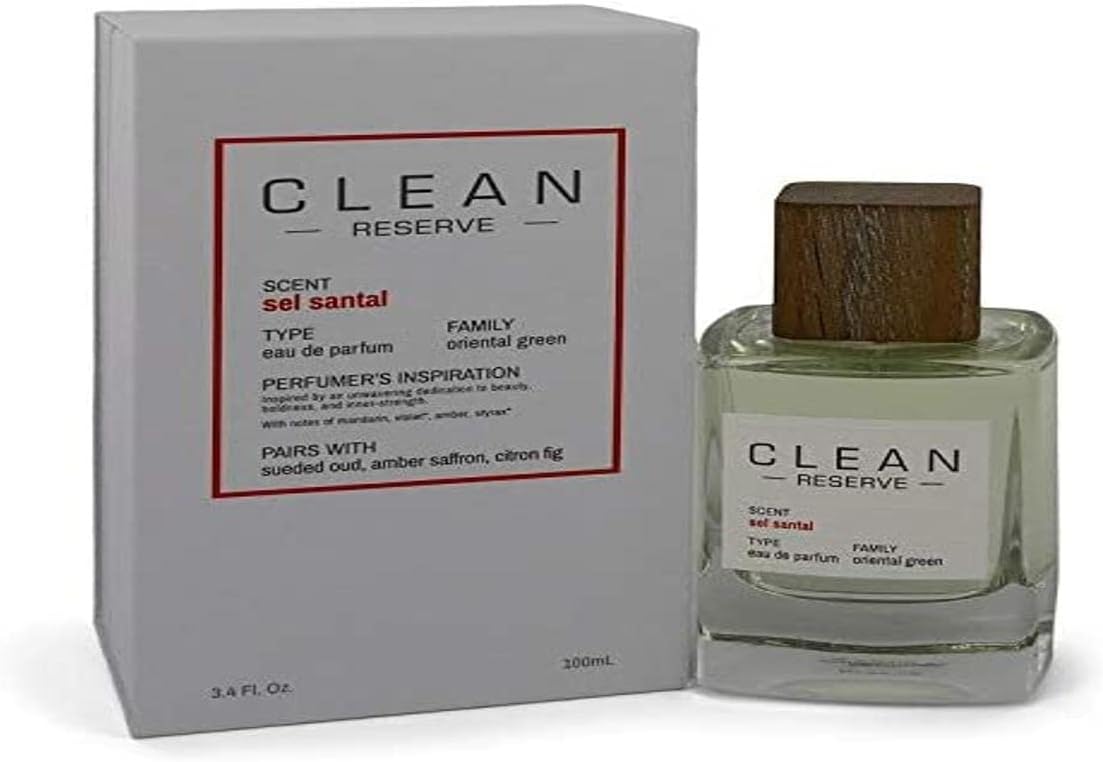
Clean Reserve Sel Santal offers something that is genuinely rare in the ethical sandalwood category: a fully accessible, mid-range-priced, clean beauty fragrance that makes ethical sourcing and sustainable ingredients central to its identity without sacrificing the olfactory quality that makes a fragrance worth wearing daily. Created as part of Clean Beauty Collective’s Clean Reserve line — which commits to 100% natural origin fragrance ingredients and responsible sourcing across the board — Sel Santal opens with a fresh, slightly saline interpretation of violet, sandalwood, and mandarin, then develops into a warm salted fig and sandalwood heart, before drying down to a smooth, clean woody musk base. Its “sel” (salt) dimension is the creative differentiator: the mineral, slightly aquatic quality of sea salt gives this sandalwood composition a freshness and lightness that makes it entirely approachable year-round. It is, in effect, what a well-designed sustainable sandalwood fragrance for everyday life looks and smells like in 2026.
- Top Notes: Mandarin, violet, sea salt — a fresh, airy, slightly marine opening that lifts the sandalwood into unexpectedly modern territory; the salt note is the fragrance’s defining creative gesture
- Heart Notes: Salted fig, sandalwood, nutmeg — a warm, slightly spiced, naturally sweet heart that develops beautifully over the first hour of wear
- Base Notes: Sandalwood, white musk — clean, transparent, enduring; the sandalwood base is sustainably sourced and carries the fragrance’s ethical credential into its most-worn dimension
- Clean Credentials: 100% natural origin ingredients; no parabens, phthalates, or SLS; PETA-recognised cruelty-free brand; responsibly sourced sandalwood supply chain
- Accessibility: Mid-range pricing (~$60–$90 for 1.7 oz EDP) — the most affordable ethically positioned sandalwood EDP in this guide
- Longevity: 4–6 hours on skin — moderate performance; best reapplied at midday for all-day wear
- Sandalwood Intensity: The salt and violet notes keep the sandalwood light and fresh rather than rich and creamy — those wanting opulent, heavy sandalwood should choose Tam Dao or Santal 33 instead
- Complexity: A deliberately approachable, everyday composition — not a complex evolving niche fragrance; the strength is its wearability, not its intricacy
- Best Season: Spring and summer primarily; works year-round given its lightness, but sings in warmer conditions
Best for: Clean beauty advocates, fragrance newcomers to ethical sandalwood, and anyone wanting a responsible, wearable, truly accessible sandalwood fragrance for daily use without niche-level investment.
The Future of Ethical Fragrance: What Comes Next?
The biotech sandalwood story is not the end of ethical fragrance innovation — it is the beginning of a much broader transformation. Several developments already visible in 2026 point toward where the industry is heading.
Reviving Extinct Scents Through Biotechnology
In 2025, Future Society (Arcaea) unveiled a collection of six fragrances, each crafted from the DNA of extinct flowers. Among these is “Solar Canopy,” which revives the aroma of Hibiscadelphus wilderianus, a Hawaiian flower last documented in 1912. By combining genetic sequencing with fermentation, scientists extracted fragrance genes from preserved herbarium specimens and recreated the scent using engineered yeast. This process, dubbed “scent-surrection,” is revolutionising how rare and extinct aromas are brought back to life. If biotech can revive extinct flowers, the ethical fragrance movement is not merely about protecting what exists — it is about reclaiming what has already been lost.
AI-Optimised Fermentation for New Sustainable Molecules
AI-driven strain optimisation uses machine learning to accelerate the design of efficient microbial strains for fragrance molecule production. This means the development timeline for new biotech ingredients — which took dsm-Firmenich 15 years for Dreamwood® — may compress to years or even months as AI assists with the design of optimal enzyme pathways and fermentation conditions.
The Global Organic and Biotech Fragrance Market
The organic perfume market is valued at $7.5 billion in 2025, with a projected CAGR of 7% through 2033, reflecting growing consumer demand for clean beauty alternatives. As biotech and sustainably sourced ingredients become the norm rather than the exception, this market will increasingly reward transparency, ethical supply chain documentation, and ingredient innovation over heritage and prestige alone.
| Trend | Current Status (2026) | Projected Direction | Impact on Consumers |
|---|---|---|---|
| Biotech sandalwood (Dreamwood® etc.) | Commercially available; adopted by leading perfumers globally | Growing adoption; AI-accelerated new molecule development | Access to luxury-quality sandalwood notes in a broader range of fragrance price tiers |
| Australian sandalwood farming | Established and growing; used by Le Labo, LVMH houses | Expanding supply; increasing quality certification standards | More brands able to offer fully traceable natural sandalwood provenance |
| EU sourcing regulations | Implemented (2024 CSDDD); currently being enforced | Stricter enforcement; potential extension to non-EU brands selling in EU markets | Greater supply chain transparency; greenwashing increasingly difficult |
| Scent-surrection (extinct flower revival) | Early stage; 6-fragrance Future Society collection launched 2025 | Accelerating rapidly with AI + fermentation combination | Access to scent experiences previously impossible; new olfactory vocabulary |
| Carbon-negative fragrance processes | Early R&D phase; CO₂ as feedstock being explored | Commercial production within 5–10 years | Fragrances that actively sequester carbon from the atmosphere — sustainability beyond net-zero |
Frequently Asked Questions
Q: Is biotech sandalwood the same as synthetic sandalwood?
No — and this distinction matters enormously. Synthetic fragrance molecules are produced through chemical reactions, typically using petrochemical starting materials. Biotech sandalwood molecules — like those in Dreamwood® — are produced by living organisms (engineered yeast) converting renewable natural feedstocks (sugarcane) into aromatic compounds via the same biochemical pathways that sandalwood trees use naturally. The IFRA recognises fermentation-derived ingredients as “natural” when produced from natural feedstocks. Biotech sandalwood is nature’s chemistry replicated in a bioreactor — not a petrochemical substitute.
Q: Do fragrances using Dreamwood® actually smell like real sandalwood?
Yes — often indistinguishably so. Dreamwood® produces beta-santalol at high purity, which is the primary aromatic compound responsible for Mysore sandalwood’s creamy, warm, woody character. Principal Perfumer François-Raphaël Balestra at Firmenich describes it as “revealing its full naturalness and deep creaminess especially in heart and base notes” — precisely the qualities that make sandalwood so prized as a base note. Experienced perfumers working with Dreamwood® have noted its consistency and quality exceed conventionally sourced sandalwood oil in certain formulation contexts, particularly for note stability and longevity.
Q: Why does Le Labo Santal 33 use Australian sandalwood instead of Mysore?
Several reasons converge. First, Mysore sandalwood (Santalum album from India) is government-controlled, extremely scarce, and prohibitively expensive at commercial scale — making consistent large-batch formulation essentially impossible. Second, Australian sandalwood farming programmes provide a fully traceable, certified, sustainable supply chain that aligns with Le Labo’s ingredient quality commitments. Third — and often underappreciated — the olfactory profile of Australian Santalum spicatum and farmed Australian Santalum album is genuinely excellent: drier and woodier than Mysore, but when blended with the leather, cedar, and Ambrox accord in Santal 33’s formula, it creates something uniquely its own.
Q: How can I tell if a sandalwood fragrance is genuinely ethical?
Look for specificity. Ethical brands name the sandalwood species (Santalum album, Santalum spicatum), the growing region (Australia, New Caledonia, government-licensed Indian plantation), the certification standard (Australian Sandalwood Network, Rainforest Alliance, ECOCERT), or the biotech ingredient partner (dsm-Firmenich Dreamwood®, Debut, Givaudan). Vague language like “sustainably sourced” or “eco-conscious” without any of these specifics is a greenwashing signal. The EU’s 2024 supply chain due diligence regulations are making this specificity increasingly legally required for brands operating in the European market.
Q: Will biotech sandalwood replace natural sandalwood entirely?
Almost certainly not — but it will continue to reduce the pressure on wild and farmed sandalwood populations significantly. Many perfumers work with a combination of naturally sourced Australian sandalwood and biotech-derived santalol molecules, using each for the qualities it contributes best: the full molecular complexity and subtle variation of natural oil for premium natural formulations; the consistency, affordability, and scalability of biotech ingredients for everything else. The likely 2026–2035 trajectory is a fragrance industry that uses a blend of ethically farmed natural sandalwood (Australian, New Caledonian), certified fair-trade regulated Indian sandalwood, and biotech-derived santalol — each serving a different market tier and formulation need, none of them depending on the depleted wild forests of Karnataka.
The Bottom Line: Ethical Fragrance Is Not the Future — It Is Already Here
The story of biotech sandalwood is, at its heart, a story about what happens when an industry is forced by necessity to innovate — and discovers, in the process, that the innovation is not just more responsible but often more beautiful.
Over 90% of India’s wild sandalwood is gone. The trees that remain grow under government guard, their extraction controlled and limited. The perfume industry could have responded to this with grief, with reduction, with the quiet disappearance of the ingredient from new formulations. Instead, it responded with twenty years of fundamental research that ultimately produced Dreamwood® — an ingredient that is 100% natural, 100% biodegradable, 100% renewable, and arguably more consistent and versatile than the wild-harvested oil it replaces.
This is the promise — and the proof — of ethical fragrance. That sustainability is not a constraint on luxury. That responsibility does not require sacrifice. That the most interesting chapter in the history of sandalwood might just be the one being written now, in a bioreactor, by engineered yeast, from sugarcane. And that the fragrance it produces — warm, creamy, woody, timeless — smells exactly as it should: like something worth protecting.
Related Posts from PerfumeLead
- What Is “Upcycled Perfume”? How Flower Waste Is Becoming Luxury Scent — Biotech and upcycling are the twin pillars of ethical fragrance innovation in 2026. Discover how spent flower petals and botanical waste are being transformed into premium ingredients.
- Stress-Relief in a Bottle: Why Lavender and Bergamot Are Trending in 2026 — Many of the same sustainable sourcing principles driving biotech sandalwood apply to lavender and bergamot. Explore the wellness science and ethical sourcing story here.
- How to Choose a Confidence Scent: The Science of Citrus and Woods — Sandalwood is one of the defining woody notes in the confidence fragrance formula. Understand how it works alongside citrus in a complete guide to authority and presence through scent.
- The “Dopamine Dressing” of Fragrance: Bright Notes to Lift Your Spirits — Explore how mood-lifting bright fragrance notes complement the grounding, calming qualities of ethical sandalwood in a complete wellness-scent wardrobe.
- A Beginner’s Guide to Perfume Types — New to fragrance? Understand EDP vs EDT concentrations, note families, and how to evaluate quality before investing in any of the ethical sandalwood fragrances recommended in this guide.
Disclaimer: This post contains Amazon affiliate links. If you purchase through these links, we may earn a small commission at no additional cost to you. All editorial recommendations are our own, based on fragrance research and industry expertise. Product ingredient formulations may change over time — always verify current ingredient lists with the brand directly, particularly for allergen-sensitive consumers.

:quality(85):extract_cover()/2022/12/12/951/n/1922153/620868d86397a1f6a2f190.46411164_.jpg "5 Top TikTok Viral Perfumes You Need to Try")