
Perfume Comparison Guide: EDT vs EDP vs Parfum
Choosing between different concentrations of the same fragrance is one of the most common dilemmas perfume enthusiasts face. Whether you’re deciding between EDT and EDP of a beloved scent or wondering if the Parfum version justifies its higher price tag, understanding these differences helps you make informed decisions that match your needs and budget. This comprehensive comparison guide explores how concentration affects scent, longevity, and value across different brands and fragrance types.
The concentration of perfume oil in a fragrance dramatically impacts its character, performance, and wearing experience. While the core DNA of a scent remains consistent across concentrations, the proportions of ingredients shift to accommodate different oil percentages. This means an EDT and EDP of the same fragrance can smell surprisingly different, with varying emphasis on top, heart, and base notes.
Understanding EDT vs EDP vs Parfum
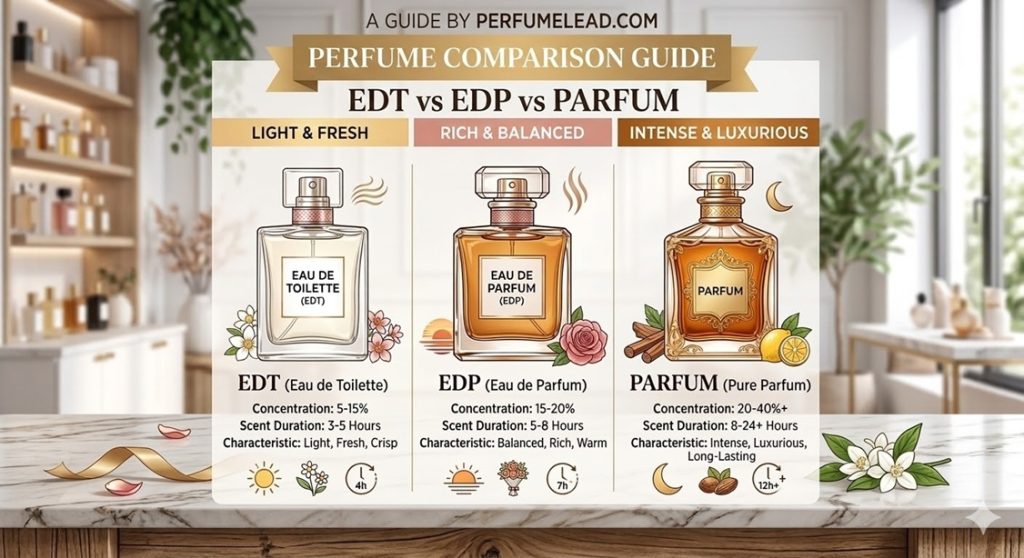
Before diving into specific brand comparisons, let’s clarify what these terms actually mean. These designations indicate the percentage of pure perfume oil diluted in alcohol, which directly affects intensity, longevity, and price.
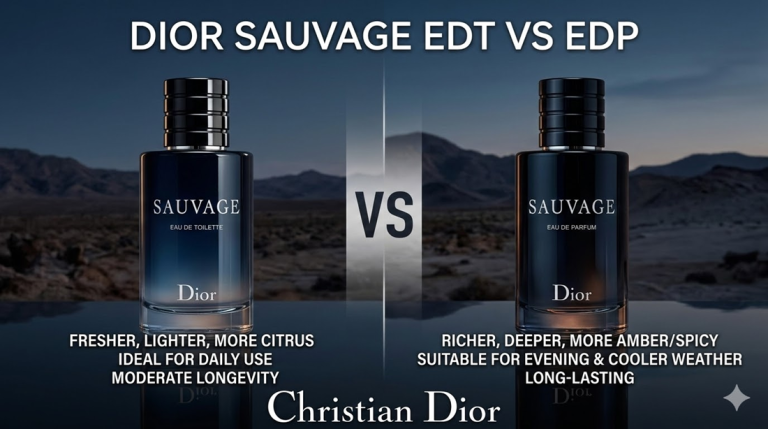
Eau de Toilette (EDT) contains 5-15% perfume oil concentration. This lighter formulation typically lasts 3-5 hours on skin, projecting moderately before settling into a subtle skin scent. EDTs are perfect for daytime wear, warmer weather, and situations where you prefer subtle fragrance presence. They’re also more affordable, making them excellent entry points for exploring new scents.
Eau de Parfum (EDP) features 15-20% perfume oil, offering significantly enhanced longevity of 6-8 hours or more. The higher concentration means richer, more complex development and stronger projection. EDPs work beautifully for evening wear, cooler weather, and long days when reapplication isn’t practical. While more expensive upfront, they often provide better value per hour of wear.
Parfum (Extrait de Parfum) represents the highest concentration at 20-30% perfume oil. These luxurious formulations last 8-12+ hours with intimate but persistent presence. Parfums emphasize base notes, creating deeper, more sophisticated scent experiences. They’re ideal for special occasions, romantic evenings, and those who want their fragrance to last from morning until night without reapplication.
The concentration affects more than just longevity—it changes how a fragrance develops. Higher concentrations often smell richer and more complex in the dry-down, while lighter concentrations may emphasize fresher top notes. Your skin chemistry, climate, and personal preferences all influence which concentration works best for you.
Chanel Comparisons: The Art of Concentration
Chanel represents the gold standard for concentration comparisons, as the house carefully crafts each version of their fragrances to offer distinct experiences while maintaining the core scent DNA. Bleu de Chanel exemplifies this approach, with each concentration providing a unique interpretation of the modern masculine classic.
Bleu de Chanel EDT offers the freshest, most citrus-forward expression of the fragrance. The lighter concentration emphasizes the bright grapefruit and lemon opening, creating an invigorating, energetic scent perfect for daytime and warm weather. The moderate longevity (4-6 hours) requires reapplication but makes it ideal for office environments and casual settings where subtlety is valued.
Bleu de Chanel EDP provides a richer, more sophisticated experience. The increased concentration amplifies the incense and ginger notes, creating greater depth and complexity. Longevity extends to 6-8 hours with stronger projection, making it suitable for evening wear and situations where you want to make an impression. Many consider the EDP the perfect balance of freshness and sophistication.
Bleu de Chanel Parfum represents the most intense, refined interpretation. The highest concentration emphasizes the woody amber base, creating a luxurious, long-lasting scent that evolves beautifully over 8-10+ hours. The Parfum version feels more mature and formal, ideal for special occasions and those who appreciate the fragrance’s full complexity.
Understanding these differences helps you choose the right Bleu de Chanel concentration for your lifestyle and preferences.
Explore our detailed comparison of Bleu de Chanel EDT vs EDP to discover which concentration suits you best.
For those seeking the ultimate Bleu de Chanel experience, our Bleu de Chanel EDP vs Parfum comparison breaks down the differences between these premium concentrations.
Zara Comparisons: Affordable Luxury
Zara has revolutionized the affordable fragrance market by creating scents that capture the essence of luxury at accessible price points. Their comparison offerings demonstrate how concentration and composition differences can create distinct scent experiences within the same brand family.
Zara Red Vanilla vs Black Amber showcases two different fragrance directions rather than concentration variations, but the comparison illustrates important principles for evaluating scent options. Red Vanilla offers a complex, gourmand experience with fruity opening notes and warm vanilla base, while Black Amber provides a streamlined tropical-floral character with simpler composition.
Red Vanilla’s multi-layered structure features blackcurrant, pear, and bergamot opening, iris and gardenia heart, and vanilla, praline, and patchouli base. This complexity creates a scent that evolves significantly throughout the day, offering greater sophistication for its price point. However, this complexity can also mean inconsistent performance depending on skin chemistry.
Black Amber takes a more straightforward approach with mandarin orange opening, passionfruit and tiare flower heart, and musk-vanilla base. This simplicity creates immediate accessibility and reliable performance, though it may lack the depth that fragrance enthusiasts appreciate. The tropical character feels perfectly suited for spring and summer wear.
Both fragrances represent exceptional value, typically retailing between $15-25 for 90ml. The choice between them depends on your preference for complexity versus simplicity, gourmand warmth versus tropical freshness, and year-round versatility versus seasonal specificity.
This comparison demonstrates that choosing between fragrances involves more than just concentration—it requires evaluating composition, character, and how each scent aligns with your personal style and needs.
Discover which Zara fragrance matches your preferences in our comprehensive comparison.
Zara Red Vanilla vs Black Amber
Byredo Comparisons: Niche Excellence
Byredo represents the pinnacle of modern niche perfumery, where concentration and composition work together to create artistic, emotionally resonant fragrances. Their bestsellers demonstrate how different scents within a brand can serve completely different purposes and moods.
Byredo Bal d’Afrique vs Gypsy Water compares two iconic scents that showcase the brand’s range. Bal d’Afrique offers vibrant, cosmopolitan sophistication with its African marigold, violet, and vetiver composition, while Gypsy Water provides bohemian, nature-inspired intimacy through juniper, incense, and sandalwood.
Bal d’Afrique’s complex structure—featuring bergamot, African marigold, blackcurrant, violet, cyclamen, jasmine, cedarwood, and vetiver—creates a fragrance that evolves significantly throughout its lifespan. This complexity appeals to those who enjoy analyzing their scents and discovering new facets over time. The artistic, cultural narrative adds depth to the wearing experience.
Gypsy Water’s streamlined composition of bergamot, lemon, juniper, incense, pine needle, amber, sandalwood, and vanilla focuses on executing a simple concept exceptionally well. This simplicity makes it more approachable for fragrance beginners and those who prefer scents that don’t require much analysis. The narrative of wanderlust and freedom resonates deeply with many wearers.
Both fragrances share Byredo’s characteristic moderate performance, with Bal d’Afrique typically lasting 4-6 hours and Gypsy Water 3-5 hours. This intimate projection makes them suitable for professional environments and close-quarter situations, though those seeking bold, room-filling fragrances may find both too subtle.
The choice between these Byredo classics reflects deeper preferences: cosmopolitan artistry versus bohemian simplicity, complex evolution versus straightforward enjoyment, vibrant celebration versus quiet contemplation. Many enthusiasts ultimately choose both, as they serve different moods and occasions rather than competing for the same purpose.
Explore the nuances of these iconic scents in our detailed comparison.
Byredo Bal d’Afrique vs Gypsy Water
How to Choose Between Concentrations
Selecting the right concentration involves evaluating several factors beyond simply wanting stronger or longer-lasting scent.
Consider your daily routine. If you work long hours without opportunity for reapplication, EDP or Parfum concentrations provide necessary longevity. If you enjoy refreshing your scent throughout the day or prefer lighter presence, EDT may be ideal.
Evaluate your environment. Conservative offices and close-quarter situations often call for the subtlety of EDT. Social events, evenings out, and outdoor activities allow for the stronger projection of EDP or Parfum.
Factor in climate. Hot, humid weather causes fragrances to project more strongly and evaporate faster, making EDT suitable for summer. Cold weather suppresses scent molecules, requiring EDP or Parfum concentration for adequate presence.
Assess your skin chemistry. Dry skin causes faster fragrance evaporation, often requiring higher concentrations for adequate longevity. Oily skin holds scent well, potentially making EDT sufficient even for all-day wear.
Calculate value considerations. While Parfum and EDP cost more upfront, their extended longevity often provides better cost-per-wear than EDT requiring frequent reapplication. However, if you prefer variety and reapplication, EDT’s lower price point enables building a larger collection.
Making Informed Comparison Decisions
When comparing fragrances or concentrations, follow a systematic approach to ensure objective evaluation.
Test on skin, not paper. Fragrance strips only show top notes and don’t account for your unique skin chemistry. Always apply to pulse points and allow several hours for full development before making decisions.
Evaluate at different times. Your sense of smell varies throughout the day, and fragrances perform differently in morning versus evening. Test candidates multiple times before committing.
Consider the complete wearing experience. A fragrance that smells amazing in the store but fades within an hour won’t serve you well. Evaluate longevity, projection, and how the scent makes you feel over time.
Factor in versatility. Some fragrances work beautifully for specific occasions but feel wrong for daily wear. Consider whether a scent fits your lifestyle or requires too many compromises.
Trust your instincts. While reviews and comparisons provide guidance, fragrance is deeply personal. The best choice is always the one that makes you feel confident and authentic, regardless of popular opinion or expert recommendations.
The Value of Comparison Shopping
Taking time to compare fragrances and concentrations ultimately saves money and prevents disappointment. Blind buying based on hype or attractive packaging often leads to unused bottles and wasted investment.
Visit stores with specific intentions. Know which concentrations or fragrances you want to compare before arriving. Limit testing to 2-3 options per visit to avoid olfactory fatigue.
Request samples when available. Many retailers provide take-home samples that allow proper evaluation over multiple days. This extended testing reveals how fragrances perform in your real life, not just in the store.
Read comparisons critically. Understand that reviewers have different preferences, skin chemistry, and contexts than you. Use comparisons as starting points rather than definitive answers.
Consider building a comparison wardrobe. Owning different concentrations of favorite scents—EDT for summer days, EDP for work, Parfum for evenings—provides appropriate options for every situation.
Frequently Asked Questions About Perfume Comparisons
Is Parfum always better than EDP or EDT?
Not necessarily. Parfum offers highest concentration and longevity but may be too intense for some situations and preferences. The best concentration depends on your lifestyle, environment, and how you enjoy wearing fragrance. Some people find Parfum overwhelming and prefer the lighter presence of EDT.
Why does the same fragrance smell different in EDT vs EDP?
While the core ingredients remain similar, proportions shift to accommodate different oil percentages. Higher concentrations often emphasize base notes, creating richer dry-downs. Lighter concentrations may highlight fresher top notes. Your skin chemistry also interacts differently with varying concentrations.
Should I own multiple concentrations of the same fragrance?
Many enthusiasts do exactly this, using EDT for warm weather and casual settings, EDP for daily wear and professional environments, and Parfum for special occasions and evenings. This approach maximizes versatility but requires greater investment.
How do I compare fragrances fairly?
Test on skin rather than paper strips. Allow each fragrance to develop for several hours. Evaluate at the same time of day under similar conditions. Consider longevity, projection, and how each makes you feel. Take notes to compare objectively after testing.
Are expensive fragrances worth the higher price?
Quality often correlates with price due to better ingredients, more complex compositions, and superior performance. However, affordable options like Zara prove that excellent fragrances exist at lower price points. The key is finding scents that perform well and make you happy, regardless of cost.
Can I layer different concentrations of the same fragrance?
Layering EDT and EDP or Parfum of the same scent can enhance longevity and complexity. Start with EDT as a base, then add EDP or Parfum to pulse points for extended presence. This technique maximizes your fragrance investment and creates custom intensity.
Explore More Perfume Comparisons
This guide provides your foundation for understanding fragrance comparisons, but the journey continues. Each linked comparison offers deeper exploration of specific scents, concentrations, and brands, helping you make informed decisions about your fragrance investments.
Remember that perfume choice is ultimately personal. While comparisons provide valuable guidance, the best fragrance is always the one that resonates with your unique personality, chemistry, and preferences. Use these resources as tools for exploration, then trust your nose and instincts to find scents that truly speak to you.
Whether you’re choosing between Chanel concentrations, evaluating Zara’s affordable offerings, or exploring Byredo’s niche artistry, informed comparison shopping ensures you find fragrances that bring joy and confidence to every wearing.
Ready to dive deeper? Explore our detailed comparisons: Bleu de Chanel EDT vs EDP, Bleu de Chanel EDP vs Parfum, Zara Red Vanilla vs Black Amber, and Byredo Bal d’Afrique vs Gypsy Water!