
A scent wheel is a map of everything you can smell in a perfume — 12 fragrance families, 49 note groups and more than 200 individual notes, arranged so you can read from the centre out and name exactly what is on your skin. If you have ever sniffed a perfume, loved it, and had no words for why, the scent wheel gives you the words. This guide explains how the wheel works, walks through all 12 families with the notes you’ll meet most, and shows you how to use it to find your next perfume. Get the free printable Scent Wheel (PRFMST) and keep it next to your bottles.

Scent Wheel vs Fragrance Wheel: What’s the Difference?
The two wheels answer different questions. The Michael Edwards fragrance wheel — explained in our fragrance wheel guide — sorts whole perfumes into 4 families (Floral, Amber, Woody, Fresh) and 14 subfamilies. It tells you what kind of perfume you are holding. The scent wheel sorts the notes inside the perfume into 12 families and 200+ individual notes. It tells you what you are actually smelling. Use the fragrance wheel to pick a perfume; use the scent wheel to describe it, compare it, and find another one like it. They work as a pair: the fragrance wheel is the map of countries, the scent wheel is the street map.
How to Read the Scent Wheel
Read from the centre out. The inner ring holds the 12 families: Citrus, Aromatic, Aquatic, Green, Floral, Fruity, Gourmand, Amber, Spicy, Woody, Leather and Chypre. The middle ring narrows each family to a group — for example, Floral splits into rose, jasmine, white floral and powdery groups. The outer ring gives you the note itself: rose, jasmine, tuberose, gardenia, orange blossom. The printable wheel carries every note, with a one-line everyday smell for each — “vetiver: wet roots and cut grass after rain” — so you can match a smell in the air to a word on the page. Start at the centre with the family you recognise, then move outward until the note clicks. Worked example: you spray a perfume and the first thing you smell is bright and sharp, like lemon peel. That’s the Citrus family, centre ring. Move out: the note is bergamot — the most-used top note in perfumery, the “Earl Grey tea” smell. Ten minutes later the citrus fades and a soft flower takes over: move to the Floral family, white floral group, orange blossom. You have just read a perfume the way a perfumer does — top, heart and base, family by family.
The 12 Fragrance Families
| Family | Smells like | Notes you’ll meet most |
|---|---|---|
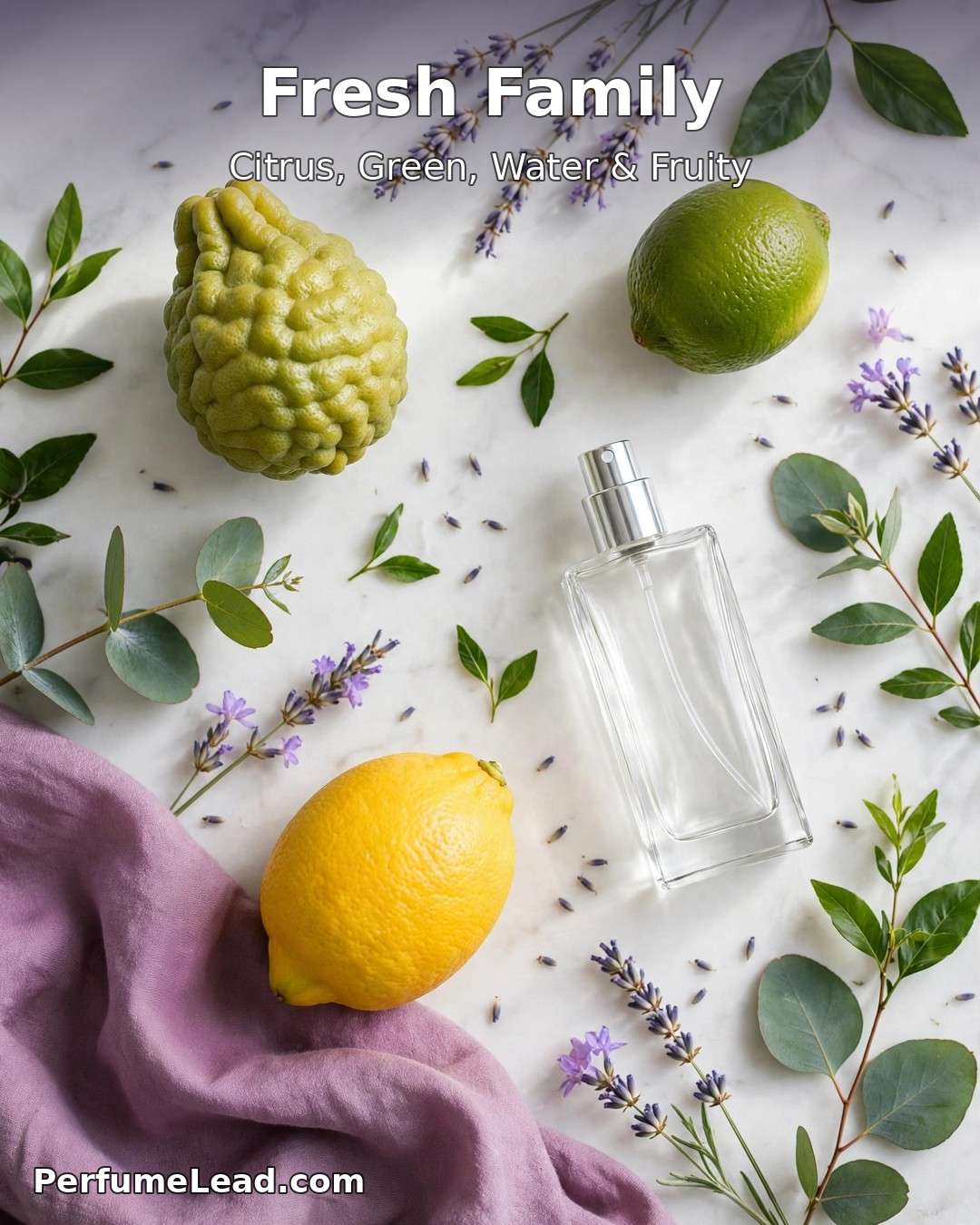
| Citrus | Bright, sharp, optimistic | Bergamot, lemon, orange, grapefruit, yuzu |
| Aromatic | Herbal, clean, Mediterranean | Lavender, rosemary, clary sage |
| Aquatic | Sea air, wet stone | Calone, sea salt, marine notes |
| Green | Cut stems, tomato leaf | Galbanum, green leaves, fig leaf |
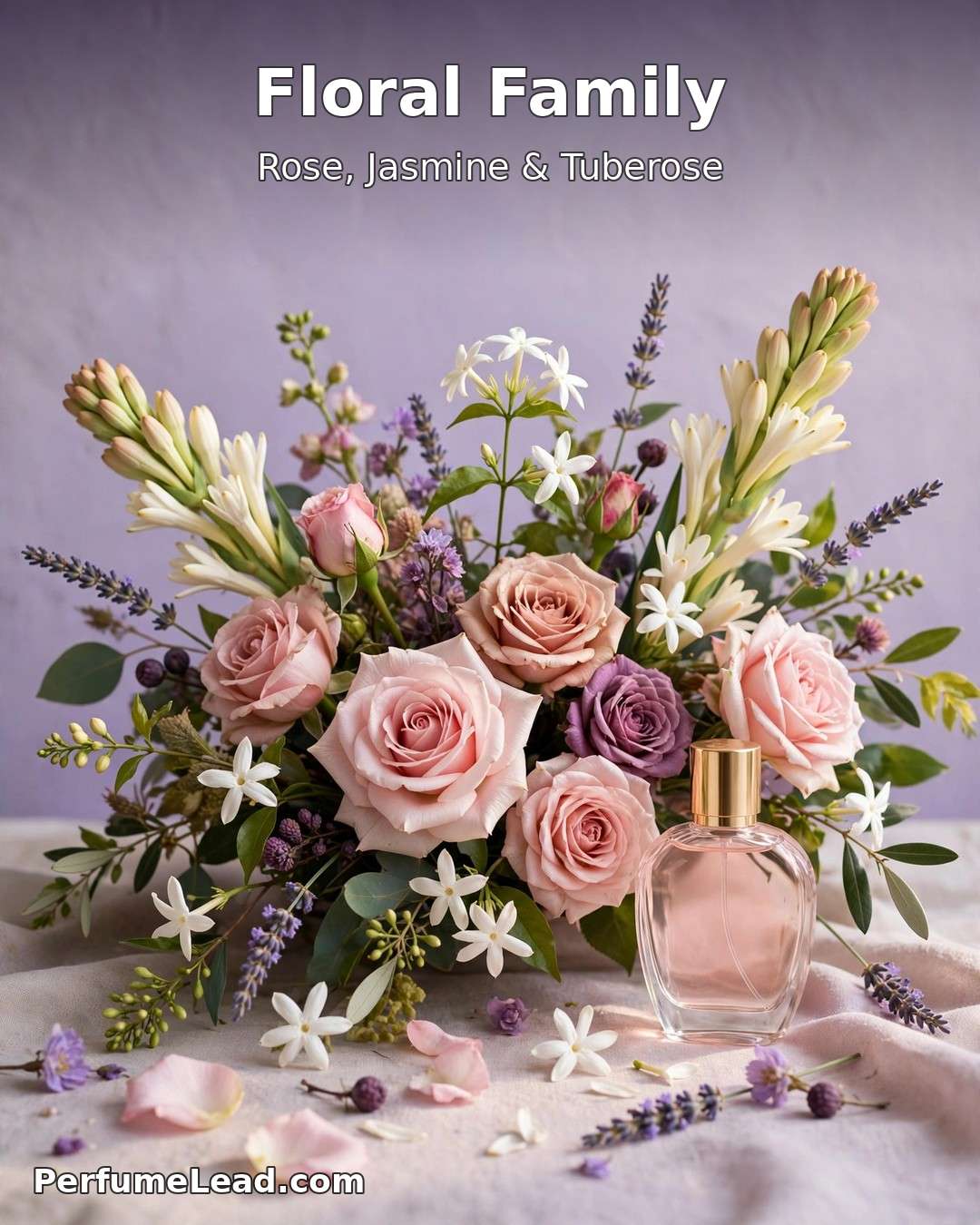
| Floral | The biggest family — bouquets and single flowers | Rose, jasmine, tuberose, gardenia, peony |
| Fruity | Peach skin, berry juice | Peach, raspberry, pear, blackcurrant |
| Gourmand | Edible, sweet, warm | Vanilla, almond, coconut, tonka bean |
| Amber | Warm, sweet, resinous | Amber, benzoin, labdanum, vanilla |
| Spicy | Warm, peppery, exotic | Cinnamon, cardamom, pink pepper, clove |
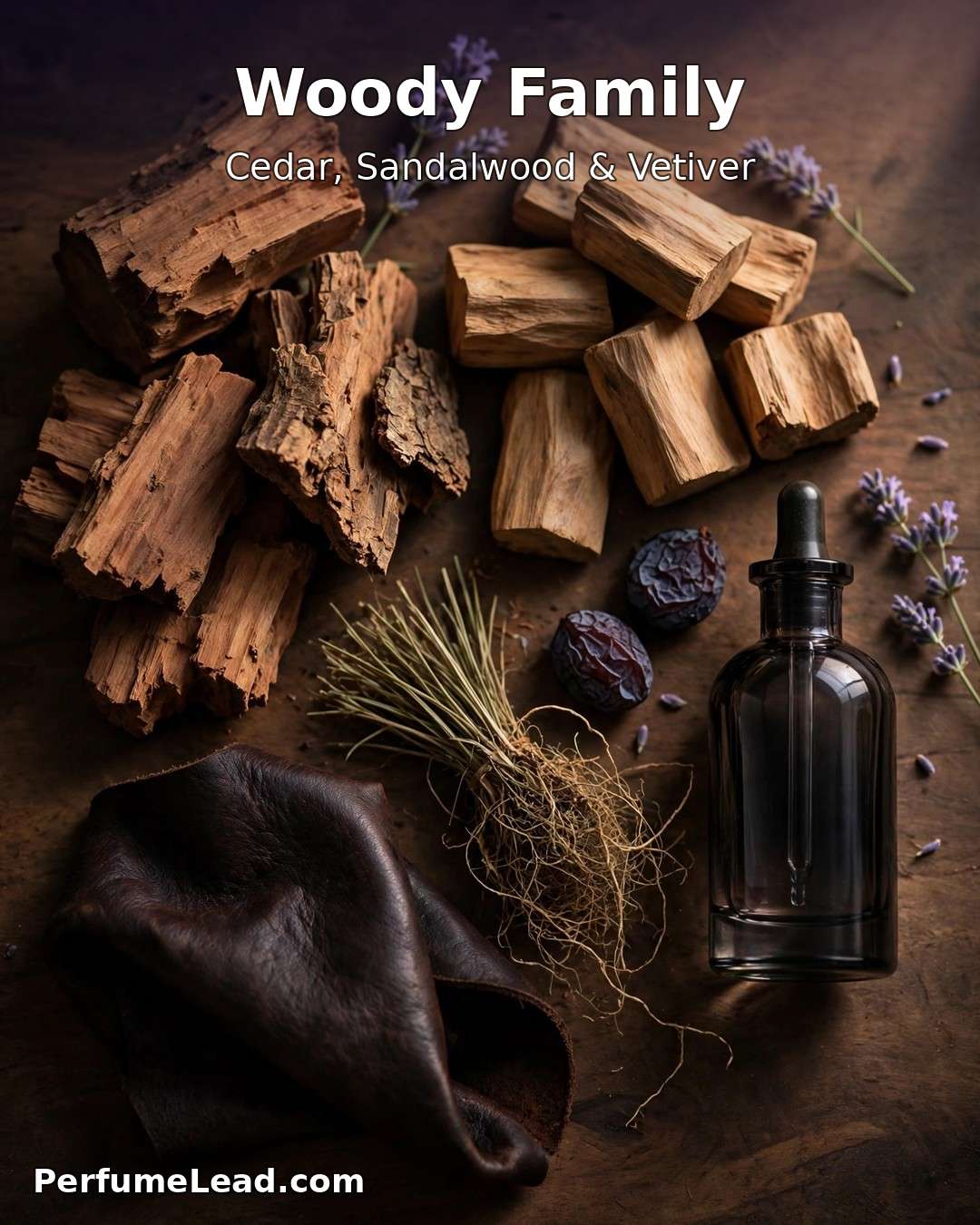
| Woody | Cedar, sandalwood, dry timber | Cedarwood, sandalwood, vetiver, patchouli |
| Leather | Smooth, smoky, animalic | Leather, tobacco, suede, castoreum |
| Chypre | Bergamot, oakmoss, labdanum | Oakmoss, bergamot, patchouli |
The families that sit next to each other on the wheel blend most easily. Floral next to Fruity is juicy and romantic; Woody next to Amber is rich and warm. Families across the wheel make a bolder contrast — Fresh against Amber, for instance — which works when one side is clearly the base. If you want to practise, start with the two families you already love: find them on the wheel, then try a perfume that sits between them. Our complete perfume guide explains how those families show up in concentrations and bottle types, so you can shop with the wheel in hand.
How to Name What You Smell: A 3-Step Practice
- Spray once on a blotter, not your skin. Wait 30 seconds, then smell. Name the family first — don’t hunt for the exact note yet. Citrus? Floral? Woody?
- Wait 15 minutes and smell again. The top notes have faded; the heart is showing. Move one ring outward and name the group — white floral, soft woods, sweet spice.
- Wait an hour and smell the drydown. The base notes are left: musk, woods, amber, vanilla. Name the note if you can; if not, the family is enough.
Do this with three perfumes you own and you’ll notice a pattern: the ones you love share a family or two. That pattern is your taste, written down. A musk perfume, for example, often hides in the base of scents people call “clean” without knowing why — musk is the note that makes a perfume smell like skin rather than like perfume. And when two perfumes you love share a note like iris or violet, our iris vs violet guide shows how two similar notes can smell completely different once you know what to look for.
Using the Scent Wheel to Find Your Next Perfume
Take the perfume you wear most and find its three main notes on the wheel — one from the top, one from the heart, one from the base. Then look for a perfume that shares two of those three notes: it will smell familiar but not identical, which is exactly what a good next bottle should do. If you want something bolder, pick a perfume from the family opposite yours on the wheel and keep one shared note as the bridge — a floral lover trying a woody perfume with a rose heart, for instance. Before you buy, check the notes list on the brand’s site and match them against the wheel; if the brand lists notes you can’t find on the wheel, look up what family they belong to in our beginner’s guide to perfume types so you know what you’re actually buying.
Get the Free Printable Scent Wheel (PRFMST)
Get the free printable Scent Wheel (PRFMST) — all 200+ notes on one A4 sheet, with the everyday-smell anchor for every note. Print it and keep it next to your bottles, or save it on your phone for your next trip to a perfume counter. The wheel is free to print and share as long as PRFMST’s name stays on it; their page asks for an email address to send the PDF.
Start Naming What You Smell Today
You don’t need a trained nose — you need a map and three bottles you already own. Print the wheel, run the 3-step practice on one perfume tonight, and write down the three notes you find. Do the same for two more perfumes this week, and by the weekend you’ll know your taste in words, not just feelings — and you’ll never again stand at a counter saying “I want something like this, but different.”