
Learning how to store perfume properly is the difference between a bottle that smells as good in year three as it did on day one, and one that turns flat, sour, or strangely sharp within a few months. Most people blame the perfume when a favourite scent changes. Nine times out of ten, the perfume was fine — the storage was the problem.
Here is the short answer: keep your perfume in a cool, dark, dry place, upright, with the cap on, away from bathrooms and windows. A bedroom drawer or a closed cupboard beats a vanity display every single time.
Perfume is a mix of fragrant oils, alcohol, and water — more fragile than it looks. The same chemistry that makes a scent bloom on warm skin also makes it break down in the wrong conditions, and once you understand the four things that damage it, every decision about how to store perfume becomes obvious. Different perfume types age at different rates, so it pays to know what you are storing.
Why Perfume Goes Bad: The 4 Enemies of Fragrance
Perfume does not go off the way milk does. It fades, shifts, and warps — the bright citrus top notes usually go first, which is why an old bottle often smells heavier and less like itself. Four forces drive that change.
Light is the biggest enemy. Ultraviolet light breaks down the aromatic molecules in a fragrance, especially the delicate top notes. That is why most perfume comes in tinted glass — and why a clear bottle on a sunny shelf can smell different within weeks.
Heat speeds up every chemical reaction inside the bottle. A fragrance kept at a steady 18–20°C ages gracefully. The same bottle near a radiator, in a hot car, or in a steamy bathroom ages years in a few months, losing its lift as the volatile top notes evaporate faster.
Air is the quiet killer. Every spray lets a little air in, and oxygen slowly oxidises the oils. That is normal — but a loose cap or a bottle stored on its side lets in far more air than intended. Oxidation is what turns a once-bright scent vinegary or plasticky.
Humidity attacks everything around the juice: labels peel, caps corrode, and metal sprayers seize up, and moisture can creep into a damaged seal. The fragrance industry’s own safety body, the International Fragrance Association (IFRA), sets standards for how fragrance materials are handled — a reminder that these are real chemical products, not decorative water.
Worked example: two identical bottles of the same eau de parfum. Bottle A lives in a bedroom drawer at 19°C; Bottle B on a bathroom shelf, under a bright light, next to a hot shower. After a year, Bottle A smells like the day you bought it, while Bottle B smells darker, flatter, and a little sour. Same perfume, same age — that is what good storage does, and why learning how to store perfume is worth ten minutes of your time. If you are unsure how old a bottle is, checking its perfume batch code can help you work out when it was made.
How to Store Perfume: 7 Rules That Keep It Fresh
These seven rules cover almost everything about how to store perfume at home. Follow them and your bottles will outlast their printed shelf life. Good storage is only half the story. Learning how to use perfume properly helps you get the most from every spray.
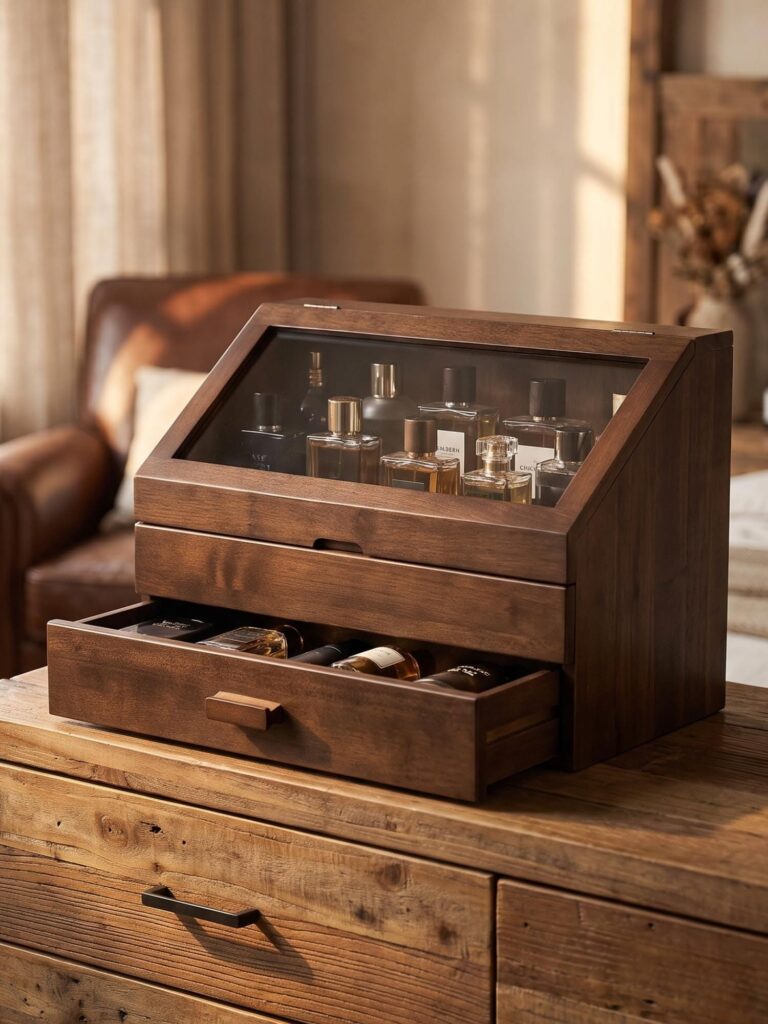
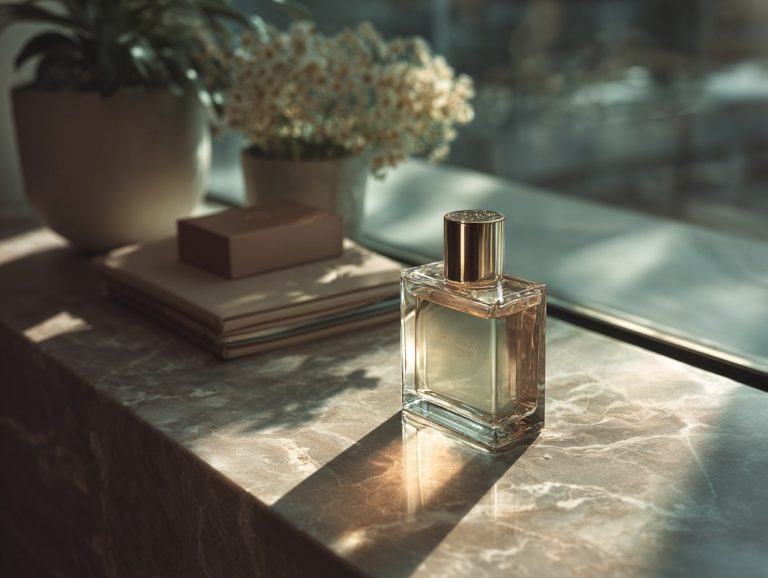
Rule 1: Keep perfume out of sunlight. Store bottles in a drawer, a closed cupboard, or a box. The simplest answer to how to store perfume is to keep it in the dark. If you love displaying your collection, keep the display away from windows — dark glass helps, but it is not a substitute for darkness.
Rule 2: Keep it cool and steady. Aim for 15–20°C and, more importantly, a stable temperature — a cool bedroom is ideal. Avoid radiators, heated towel rails, sunny shelves, and cars: swings are worse than steady warmth, because expansion and contraction push air in and out of the bottle.
Rule 3: Keep it dry. Low humidity, around 40–60%, is fine. That rules out the bathroom, where steam from every shower sends humidity soaring. If you are wondering how to store perfume in a small flat, a dry bedroom drawer beats a damp bathroom cabinet every time.
Rule 4: Store bottles upright. Perfume is designed to sit upright. On its side, the liquid rests against the sprayer and the seal, which can loosen and let air in. Upright also keeps the dip tube working, so the sprayer draws liquid evenly to the last drop.
Rule 5: Keep the cap on. The cap is not decoration. It seals the sprayer, slows evaporation, and keeps dust and air out. If you have lost a cap, wrap the sprayer in cling film, or decant the perfume into a small airtight atomiser.
Rule 6: Do not shake the bottle. Shaking mixes air into the liquid and speeds up oxidation. If you have just bought a bottle, let it sit upright for a day before judging it — transport and temperature changes can make a new bottle smell slightly off until it settles.
Rule 7: Keep the original box. The box is the best free storage you will ever own. It blocks light completely, cushions the bottle, and keeps dust off. Knowing how to store perfume also means keeping the box: if you buy a fragrance you will not wear every day, leave it in its box between uses.
Remember five words: cool, dark, dry, upright, capped. That checklist is how to store perfume in any home, in any climate, without buying a single extra product.
How to Store Perfume at Home: Where Each Spot Ranks
Not every room is equal when it comes to how to store perfume. Here is how the usual spots compare.
| Storage spot | Light | Temperature | Humidity | Verdict |
|---|---|---|---|---|
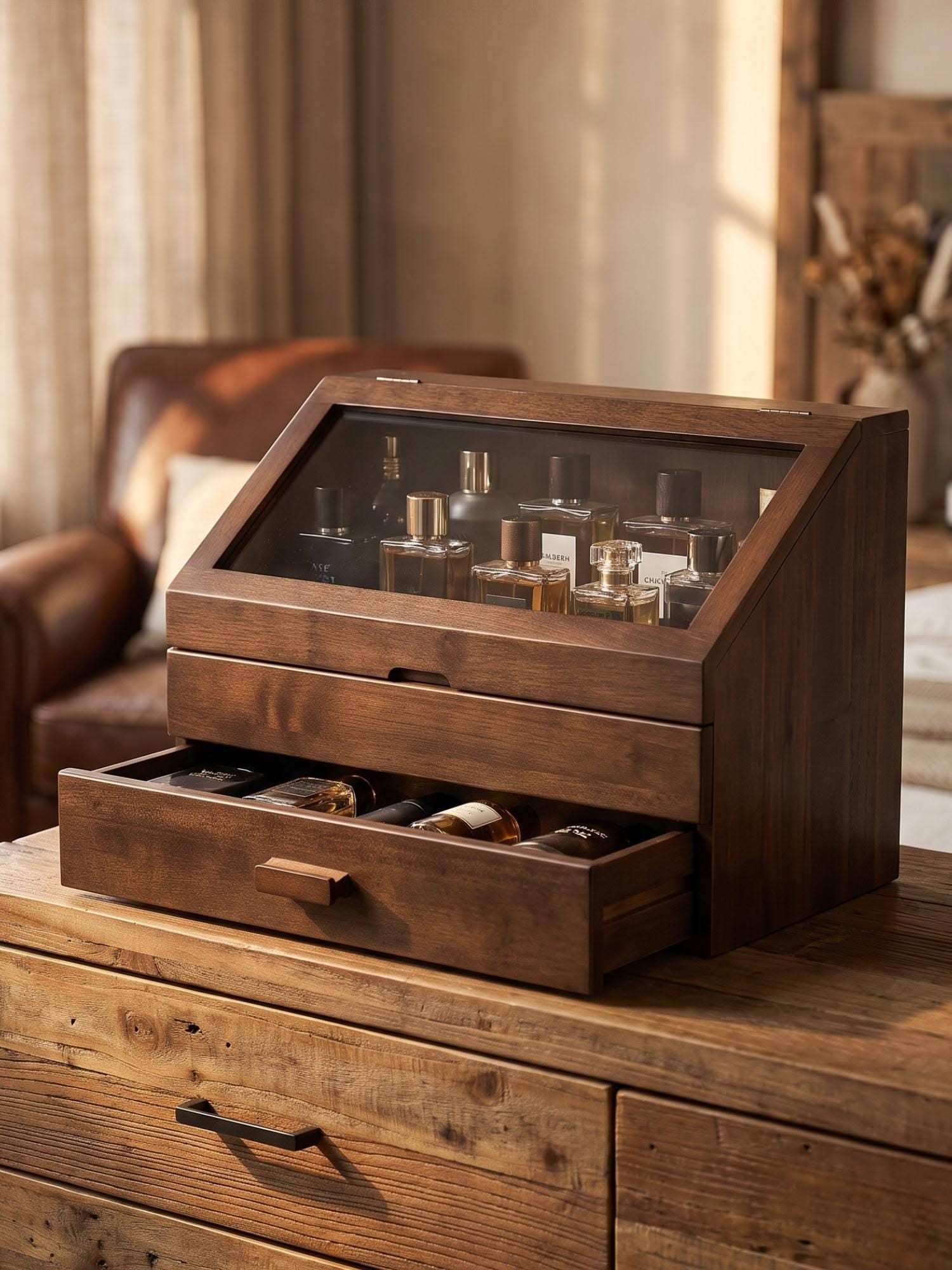
| Bedroom drawer | None | Cool, stable | Low | Best — ideal for daily bottles |
| Closed wardrobe shelf | None | Cool, stable | Low | Excellent, especially in the box |
| Dressing-table drawer | None | Cool, stable | Low | Excellent |
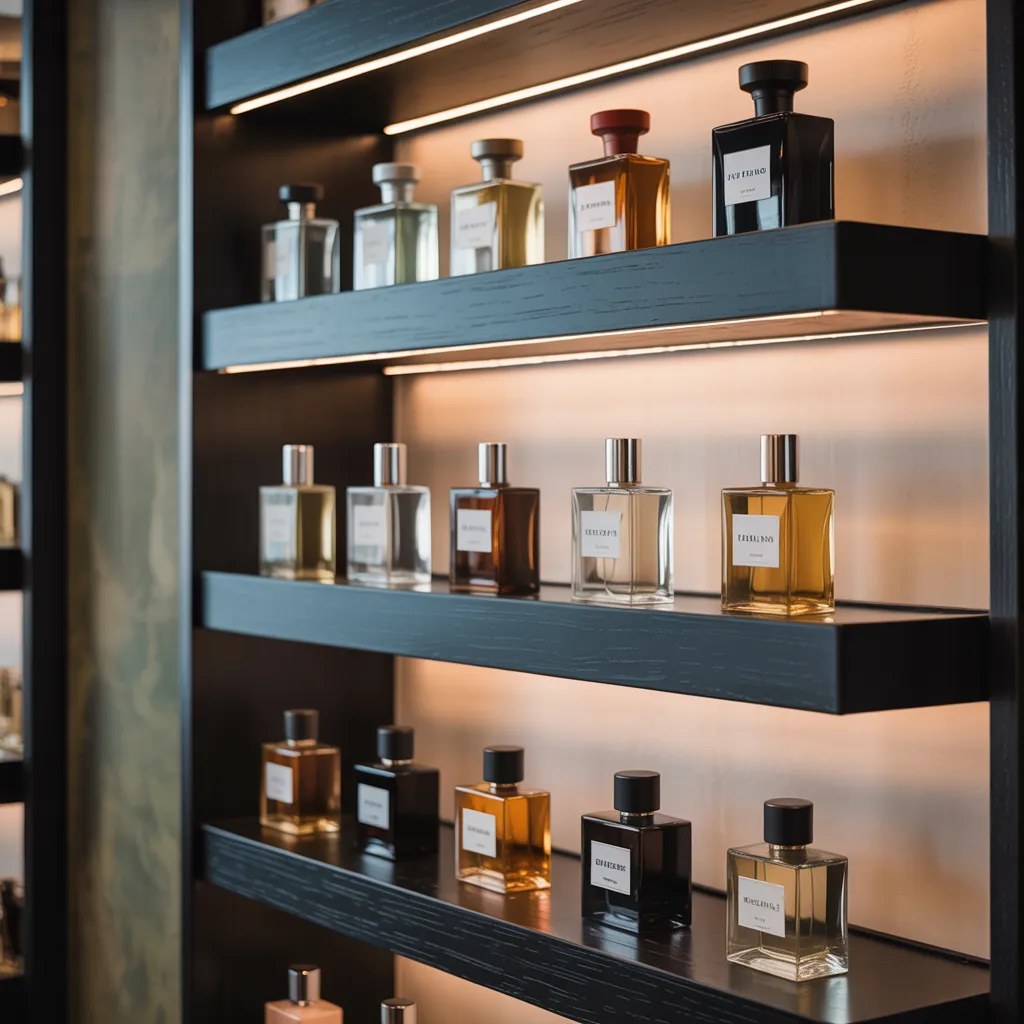
| Display shelf (away from window) | Low | Room temp | Low | Good for display, worse for longevity |
| Bathroom shelf or cabinet | Low | Hot, swings daily | Very high | Worst — avoid |
| Windowsill | Direct sun | Hot, swings daily | Varies | Worst — never |
| Fridge (sealed bag) | None | Cold, stable | Low inside bag | Works for rare bottles, not daily use |
| Car glove box | Varies | Extreme swings | Varies | Never |
That is the whole secret of how to store perfume — the best spots are boring ones. A drawer is not glamorous, but it is dark, cool, and dry, which is exactly what perfume needs. If you want your collection visible, keep your daily bottle on display and the rest in a drawer. You get the look without sacrificing the juice.
How to Store Perfume in the Bathroom (Spoiler: Don’t)
The bathroom is where most people keep their perfume, and it is the worst room in the house for it. Every shower fills the room with steam, pushing humidity to 80% or more, and the temperature can swing 10°C in half an hour. That daily cycle of heat and moisture is exactly what breaks fragrance down.
Look at the photo at the top of this article: a beautiful bottle on a marble bathroom vanity, in bright morning light, next to a steamy shower. A lovely photo — and a storage disaster. Within six months there, the citrus top notes would be noticeably duller.
The honest answer to how to store perfume in a bathroom is: don’t, if you have any alternative. If the bathroom is genuinely your only option, use a closed cabinet, keep bottles in their boxes inside it, and never store them near the shower. Moving your perfume out of the bathroom is the single highest-impact change you can make, and it costs nothing.
How Long Does Perfume Last When Stored Properly?
A well-stored bottle lasts far longer than most people expect. The printed shelf life is usually 24 to 36 months after opening, but that is a cautious figure for average storage. How long a bottle lasts is the payoff for learning how to store perfume well: with proper storage, most fragrances stay true for three to five years, some for much longer. For the full picture — including the signs a bottle has gone off — read our guide on whether does perfume expire.
Shelf life also depends on concentration, because stronger formulas have more fragrant oil and less alcohol to evaporate:
| Concentration | Typical shelf life stored well | Notes |
|---|---|---|
| Parfum / Extrait | 5–10 years | Highest oil content, most stable |
| Eau de Parfum (EDP) | 3–5 years | The sweet spot for most collections |
| Eau de Toilette (EDT) | 2–4 years | Lighter, citrus top notes fade first |
| Eau de Cologne (EDC) | 1–2 years | Very light; use it, don’t hoard it |
| Body mist / splash | 1–2 years | Low oil content, fades fastest |
Two things matter more than the numbers in that table. First, unopened bottles last much longer, because no air has entered yet — one kept in its box in a cool drawer can stay good for years past its printed date. Second, natural ingredients age faster than synthetics: a citrus-heavy cologne changes sooner than a woody amber built on stable synthetics. Our complete perfume guide explains how concentrations and notes work.
Quick freshness test: spray once on a paper strip. If the top notes are gone and it smells flat, dark, or sour — or the juice has darkened dramatically — the bottle has turned.
Perfume Storage Mistakes That Ruin Your Fragrance
Run through this checklist against your own setup — the fastest way to check how to store perfume in your home. Each “yes” is a bottle slowly losing its best years.
- Storing perfume in the bathroom. Heat, steam, and daily temperature swings — the worst combination.
- Leaving bottles on a windowsill or sunny shelf. UV light destroys top notes in weeks.
- Storing bottles on their side. Liquid against the seal lets air in and can damage the sprayer.
- Leaving caps off. An open sprayer is an open door for air and evaporation.
- Keeping perfume in a hot car. Temperatures over 40°C can ruin a bottle in a single summer afternoon.
- Shaking bottles before spraying. It mixes air into the juice and speeds oxidation.
- Buying huge bottles you will never finish. A 200ml bottle of a light citrus scent will go off long before you use it. Match the size to how fast you wear it — our guide to perfume bottle sizes helps you pick the right one.
- Decanting into a cheap, leaky atomiser. A bad seal is worse than the original bottle. Use a quality, airtight atomiser, or don’t decant at all.
Fixing even two or three of these will add years to your collection. The bathroom move alone is worth more than any storage gadget on the market.
How to Store Perfume Decants and Travel Sprays
The rules for how to store perfume decants are the same as for full bottles, with one extra rule: the smaller the container, the faster it ages, because there is more air relative to liquid.
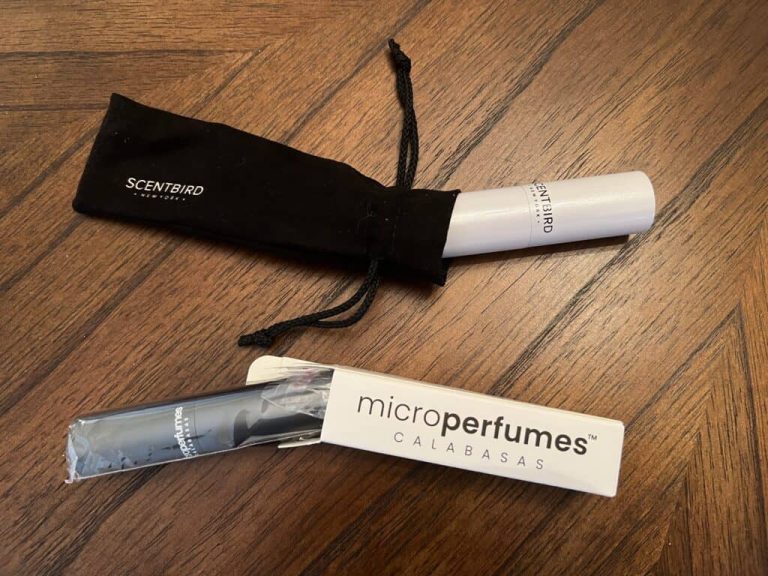
Store decants upright, capped, in a dark pouch or small box, out of the bathroom like full bottles. If you travel with perfume, carry it in your hand luggage — the hold of a plane is cold, and a hot car at your destination is worse. A small, well-sealed atomiser in a dark toiletry bag survives a trip fine; a loose bottle in a sunny car does not.
As for the fridge: it works, but it is rarely worth it. A fridge is cool, dark, and stable — exactly what perfume wants — but taking a cold bottle into a warm room causes condensation, and it will absorb food smells unless sealed in a bag. Reserve the fridge for a rare bottle you are saving, not for the one you spray every morning.
How to Store Perfume: FAQs
Does perfume go bad if you store it in the bathroom?
Yes, eventually. This is the most common question about how to store perfume, and the answer is simple: get it out of the bathroom. Heat and steam speed up the chemical breakdown of fragrance, dulling the top notes first, so a bathroom bottle ages noticeably faster than one in a bedroom drawer.
Should you store perfume in the fridge?
You can, but you don’t need to. A cool, dark drawer at room temperature is enough for almost every bottle. The fridge only makes sense for rare or vintage bottles you are preserving long-term — and always seal them in an airtight bag first, so they don’t pick up food odours or condensation.
Does perfume last longer unopened?
Yes, much longer. An unopened bottle in its box, kept cool and dark, can stay good for years beyond its printed shelf life, because no air has entered it. Once opened, the clock runs faster — which is why storage matters more after the first spray.
Is it okay to store perfume on a shelf?
A shelf is fine as long as it is out of direct sunlight and away from heat sources. When people ask how to store perfume on a shelf, the answer is always the same: dark shelf, cool room, cap on. A shelf next to a window is not fine — sunlight is the single fastest way to damage a fragrance.
How can you tell if stored perfume has gone bad?
Spray it on a paper strip. If the top notes are missing, the scent smells flat, dark, or sour, or the liquid has turned much darker, the perfume has turned. A faint change in the first minute is normal for an old bottle; a vinegary or plasticky smell is not.
Keep Your Perfume Smelling Like Day One
You don’t need a special fridge, a humidity-controlled cabinet, or any expensive gadget. You need a drawer, a box, and five seconds of habit: cap on, upright, out of the sun, out of the bathroom. That is how to store perfume — and how a bottle you love today still smells like itself years from now.
Start tonight: take the bottles off the bathroom shelf and the windowsill, put them in a bedroom drawer with their caps on, and leave the ones you aren’t wearing in their boxes. Then spray your favourite — and if you want it to last even longer on your skin, learn how to apply perfume so it lasts longer. Your future self, opening that same bottle in three years and finding it perfect, will be glad you did.