Iris vs. Violet: Which Powdery Note Is Right for Your Signature Scent?
Both iris and violet are the twin pillars of powdery perfumery — beloved for their soft, velvety, cosmetic-tinged magic. But they are far from identical. Iris (from orris root) is richer, more complex, earthy, buttery, and quietly luxurious — the aristocrat of the powdery world. Violet is sweeter, airier, more immediately floral and sometimes candy-like — the playful romantic of the pair. Knowing which note suits your personality, lifestyle, and nose is the key to building a truly memorable signature scent. This guide covers everything: how they’re made, how they smell, which personalities they suit, and the best bottles of each available on Amazon right now.
Walk into any fine fragrance counter and you’ll encounter the powdery family — that soft, velvety, cosmetic cloud of scent that somehow manages to feel simultaneously vintage and timelessly modern. At the heart of this family sit two iconic notes that confuse even experienced fragrance lovers: iris and violet. They’re often mentioned in the same breath. They’re frequently confused for each other. And yet, once you truly understand the difference between them, you’ll never mistake one for the other again — and you’ll know exactly which one belongs at the center of your signature scent.
This is more than a chemistry lesson. It’s a personality test bottled in glass. The iris lover tends to reach for understatement and depth, for the kind of fragrance that reveals itself slowly over hours of wear. The violet lover gravitates toward sweetness and immediacy, toward something that blooms upon first spray and fills a room with a warm, romantic radiance. Neither is better. Both are beautiful. The question is: which one is you?
Let’s find out.
Understanding Iris: The Aristocrat of Powder
Iris has been prized in perfumery for centuries — coveted by royal courts across Europe since the Middle Ages, and still regarded today as one of the most expensive and prestigious raw materials in the entire fragrance industry. But there’s a beautiful paradox at its core: the iris flower is odorless. What perfumers actually use is something far more interesting.
Where Iris Comes From: The Secret of Orris Root
According to Lancôme’s fine fragrance evaluator Tripta Holtz, the scent we call “iris” in perfumery is extracted from the rhizomes — the underground root-like structures — of the iris plant, specifically varieties like Iris Pallida and Iris Germanica. The harvested rhizomes are almost completely odorless at the time of picking. They must then be dried and left to mature for three to five years (sometimes longer) before they develop the high levels of aromatic molecules called irones that give iris its distinctive scent.
Pascal Gaurin, VP Senior Perfumer at IFF, describes orris this way: “It has a very soft and creamy odor with earthy, powdery, violet, and suede notes with dry fruits and woody undertones.” That complexity — woody AND floral AND powdery AND earthy AND suede-like, all at once — is precisely what makes iris so endlessly fascinating to work with and to wear.
This elaborate, time-intensive extraction process makes orris one of the most expensive ingredients in all of perfumery. A single kilogram of the finest orris butter can command prices that rival precious metals. This is why true iris-forward fragrances — from Prada, Dior, Xerjoff, and others — command serious price tags. You are quite literally wearing years of patience.
What Does Iris Actually Smell Like?
Iris is genuinely multidimensional, and the precise facets you perceive will depend on the specific formula, the extraction method, and even your own skin chemistry. Generally, the iris note in perfumery offers some combination of:
- Powdery: Soft, face-powder quality — cosmetic but refined, never cloying
- Earthy / Rooty: A slightly carrot-like, root vegetable quality, especially in natural orris. Earthy but elegant.
- Buttery / Waxy: A creamy, almost tactile richness — like warm lipstick or cold cream
- Woody: Particularly cedar-adjacent — grounding and slightly dry
- Violet-floral: A ghost-like echo of the violet flower (because iris and violet share the same aromatic molecule family, the ionones)
- Suede-like: Soft, smooth, skin-warm — one of iris’s most addictive qualities
- Cool / Austere: Iris often reads as slightly cold or aloof — restrained and deliberately understated
Here’s the chemistry that explains why iris and violet are so frequently confused: both notes belong to the same aromatic molecule family — the ionones. Irones (found in iris) and ionones (found in violet) are closely related compounds that create overlapping olfactory impressions of floral powderiness. This shared DNA is why an iris fragrance can sometimes read as “almost violet” and vice versa — but the overall character of each note diverges significantly in both depth and personality.
Who Should Wear Iris?
Iris is the note for those who want their fragrance to feel earned. It does not announce itself loudly. It reveals itself gradually, rewarding those who pay attention. Iris wearers tend to appreciate quality over volume, depth over sweetness, and understatement over projection.
If any of the following resonate with you, iris may be your powdery note:
- You gravitate toward minimalist aesthetics — quality fabrics, clean lines, restrained luxury
- You want to smell sophisticated rather than sweet
- You appreciate fragrances that change and evolve over hours of wear
- You’re drawn to genderless, unisex scents that defy categorization
- You find most floral fragrances too sweet or too obvious
- You love the idea of smelling expensive without smelling loud
Understanding Violet: The Sweet Romantic
If iris is the cool, composed aristocrat of the powdery world, violet is its more openly emotional, romantically inclined sibling. Sweet, immediately floral, and undeniably nostalgic, violet has been a staple of perfumery since the Victorian era — when it was used extensively in cosmetics, powders, and toilet waters to create a soft, feminine, gently powdery effect.
Where Violet Comes From: Flower vs. Leaf
One of the most important things to understand about violet in perfumery is that the note is almost always created synthetically rather than from the actual flower. The scented violet flower (Viola odorata) has a uniquely tricky quality: its key aromatic compound, ionone, desensitizes the nose almost immediately upon smelling it. As the fascinating history noted at Demeter Fragrance Library records, Napoleon’s Josephine was the first person documented to use this quality deliberately — wearing violet perfume precisely because it seemed to disappear, then reappear, making her more intriguing to those around her. Today, perfumers recreate the violet effect using synthetic ionones, allowing far more control over intensity and longevity.
There is also a crucial distinction between violet flower and violet leaf — and they smell almost nothing alike:
- Violet Flower: Sweet, powdery, nostalgic, slightly candy-like. The note most people associate with “violet perfume.”
- Violet Leaf: Green, sharp, almost aquatic — more like crushed leaves than flowers. Used to add fresh brightness and a “green bite” to compositions.
For this guide, we’re focusing primarily on violet flower — the powdery, romantic, sweet-floral note that forms the backbone of fragrances like Guerlain Insolence and Tom Ford Violet Blonde.
What Does Violet Actually Smell Like?
Violet in perfumery delivers a distinctly different impression from iris, though the two do share a powdery foundation. Violet tends to read as:
- Sweet: More immediately and overtly sweet than iris — candy-like, almost edible in some formulations
- Powdery: Soft and cosmetic, but with a warmer, more sugary quality than iris powder
- Nostalgic / Retro: Vintage makeup, lipstick, powder compacts, Parma violets candy
- Bright and Airy: More transparent and uplifting than the deeper, more complex iris
- Romantic: Delicate, feminine (though not exclusively), and gently emotional
- Slightly Green: In some formulations, especially those using violet leaf alongside the flower
Violet can veer into overtly sweet, candy-like territory if not handled carefully by the perfumer. If you find most violet fragrances too sugary or childlike, look for ones that pair the violet note with drier base notes: cedar, vetiver, suede, or tobacco. These additions ground the sweetness and give violet fragrances a more sophisticated, grown-up edge. Tom Ford Violet Blonde is an excellent example of violet done in this more elegant, grounded way.
Who Should Wear Violet?
Violet is the note for those who want their fragrance to feel warm, immediately welcoming, and romantically expressive. Violet wearers tend to embrace their emotions openly, gravitating toward beauty that delights rather than confounds.
If any of the following resonate, violet may be your powdery note:
- You love fragrances that make an impression instantly, from the first spray
- You’re comfortable with sweetness and don’t shy away from feminine, romantic notes
- You want a fragrance that feels warm, nostalgic, and emotionally evocative
- You gravitate toward vintage or retro-inspired aesthetics
- You love florals but find rose or jasmine too heady or traditional
- You want to smell gorgeous and a little playful, rather than austere
Iris vs. Violet: The Core Differences at a Glance
| Characteristic | 🌿 Iris / Orris Root | 💜 Violet Flower |
|---|---|---|
| Source | Dried rhizome (root) of iris plant, aged 3–5+ years | Primarily synthetic ionones; occasionally natural absolute |
| Cost | Extremely expensive — one of perfumery’s costliest materials | Relatively affordable (synthetic); natural absolute is pricier |
| Powder Quality | Deep, buttery, complex powder — suede-like and cool | Lighter, sweeter powder — warmer, more cosmetic |
| Sweetness Level | Low–Moderate. Earthy and dry, not sweet | Moderate–High. Noticeably sweet, candy-adjacent possible |
| Complexity | Very high — earthy, woody, floral, suede all at once | Moderate — primarily sweet-floral powdery |
| Projection / Sillage | Tends toward intimate, close-to-skin | Can range from intimate to bold, depending on formula |
| Best Season | All seasons; especially beautiful in autumn/winter | Spring and summer; some warmer violet frags suit autumn |
| Gender Expression | Strongly unisex — widely worn across all genders | Traditionally feminine; some formulations are unisex |
| Personality Fit | Understated, elegant, complex, minimalist | Romantic, warm, expressive, nostalgic |
| Key Fragrance Families | Floral Woody, Chypre, Oriental Woody | Floral Powdery, Fruity Floral, Oriental Floral |
Top Product Picks: The Best Iris and Violet Fragrances on Amazon
Now that you know which note suits you, here are our top picks — two for iris lovers, two for violet devotees — all available on Amazon with our affiliate links.
🌿 Best Iris Fragrances
1. Prada Infusion d’Iris EDP — The Gold Standard of Modern Iris
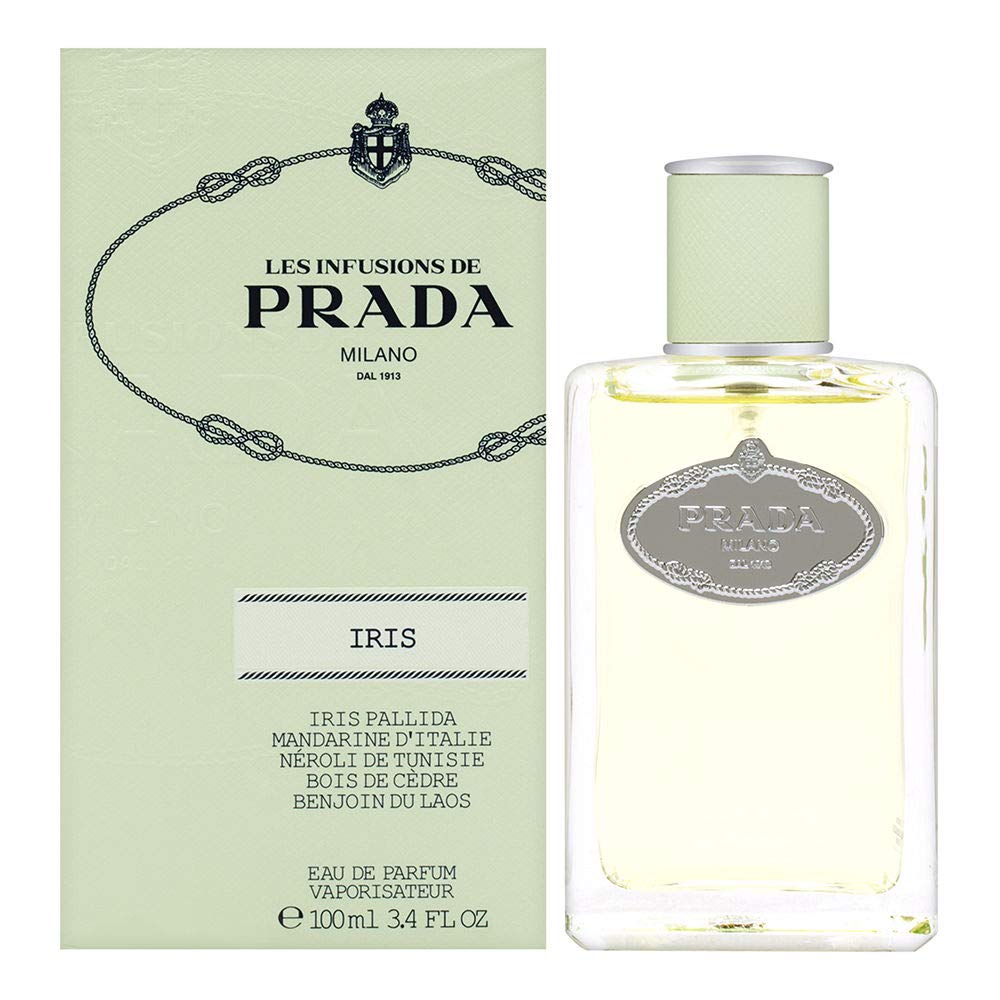
 If one fragrance exists to teach the world what iris truly smells like in its most refined, modern form, it is Prada Infusion d’Iris. Crafted by master perfumer Daniela Andrier and launched in 2007, this EDP has become the benchmark against which all other designer iris fragrances are measured. Its name was inspired by the historical process of iris extraction — months of soaking the dried rhizomes to coax out the flower’s ethereal, powdery soul.
The opening is bright and slightly green — a crisp burst of Italian mandarin and galbanum that sets the stage. Then, after about 15 minutes, the iris emerges: airy, buttery, velvety, and unmistakably powdery. Fragrantica reviewers consistently describe it in terms that capture iris at its most eloquent — “the perfect iris,” “serene and understated,” “the Prada the Devil wears.” Cedar, vetiver, incense, and benzoin form the base, giving the composition a quietly warm, woody drydown that prevents the iris from ever feeling too delicate or one-dimensional. This is a fragrance that wears beautifully on both skin and fabric, lasting 6–8 hours with intimate projection.
Key Notes: Italian Mandarin, Galbanum, Orange Blossom, Iris Pallida, Tunisian Neroli, Cedar, Vetiver, Incense, Benzoin from Laos
Fragrance Family: Floral Woody | Gender: Unisex | Best For: Office, refined occasions, year-round
- Ingredient Quality: Uses true Iris Pallida from Florence — one of the finest orris sources available in commercial perfumery.
- Complexity: A fragrance that rewards patience — the drydown is vastly different from (and arguably more beautiful than) the opening.
- Versatility: Genuinely unisex and universally flattering — works on every skin type and in any setting.
- Longevity: Exceptional for a relatively sheer powdery — typically 6–8 hours on skin, noticeably longer on fabric.
- Opening: The galbanum makes the opening distinctly green and sharp — allow at least 20 minutes for the iris heart to develop fully before judging.
- Style: Deliberately austere and cool — not for those who want a warm, sweet, or cozy powdery experience. This is iris, undiluted.
- Popular: A recognized classic — more signature-level than hidden gem, but quality absolutely compensates.
- Notes: Several versions exist (Iris Cèdre, the Absolue edition) — the original EDP is the iconic starting point.
Pro Tip: Spray Prada Infusion d’Iris on fabric as well as skin — the cedar and benzoin base bloom magnificently on cashmere and cotton, creating a beautiful, long-lingering scent cloud.
Customer Review: “Every time I wear this fragrance I get a ton of compliments from both men and women. Today my hairdresser said I smell so good she had to know the name. I left smelling like a million bucks!”
2. Byredo Mojave Ghost EDP — The Modern Iris-Violet Skin Scent
 For those who find pure iris too austere and pure violet too sweet, Byredo Mojave Ghost offers a supremely elegant middle ground — a fragrance where powdery violet sits at the heart, wrapped in ambrette musk, magnolia, sandalwood, and ambergris to create one of the most compelling “skin scents” in contemporary perfumery. Inspired by the rare Mojave Ghost flower that somehow survives and blooms in the harsh conditions of the Californian desert, this EDP captures something similarly impossible: the sensation of powder that smells genuinely alive.
The opening is unusual and addictive — sapodilla (a tropical fruit with a honey-malt sweetness) and ambrette (a musky, pear-like seed) create a warm, slightly exotic first impression. Then the violet heart emerges: powdery, soft, and skin-close, supported beautifully by the woody warmth of sandalwood and the sweetly animalic touch of magnolia. The base of ambergris and cedar adds a mineral, slightly oceanic depth that makes the whole composition feel like it is simply part of you — not a fragrance you’re wearing, but a quality your skin is emitting. This is the Who What Wear pick for violet fragrances that “stop people in their tracks” — not because it’s loud, but because it is quietly magnetic.
Key Notes: Sapodilla, Ambrette (Musk Mallow), Violet, Magnolia, Sandalwood, Ambergris, Cedar, Musk
Fragrance Family: Oriental Floral | Gender: Unisex | Best For: All-day wear, intimate occasions, spring/summer
- Bridge fragrance: Perfect for those uncertain between iris and violet — it blends the sweetness of violet with the skin-close quality of a musk-iris composition.
- Uniqueness: The sapodilla-ambrette opening is genuinely unlike anything else in the market at this price point.
- Compliment magnet: The sweet, musky, powdery-floral drydown is one of the most universally appreciated skin scents in niche perfumery.
- Genderless: Worn and beloved equally by all genders — a true unisex masterpiece.
- Longevity: Mojave Ghost is a notoriously skin-close fragrance with sometimes underwhelming projection and longevity — many reviewers find it fades faster than expected given the price.
- Drydown: After the distinctive opening, the drydown settles into a fairly clean, powdery violet on some skin types — beautiful but less complex than the opening suggests.
- Price: As a niche offering, Byredo commands a premium. Consider sampling before committing to a full bottle.
- Popular: Extremely well-known in fragrance circles — widely recognizable as a Byredo signature.
Customer Review: “I caught this scent on someone and wow — that scent was super unusual and totally unique. It immediately caught my attention. I felt like this is totally different from what I usually wear. I’m not letting this one go.”
💜 Best Violet Fragrances
3. Guerlain Insolence EDP — The Definitive Violet Statement
 If you want to understand what violet can do at its most dramatic, most unapologetic, most magnificent — you need to experience Guerlain Insolence. This is the violet note turned up to its maximum expression: a neon, almost electric burst of sparkling violet that is simultaneously powdery, berry-kissed, slightly spicy, and deeply, unforgettably Guerlain. One fragrance expert described Insolence as “a deconstruction of Guerlain’s famous L’Heure Bleue — doing a crazy dance of seven veils with candied violet and raspberry notes.” That is exactly right.
The EDP version is denser, more violet-centered, and more powdery than the EDT. The opening is a vivid explosion of berry and violet — intense, joyful, and absolutely impossible to ignore. As it dries down, the Guerlinade (Guerlain’s legendary signature base of vanilla, iris, and soft spices) begins to emerge beneath the violet heart, adding warmth and a quiet sensuality that transforms this from a simple floral into something genuinely complex. Who What Wear lists Insolence among the definitive violet experiences in modern perfumery — and the fragrance community has been devoted to it for nearly two decades.
A word of warning: Guerlain Insolence is powerful. Apply it sparingly — a single spray near the ankle or wrist can fill a room for hours. This is not a shy scent.
Key Notes: Red Berries, Bergamot, Lemon, Orange Blossom, Violet, Rose, Iris, Resins, Tonka Bean, White Musk, Sandalwood
Fragrance Family: Floral Powdery | Gender: Feminine | Best For: Evening, date night, cold weather, statement occasions
- Violet concentration: The most fully realized, uncompromising violet fragrance at the designer price point — pure violet in its most beautiful, dramatic form.
- Longevity: Exceptional — one well-placed spray will last 8–12 hours or more. One of the best-performing violet fragrances available.
- Depth: The Guerlinade base prevents it from ever feeling one-dimensional — there is real complexity beneath the violet heart.
- Heritage: Made by one of the greatest perfume houses in history — Guerlain’s violet legacy is unrivaled.
- Intensity: This fragrance is genuinely powerful — overapplication is a real risk. A single spray is almost always sufficient.
- Sweetness: The berry-violet combination reads as quite sweet; those who prefer dry or austere powdery fragrances will want to look elsewhere.
- Style: Boldly feminine and unapologetically retro in character — not for those seeking an understated, modern skin scent.
- Popular: A recognized classic — not an undiscovered gem, but a masterpiece for good reason.
Pro Tip: Apply Insolence near your ankles or the back of your knees — the scent will waft upward in a beautiful, perfectly-dosed cloud throughout the day without overwhelming those nearby.
Customer Review: “I can’t explain it, but this perfume makes my brain happy and I love wearing it. As soon as I spritz it on I feel good. My mom came over and kept asking me all day what smelled so good in my apartment.”
4. Chloé Eau de Parfum — Violet & Rose Harmony for Everyday Elegance
 For those who want their violet experience elegant, wearable, and undeniably beautiful every single day, Chloé Eau de Parfum is the answer. While primarily celebrated as a powdery rose fragrance, Chloé’s construction depends significantly on violet-adjacent ionones and white musk in its base — giving it that recognizable soft, powdery quality that straddles the line between violet sweetness and the skin-like intimacy of a clean musk composition.
The result is one of the most universally beloved fragrances of the past two decades: a fresh, airy opening of peony, lychee, and freesia that gradually reveals a warm powdery rose heart, then settles into a base of cedarwood, amber, and honey that clings to skin beautifully for hours. As Marie Claire UK noted of this style of powdery floral, the best of them carry “an extra layer” beyond simple freshness — “smelling like you, but infinitely chicer.” Chloé EDP is the quintessential example of that principle.
Unlike Guerlain Insolence, which wears its violet like a statement piece, Chloé’s violet-inflected powderiness is subtle, refined, and effortlessly wearable — the perfect choice for those new to the powdery world who want their first signature scent to feel immediately right.
Key Notes: Pink Peony, Lychee, Freesia, Powdery Rose, Magnolia, Lily of the Valley, Cedarwood, Amber, Honey
Fragrance Family: Floral Powdery | Gender: Feminine | Best For: Everyday wear, office, spring/summer/autumn
- Wearability: One of the most universally flattering and inoffensive powdery fragrances available — suitable for virtually any setting, age, or occasion.
- Accessibility: The ideal entry point into powdery perfumery for those who find straight iris or violet too intense.
- Longevity: Exceptional staying power for an EDP — consistently praised by reviewers for all-day presence.
- Compliment magnet: Among the most frequently complimented “what perfume are you wearing?” fragrances worldwide.
- Uniqueness: Its enormous popularity means it is instantly recognizable rather than a personal discovery — not ideal for those wanting an obscure signature.
- Projection: Relatively close-to-skin sillage by evening — those wanting room-filling projection may prefer Insolence or YSL Libre.
- Sweetness: The honey and lychee add gentle sweetness; those seeking a purely dry or austere powdery should explore iris-forward alternatives.
- Range: Several flankers (Nomade, Naturelle, Rose Naturelle) exist — ensure you’re purchasing the original signature EDP.
Customer Review: “This is an absolutely beautiful fragrance that lasts and lasts. It is so feminine, so fresh, and very unique. As soon as I tried a sample in the store, I had to buy it. Now it is my signature scent and I absolutely adore it.”
Full Fragrance Comparison: Which Pick Is Right for You?
| Fragrance | Core Note | Sweetness | Sillage | Best Personality Fit | Price Range |
|---|---|---|---|---|---|
| Prada Infusion d’Iris | Iris (Pure, Dry) | Low | Intimate | Minimalist, unisex, refined | $$$ |
| Byredo Mojave Ghost | Violet + Musk | Low–Moderate | Intimate | Cool, modern, genderless | $$$$ |
| Guerlain Insolence EDP | Violet (Bold, Berry) | High | Strong | Romantic, expressive, dramatic | $$$ |
| Chloé EDP | Rose-Violet Hybrid | Moderate | Moderate | Elegant, everyday, universally flattering | $$ |
Pro Tips: Getting the Most from Iris and Violet Fragrances
For Iris Fragrances:
- Be patient with the opening. The best iris fragrances often smell their finest 20–45 minutes after application, once the green or citrus top notes have dissipated and the orris heart fully develops.
- Spray on fabric. Iris notes — particularly the cedar and woody base elements — bloom magnificently on cashmere, wool scarves, and shirt collars, often lasting longer on fabric than on skin.
- Layer with unscented skin care. Because iris works so closely with skin chemistry, keeping everything else unscented allows the fragrance to express itself most distinctly.
- Wear in cooler months. Iris’s dry, powdery, woody qualities are especially beautiful when the air is cool and crisp — autumn and winter bring out the best in orris-forward fragrances.
For Violet Fragrances:
- Apply with a light hand. Especially for powerhouses like Guerlain Insolence, start with one spray near the ankle or behind the knee and let the scent drift upward. One spray is often genuinely sufficient.
- Try pulse points without rubbing. Violet notes can become sharper if the skin is rubbed after application — let the fragrance dry naturally for the truest expression.
- Pair with complementary notes. Violet’s sweetness can be beautifully grounded by pairing (layering) it with a cedar or vetiver body oil underneath, if you find straight violet too sweet on its own.
- Spring and summer are violet’s season. The sweetness and airiness of violet florals are most harmonious with warm weather, blooming gardens, and bright daylight.
The Fragrance Personality Quiz: Iris or Violet?
Answer these five questions honestly and tally your answers:
1. Your ideal Sunday afternoon is:
A) Reading in a quiet room with a pot of good coffee — (Iris)
B) A walk through a flower market followed by brunch with friends — (Violet)
2. Your fragrance priority is:
A) Depth and complexity that reveals itself over hours — (Iris)
B) An immediate, warm, beautiful impression from the first spray — (Violet)
3. Your signature aesthetic leans toward:
A) Minimalist luxury — few things, but exceptional quality — (Iris)
B) Romantic abundance — color, texture, warmth, and feeling — (Violet)
4. The compliment you most want your scent to receive is:
A) “What is that you’re wearing? I can’t place it but I need it.” — (Iris)
B) “You smell absolutely beautiful — like a bouquet.” — (Violet)
5. Your preferred seasonal fragrance energy is:
A) The first cold, clear day of autumn — (Iris)
B) A warm spring morning with the windows open — (Violet)
Mostly A’s → You’re an Iris wearer. You crave depth, restraint, and the kind of elegance that doesn’t announce itself. Explore Prada Infusion d’Iris or Byredo Mojave Ghost as your starting point.
Mostly B’s → You’re a Violet wearer. You love warmth, sweetness, and the emotional resonance of a beautiful bloom. Start with Chloé EDP or Guerlain Insolence EDP.
Even split → You’re a Bridge wearer. Byredo Mojave Ghost — which sits beautifully between violet sweetness and musky skin-like depth — was made for you.
Frequently Asked Questions: Iris vs. Violet in Perfumery
Q1: Can a perfume contain both iris and violet?
Absolutely — and many of the best powdery fragrances do exactly this. Because the two notes share the same ionone chemistry, they blend seamlessly and reinforce each other’s powdery quality. Guerlain Insolence, for example, features both violet in its bold floral heart and iris in its base, where it adds a luxurious depth beneath the violet’s sweetness. Tom Ford Violet Blonde is another celebrated example of the iris-violet pairing done with sophisticated elegance. When the two notes are used together skillfully, they create a powdery fragrance that has both the sweetness of violet and the complexity of iris — the best of both worlds.
Q2: Why do some iris perfumes smell almost like violet?
This is a direct result of their shared chemistry. Both iris and violet produce aromatic compounds from the ionone family — iris produces irones, violet produces ionones — and these molecules have overlapping olfactory profiles. The iris note, especially when formulated as a “fantasy iris” (rather than a purely natural orris extraction), can read as a powdery floral that is very close to violet. The difference is that iris, when natural, also carries the distinctive earthy, buttery, woody facets of the orris root — facets that violet simply does not have. As Fragrantica’s note descriptions note, “a fantasy iris note is a powdery floral, reminiscent of the violet flower” — making the confusion between the two entirely understandable.
Q3: Which note is more appropriate for everyday wear?
Both can work beautifully for daily wear depending on the concentration and specific formula. As a general guide: iris-forward fragrances (especially the drier, more restrained ones like Prada Infusion d’Iris) are excellent for office environments and professional settings because they project intimately without being intrusive. Violet fragrances vary more widely — lighter violet compositions like Chloé EDP or Byredo Mojave Ghost are perfectly suited to everyday wear, while intense violet bombs like Guerlain Insolence are better reserved for evenings and occasions where a bold scent presence is welcome.
Q4: Is iris a masculine or feminine note?
In contemporary perfumery, iris is firmly and beautifully genderless. While it has historically appeared in both feminine and masculine compositions, the modern fragrance world has fully embraced iris as a unisex note par excellence. Prada Infusion d’Iris is worn equally by all genders. Dior Homme — one of the most acclaimed iris fragrances of the 21st century — is marketed as masculine but worn and loved by everyone. Iris tends to attract wearers who appreciate complexity and restraint over sweet florality, and those qualities transcend gender entirely.
Q5: How do I know if a fragrance is primarily iris or violet without smelling it?
Check the fragrance pyramid notes listed by the brand or on review sites like Fragrantica. If you see “orris root,” “orris butter,” “iris pallida,” “iris absolute,” or simply “iris” listed as a prominent heart or base note, the composition is iris-driven. If you see “violet,” “violet petals,” “ionone,” or “heliotrope” (which closely mirrors violet in its powdery sweetness) listed prominently, you’re looking at a violet-forward fragrance. The presence of cedar, vetiver, or incense in the base typically reinforces an iris composition; the presence of berries, rose, or tonka in the base typically reinforces a violet composition.
The debate between iris and violet is not really a competition — it is an invitation to understand yourself more deeply as a fragrance lover. Iris speaks to the part of you that values patience, complexity, and the luxury of restraint. Violet speaks to the part of you that loves warmth, beauty, and the joy of an immediately gorgeous impression. The very best fragrance wardrobe has room for both: an iris for mornings and professional settings, a violet for evenings and emotional moments, and perhaps a Byredo Mojave Ghost sitting in between for when you can’t quite decide which you are today.
Ready to explore? Start with a sample of your chosen note and give it a full day on skin before deciding. The best powdery fragrances always reveal their true character in the drydown — and that is where the magic lives.
Shop Iris Fragrances on Amazon Shop Violet Fragrances on Amazon
Disclosure: This post contains Amazon affiliate links. If you purchase through these links, we may earn a small commission at no additional cost to you. All opinions are our own and based on independent fragrance research and community review analysis.