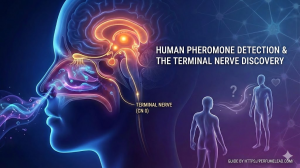

Cranial Nerve 0 and the Vomeronasal Organ: The Complete Guide to Human Pheromone Detection and the Terminal Nerve Discovery
For decades, the debate about human pheromones has been trapped in a circular argument: skeptics dismiss pheromone detection in humans because the vomeronasal organ appears vestigial, while researchers present compelling evidence of chemical communication that seems impossible without proper anatomical pathways. This comprehensive guide explores the groundbreaking discovery that may finally resolve this paradox—Cranial Nerve 0, also known as the terminal nerve, a long-overlooked neural structure that connects the nasal cavity directly to the brain’s reproductive control centers.
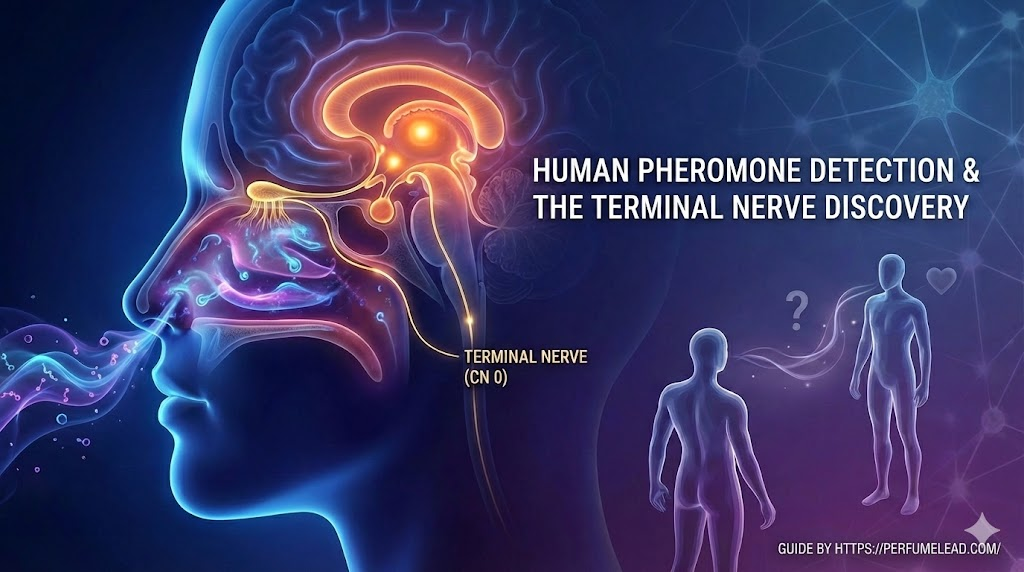
Table of Contents
- Understanding the Human Pheromone Paradox
- What Is Cranial Nerve 0 (The Terminal Nerve)?
- The Vomeronasal Organ: Vestigial or Functional?
- Scientific Evidence for Human Pheromone Detection
- How Cranial Nerve 0 Solves the Pheromone Paradox
- Comparative Analysis: Different Scientific Perspectives
- Neuroanatomical Pathways and Mechanisms
- Clinical Significance and Future Research
- Frequently Asked Questions
Understanding the Human Pheromone Paradox: Why Scientists Have Been Arguing for Decades
The human pheromone debate represents one of the most contentious topics in neuroscience, chemical communication research, and evolutionary biology. For over four decades, scientists have struggled to reconcile compelling behavioral and physiological evidence of chemical communication in humans with the apparent absence of the primary pheromone-detecting organ found in other mammals.
The Core of the Controversy
The traditional argument dismissing human pheromones centers on one key anatomical fact: androstene steroid molecules like androstenone, androstenol, androstadienone and estratetraenol have never been shown through rigorous bioassay evidence to function as human pheromones. Despite decades of research and hundreds of published studies, skeptics maintain that without a functional vomeronasal organ (VNO), humans simply cannot detect pheromones.
However, this reasoning contains a critical flaw: it assumes the VNO is the only possible pathway for pheromone detection.
Compelling Evidence That Couldn’t Be Explained
Researchers have documented numerous instances of chemical communication in humans that traditional anatomical models cannot explain:
Documented Physiological Responses:
- Female tears have been shown to reduce testosterone levels in males
- Women’s axillary secretions influence menstrual synchrony among women living in close proximity
- Androstadienone exposure affects mood, cortisol levels, and brain activity in sex-specific patterns
- Nasal erectile tissue responds measurably to chemical signals
The Missing Link: If the VNO is truly non-functional in adult humans, how do these chemical signals reach the brain’s reproductive control centers? Researchers speculated that nasal mucosa nerve projections might transduce chemical signaling from adult human pheromones and regulate hypothalamic GnRH secretory pulses, controlling gonadotropins and sex steroids secretions in response to pheromone chemical cues.
The answer lay hidden in plain sight for over a century—in a nerve structure discovered in 1913 but largely ignored by medical textbooks and neuroscience curricula.
What Is Cranial Nerve 0 (The Terminal Nerve)? The Forgotten Thirteenth Cranial Nerve
Cranial Nerve 0, scientifically known as the nervus terminalis or terminal nerve, represents one of the most overlooked structures in human neuroanatomy. Despite being identified in the human brain since 1914, this structure remains largely unrecognized in medical literature, with most anatomy and medical books overlooking its existence.
Discovery and Historical Context
The terminal nerve was discovered by German scientist Gustav Fritsch in 1878 in the brains of sharks, and was first found in humans in 1913. Initially called various names including cranial nerve XIII, nerve N, and nerve nulla (from Latin for “nothing” or “zero”), it was eventually designated as Cranial Nerve 0 in the late 1980s due to its position rostral to (in front of) the traditionally numbered twelve cranial nerves.
The naming itself reveals why this nerve remained overlooked: Because there is no Roman numeral symbol for zero, the designation “N” for the Latin word nulla serves as a better numerical designation.
Anatomical Structure and Location
Physical Characteristics:
- Consists of a microscopic plexus of unmyelinated peripheral nerve fibers
- Appears bilaterally (on both sides) in the subarachnoid space covering the straight gyrus
- Located in close relationship to the olfactory tract, with nerve components conglomerating into a rich plexus of fibers embedded along with the dura mater in proximity to cranial nerve I
- Fibers pass through the cribriform plate medial to olfactory nerve fibers
- Terminates in the nasal mucosa
Neural Pathway: The terminal nerve follows a unique path that bypasses the olfactory bulb entirely:
- Originates from ganglia near the cribriform plate
- Projects directly to subcortical structures
- Sends connections to medial septal nucleus
- Projects to key limbic structures including the amygdala and hypothalamic nuclei
- Connects specifically to reproductive control centers
The GnRH Connection: Why This Matters for Reproduction
What makes Cranial Nerve 0 particularly significant for pheromone research is its unique biochemical profile. The CN0 neurons are associated with gonadotropin-releasing hormone (GnRH), suggesting a potential role in controlling human reproductive functions and behaviors through unconscious perception of special odorants influencing autonomic and reproductive hormonal systems via the hypothalamic-pituitary-gonadal axis.
The Significance of GnRH:
- Gonadotropin-releasing hormone controls the entire reproductive hormone cascade
- Triggers release of luteinizing hormone (LH) and follicle-stimulating hormone (FSH)
- Regulates production of testosterone and estrogen
- Influences reproductive behavior and mate selection
- Functions without conscious awareness
The gonadotropin-releasing hormone component of CN 0 has been suggested to be neuromodulatory, exerting a level of neurophysiological regulation over the olfactory epithelium, thus making pheromones more readily detectable.
Embryological Development: The Scaffolding of the Reproductive System
One of the most compelling aspects of Cranial Nerve 0 involves its role in fetal development. During embryogenesis, GnRH neurons use the terminal nerve as a migratory pathway to reach the hypothalamus from the nasal placode.
Developmental Timeline:
- Fibers from the terminal nerve and vomeronasal organ enter the brain at embryological stages 17 and 18, independent from the olfactory nerve
- GnRH neurons migrate along CN0 fibers to establish reproductive control centers
- This pathway remains intact throughout life, even as some ganglion cells are lost prenatally
This means the terminal nerve literally serves as the architectural foundation upon which the entire reproductive hormone system is built—and this pathway persists into adulthood.
The Vomeronasal Organ: Vestigial or Functional? Examining the Evidence
The vomeronasal organ (VNO), also called Jacobson’s organ, sits at the center of the human pheromone controversy. Understanding its true status in adult humans requires examining both sides of a complex scientific debate.
What Is the Vomeronasal Organ?
The vomeronasal organ is the paired auxiliary olfactory sense organ located in the soft tissue of the nasal septum, in the nasal cavity just above the roof of the mouth. It is present and functional in all snakes and lizards, and in many mammals, including cats, dogs, cattle, pigs, and some primates.
In animals with functional VNOs, this organ detects non-volatile chemical compounds including pheromones, connecting to the brain through the accessory olfactory bulb and specialized neural pathways to the hypothalamus.
The Case for Vestigiality: Arguments Against VNO Function
Multiple lines of evidence suggest the human VNO lacks the structural components necessary for sensory function:
Anatomical Deficiencies:
- The adult human VNO lacks neurons and nerve fibers necessary for transferring sensory information
- No accessory olfactory bulb exists in adult humans to receive VNO signals
- Genes coding for vomeronasal receptor proteins and specific ionic channels involved in the transduction process have mutated and are non-functional in humans
Clinical Observations:
- Surgical damage to the VNO during nasal procedures does not appear to affect patients’ social lives in terms of selecting mates and creating relationships
- Only approximately one-third to two-thirds of people have an identifiable VNO structure
- A macroscopically visible septal pit does not necessarily correspond with the actual VNO
Scientific Consensus: Based on available evidence, researchers conclude the human VNO is probably a vestigial organ with a non-operational sensory function, and it is not necessary to take particular care not to damage the VNO during septal surgery.
The Case for Functionality: Evidence Supporting VNO Activity
Despite anatomical limitations, some researchers present evidence suggesting the VNO retains some capacity:
Electrophysiological Responses: Studies by Monti-Bloch and colleagues recorded electrical responses in the VNO region when exposed to putative pheromones, with no response when the same chemicals were placed on other nasal mucosa—suggesting selectivity.
Cellular Evidence:
- Presence of two morphologically distinct cell types in human vomeronasal epithelium
- Morphological connections between VNO cells and underlying capillaries, along with expression of calcium-binding protein, suggest potential endocrine activity
- Possible hormone-releasing function rather than sensory function
Historical Context: The VNO was first described by Dutch botanist Frederik Ruysch in 1703 while dissecting a young male cadaver, making its first identification in humans rather than other animals—yet this finding remains widely debated.
The Middle Ground: Alternative Interpretations
Some researchers propose that even if the VNO lacks traditional sensory function, it might serve other roles:
Possible Endocrine Function: Evidence of an alternative function for the VNO would represent the first documented endocrine activity for this organ in any organism, which could potentially account for enigmatic effects of pheromones on human behavior despite the absence of olfactory sensory neurons.
Developmental Significance: An intriguing question arises as to why some prenatal humans have well-developed VNOs that only become vestigial after birth—these organs might be crucial during early development before disappearing when their usefulness is lost.
Scientific Evidence for Human Pheromone Detection: Documented Physiological and Behavioral Effects
Regardless of the anatomical debate, substantial research demonstrates that humans respond to chemical signals in ways consistent with pheromone communication. Understanding this evidence is crucial for evaluating the significance of Cranial Nerve 0.
Androstadienone: The Most Studied Candidate
Androstadienone, a testosterone-derived compound found predominantly in male axillary sweat, represents the most extensively researched putative human pheromone.
Documented Effects:
On Women:
- Affects mood and emotional state
- Increases cortisol levels
- Activates brain regions linked to social cognition
- Influences perception and attention
- Significantly affects the mood of heterosexual women, though it does not alter behavior overtly and may have more subtle effects on attention
On Men:
- Increases cooperation between men in decision-making tasks after controlling for baseline testosterone levels
- Affects salivary hormone levels (testosterone and cortisol)
- Increases individualistic behavior while decreasing cooperative responses, supporting its role as a threatening signal of dominance that elicits behavioral avoidance and social withdrawal tendencies
Neural Activation: Studies using fMRI demonstrate that androstadienone activates sex-differentiated brain responses, particularly in the hypothalamus and limbic system—regions directly connected to Cranial Nerve 0.
Female Tears: A Documented Chemical Signal
One of the most compelling pieces of evidence for human chemical communication involves female tears:
Research Findings:
- When men smelled tears cried by women who had watched a sad film, their testosterone levels fell, and brain scans showed changes in areas linked to both aggression and smell, with researchers identifying four receptors in the nose that detected the chemical signal
- Female tears affect men’s blood testosterone levels, though the biological significance or relevance remains unclear and researchers were not able to test male tears
This represents one of the strongest candidates for a true human pheromone effect, with researchers now working to identify the specific molecules responsible.
Other Documented Chemical Communication
Menstrual Synchrony: Extracts of armpit secretions from women at different stages in their cycles were reported to influence menstrual timing in other women when applied to the upper lip, though this phenomenon remains debated with inconsistent replication.
Axillary and Vulvar Scents: Female scents sampled at periovulatory and late luteal phases are reported to modify men’s salivary testosterone and cortisol levels.
Hedione Effects: The synthetic odorant Hedione binds to the VN1R1 receptor, a receptor structurally homologous to pheromone receptors in mammalian vomeronasal organs, eliciting stronger limbic and hypothalamic activation than common odors.
Critical Evaluation: The Controversy Continues
Despite documented effects, significant skepticism remains in the scientific community:
Methodological Concerns:
- Studies often test molecules in doses far higher than the body naturally produces, making results unreliable, and many experiments are riddled with design flaws and weak statistics
- Small sample sizes leading to statistically shaky results
- Publication bias favoring positive results
- Lack of robust bioassay-led evidence and replication challenges mean positive results should be treated with skepticism as they are highly likely to be false positives
The Skeptical Position: As humans are mammals, it is possible, perhaps even probable, that we have pheromones, but there is no robust bioassay-led evidence for the widely published claims that four steroid molecules are human pheromones.
The key issue: documented physiological responses exist, but the anatomical pathway remained unclear—until Cranial Nerve 0 entered the conversation.
How Cranial Nerve 0 Solves the Pheromone Paradox: The Missing Anatomical Link
The discovery of Cranial Nerve 0’s potential role in pheromone detection resolves the fundamental contradiction that has plagued human pheromone research: how can humans exhibit clear physiological responses to chemical signals without a functional vomeronasal organ?
The Direct Pathway: Bypassing the VNO Entirely
Traditional pheromone detection in mammals follows this pathway:
- Pheromones enter the VNO
- VNO sensory neurons detect chemicals
- Signals travel to accessory olfactory bulb
- Information relayed to hypothalamus and amygdala
In humans, Cranial Nerve 0 provides an alternative route:
- Chemical signals contact nasal mucosa
- CN0 fibers detect specific compounds
- Signals project directly to hypothalamic nuclei
- GnRH neurons respond, triggering hormonal cascades
The Revolutionary Implication: Considering that the VNO may lack physiological competence concerning biological pheromones detection in adults, CN0 may be a plausible candidate for this novel physiological role independent from the VNO.
The Kisspeptin Connection: How CN0 Controls Reproduction
Recent research has identified a critical link between Cranial Nerve 0 and the kisspeptin neuronal network (KP), which controls human reproductive function:
The Hypothalamic-Pituitary-Gonadal Axis: The KP neural circuit is involved in central endocrinological regulation of sexual development and human reproductive functions by inducing GnRH secretion from the hypothalamus, causing regulatory response over gonadotropins (FSH and LH), thereby inducing synthesis and release of testosterone and estradiol.
The Proposed Mechanism: Nasal mucosa nerve projections from CN0 may transduce inscrutable chemical signaling from adult human pheromones, regulating hypothalamic GnRH secretory pulses via KP neurons and consequently controlling gonadotropins and sex steroids secretions in response to pheromone chemical cues—though this conceptual cascade remains hypothetical since CN0 projections to hypothalamic KP neurons are merely speculative.
Neuromodulatory Function: Making Pheromones Detectable
One of the most intriguing hypotheses suggests CN0 doesn’t just detect pheromones—it modulates the entire olfactory system to make pheromones more noticeable:
The nerve may modulate olfactory inputs making pheromones (particularly sex pheromones) more detectable, with the terminal nerve projecting to the medial and lateral septal nuclei and preoptic areas, all of which are involved in reproduction in mammals.
This would explain why pheromone effects seem subtle and context-dependent—CN0 adjusts the gain on the olfactory system based on reproductive state and hormonal context.
Sexual Dimorphism: Different Pathways for Males and Females
In females, kisspeptin cells are mainly localized in the preoptic area and infundibular regions of the hypothalamus, posing a riveting sexually dimorphic trait that may have significant clinical considerations.
This sex difference in neural architecture could explain why pheromone responses differ between men and women—the same chemical signal may trigger different neural pathways based on sex-specific CNO connections.
Why This Discovery Matters: Resolving Decades of Circular Arguments
The identification of CN0 as a potential pheromone pathway fundamentally changes the debate:
Old Argument: “Humans can’t detect pheromones because we don’t have a functional VNO.”
New Understanding: “Humans may detect pheromones through an entirely different neural pathway—one that has been documented in medical literature for over a century but ignored in the context of chemical communication.”
The functional evidence (tears reducing testosterone, androstadienone affecting behavior, nasal erectile tissue responding to chemicals) no longer contradicts the anatomy—it simply requires looking at the right anatomical structure.
Comparative Analysis: Different Scientific Perspectives on Human Pheromone Detection
The scientific community remains divided on human pheromone detection, with researchers taking distinctly different positions based on how they weigh anatomical versus functional evidence. Understanding these perspectives reveals the complexity of the debate.
Perspective 1: The Anatomical Skeptics
Core Position: Without proper sensory apparatus and neural connections, documented effects cannot represent true pheromone communication.
Key Arguments:
- VNO lacks functional neurons and connections to brain
- Genes for vomeronasal receptors are pseudogenized in humans
- No accessory olfactory bulb exists in adult humans
- Surgical damage to VNO causes no measurable behavioral changes
Leading Proponent: Tristram Wyatt (Oxford University) represents this position most prominently. Wyatt argues that experiments using putative pheromone molecules, however well designed and executed, do not lead us nearer to discovering human pheromones because these molecules have never been shown to be biologically relevant through proper bioassay methods.
Methodology Critique: Wyatt emphasizes that clear tests showing consistent responses, larger and better-designed studies, and moving beyond the same old unproven molecules are essential—only careful, evidence-based research will give real answers.
Perspective 2: The Functional Evidence Advocates
Core Position: Documented physiological and behavioral responses to chemical signals demonstrate pheromone-like communication regardless of the anatomical pathway.
Key Evidence:
- Measurable testosterone changes from tear exposure
- Brain imaging showing sex-differentiated responses to compounds
- Behavioral changes in controlled experiments
- Hormonal fluctuations in response to chemical signals
Research Approach: These scientists prioritize documenting effects first, trusting that anatomical explanations will follow. They point to Cranial Nerve 0 as the missing anatomical link.
Counterargument to Skeptics: The absence of a functional VNO doesn’t prove the absence of pheromone detection—it simply means we need to look for alternative pathways, which CN0 provides.
Perspective 3: The Cranial Nerve 0 Hypothesis
Core Position: CN0 represents the primary pheromone detection pathway in humans, explaining functional effects while acknowledging VNO vestigiality.
Supporting Evidence:
- The terminal nerve releases luteinizing-releasing hormone and is therefore thought to play a role in reproductive behavior, and based on available evidence, appears to be functional in adult humans
- In hamsters with severed terminal nerves, there is decreased mating behavior, and molecular studies demonstrate CN0 produces and releases gonadotropin-releasing hormone
- Direct projections from nasal mucosa to reproductive control centers
- Embryological role in establishing reproductive hormone system
Clinical Significance: Understanding CN0’s function has important clinical implications for sexual development, reproductive disorders, and potentially psychiatric conditions linked to social chemosensory processing.
Perspective 4: The Alternative Pathway Theorists
Core Position: Pheromone detection may occur through the main olfactory system rather than requiring specialized VNO or CN0 pathways.
Key Arguments:
- Despite lack of a functional VNO, the human olfactory system comprises five vomeronasal-type 1 receptors on the nasal mucosa, with Hedione binding to VN1R1 receptor showing stronger limbic and hypothalamic activation than common odors
- Regular olfactory neurons may detect pheromones
- No specialized organ necessary if appropriate receptors exist
Integration with CN0 Theory: This perspective doesn’t necessarily contradict the CN0 hypothesis—CN0 could modulate olfactory inputs or work in tandem with main olfactory detection.
Comparison Table: Key Differences in Scientific Positions
| Aspect | Anatomical Skeptics | Functional Advocates | CN0 Hypothesis | Alternative Pathway |
|---|---|---|---|---|
| VNO Status | Vestigial, non-functional | Possibly retains some function | Vestigial, but irrelevant | Vestigial |
| Pheromone Detection | No convincing evidence | Clear physiological effects | Detected via CN0 | Detected via main olfactory |
| Anatomical Pathway | None identified | Unknown/disputed | Direct via CN0 to hypothalamus | Main olfactory system |
| Documented Effects | Methodologically flawed | Real but mechanism unclear | Explained by CN0 connections | Explained by VR1 receptors |
| Research Priority | Rigorous bioassay methods | Document effects first | Study CN0 anatomy/function | Study olfactory receptors |
| Clinical Relevance | Low (no functional system) | High (affects behavior) | Very high (reproductive control) | Moderate (integrated with smell) |
Points of Agreement Across Perspectives
Despite disagreements, several facts are universally accepted:
- Humans may have physical remnants of a VNO, but even if present, evidence suggests it is vestigial and non-functional in the traditional sensory capacity
- Cranial Nerve 0 has been identified in the human brain since 1914 and is confirmed in numerous studies of adult brains and fetuses
- Documented physiological responses to chemical signals exist, regardless of the mechanism
- More rigorous research with proper methodology is needed
- The field requires better replication of existing studies
The Path Forward: Reconciling Different Views
The emergence of Cranial Nerve 0 research may provide the bridge between anatomical and functional perspectives:
For Skeptics: CN0 offers a concrete anatomical pathway that can be studied with the same rigorous methods applied to VNO research, potentially satisfying demands for structural evidence.
For Functional Researchers: CN0 explains their documented effects through a legitimate neural pathway, lending anatomical credibility to behavioral findings.
For Future Research: The focus can shift from debating whether pheromone detection exists to studying how CN0 functions and what molecules it responds to.
Neuroanatomical Pathways and Mechanisms: How Chemical Signals Reach the Brain
Understanding how chemical signals potentially influence human behavior and physiology requires detailed examination of the neuroanatomical structures and pathways involved. This section explores the functional architecture of human chemosensory systems.
The Traditional Olfactory Pathway
Main Olfactory System:
- Olfactory Epithelium: Located in upper nasal cavity, contains millions of olfactory receptor neurons
- Olfactory Bulb: First processing station, where axons from receptor neurons synapse with mitral and tufted cells
- Olfactory Cortex: Primary processing in piriform cortex, where conscious odor perception occurs
- Higher Processing: Connections to amygdala, hippocampus, orbitofrontal cortex for memory and emotion
Characteristics:
- Conscious perception of smells
- Extensive cognitive processing
- Connection to memory and emotion
- Voluntary attention and discrimination
The Cranial Nerve 0 Pathway: Direct and Unconscious
Proposed CN0 Chemosensory Route:
Step 1: Chemical Detection
- Chemical signals contact nasal mucosa
- CN0 nerve endings in nasal submucosa detect specific compounds
- Unmyelinated fibers (possibly SVA – special visceral afferent) ascend from nasal submucosa
- Detection occurs unconsciously, below threshold of awareness
Step 2: Signal Transmission
- Fibers pass through cribriform plate medial to olfactory nerve fibers
- Form plexus near olfactory tract but do not synapse in olfactory bulb
- Project to key limbic structures including amygdala and hypothalamic nuclei
- Bypass conscious sensory processing entirely
Step 3: Hypothalamic Integration
- Terminal nerve projects to medial and lateral septal nuclei and preoptic areas, all involved in reproduction in mammals
- Direct connections to GnRH-producing neurons
- Integration with kisspeptin neuronal network
- Triggers neuroendocrine responses
Step 4: Hormonal Cascade
- GnRH release triggers pituitary hormone secretion
- Luteinizing hormone (LH) and follicle-stimulating hormone (FSH) released
- Gonadal steroids (testosterone, estrogen) produced
- Behavioral and physiological changes occur
Key Differences from Olfactory Processing:
- No conscious awareness of detection
- No olfactory bulb involvement
- Direct hypothalamic access
- Tied specifically to reproductive functions
- Functions independently of smell perception
Nasal Erectile Tissue: The Pumping Mechanism
An often-overlooked component of the nasal chemosensory system is the vascular erectile tissue associated with both the VNO region and CN0 pathways.
Vascular Regulation:
- The lateral aspect of the vomeronasal organ harbors erectile tissue with dense innervation—sympathetic stimulation constricts blood vessels and opens the nasopalatine duct, suggesting sympathetic innervation regulates a vasomotor pumping mechanism
- Engorgement of nasal tissue may enhance chemical signal detection
- Cyclic changes in nasal blood flow could modulate sensitivity
- Explains why nasal congestion affects more than just smell
Functional Implications: This pumping mechanism could explain context-dependent pheromone responses—detection sensitivity varies based on autonomic nervous system state, which itself responds to social and reproductive context.
The Kisspeptin Network: Central Control System
The kisspeptin (KP) neuronal network represents the master regulator of human reproductive function, and its potential connection to CN0 is crucial for understanding pheromone effects.
KP Network Architecture:
- In humans, KP-synthesizing neurons are localized in two major hypothalamic sites: the preoptic area (POA) and infundibular areas
- POA neurons: Involved in GnRH surge generation (ovulation timing)
- Infundibular neurons: Generate pulsatile GnRH secretion (continuous reproductive function)
- Sexually dimorphic distribution explains sex differences in responses
Potential CN0-KP Interactions: The hypothetical cascade involves CN0 transducing chemical signals and regulating hypothalamic GnRH pulses via KP neurons, consequently controlling gonadotropins and sex steroids—though CN0 projections to hypothalamic KP neurons remain speculative.
If this connection exists, it would explain:
- How chemical signals influence reproductive hormone timing
- Sex-differentiated responses to the same compounds
- Context-dependent effects based on reproductive state
- Integration of social chemical information with internal reproductive status
Anatomical Evidence in Non-Human Species
Studies in other mammals provide insights into potential human mechanisms:
Hamster Studies: In hamsters with severed terminal nerves, decreased mating behavior occurs, demonstrating functional significance
- Suggests CN0 is necessary for normal reproductive behavior
- Provides experimental evidence of functional relevance
- Indicates evolutionary conservation of pathway
Goldfish Research: Ganglion cells of the terminal nerve in goldfish are located in the olfactory nerve and bulb, sending peripheral processes into the olfactory epithelium and central processes to telencephalon and retina, with correlations suggesting the terminal nerve mediates responses to sex pheromones.
Cross-Species Pattern: The terminal nerve appears consistently across vertebrates from fish to mammals, suggesting fundamental importance despite limited recognition in medical education.
Comparison Table: Olfactory vs. CN0 Pathways
| Feature | Main Olfactory System | Cranial Nerve 0 Pathway |
|---|---|---|
| Entry Point | Olfactory epithelium, upper nasal cavity | Nasal submucosa, widespread distribution |
| Receptor Type | Olfactory receptor neurons (ciliated) | Unclear; possibly specialized chemoreceptors |
| First Synapse | Olfactory bulb | Direct to hypothalamus/limbic system |
| Processing | Conscious, cognitive | Unconscious, autonomic |
| Neural Character | Myelinated, fast | Unmyelinated, slower |
| Brain Targets | Piriform cortex, orbitofrontal cortex | Hypothalamus, septal nuclei, amygdala |
| Function | Odor discrimination and identification | Reproductive/neuroendocrine modulation |
| Awareness | Fully conscious | Below conscious threshold |
| Plasticity | High (learning, adaptation) | Fixed (innate responses) |
| Associated Hormone | None specific | GnRH (gonadotropin-releasing hormone) |
| Clinical Impact of Damage | Loss of smell (anosmia) | Potentially reproductive dysfunction |
Neuromodulatory Mechanisms: Bidirectional Regulation
Recent research suggests CN0 may function bidirectionally:
Bottom-Up Modulation:
- Chemical signals from environment activate CN0
- CN0 modulates olfactory epithelium sensitivity
- Makes reproductively relevant odors more salient
- Adjusts detection threshold based on reproductive state
Top-Down Regulation:
- Hormonal status affects CN0 sensitivity
- Menstrual cycle phase alters chemical detection
- Testosterone levels influence response magnitude
- Creates adaptive, context-dependent detection system
This bidirectional system would explain why pheromone research shows such variable results—the same chemical concentration might produce different effects depending on the recipient’s hormonal state.
Clinical Significance and Future Research Directions: From Laboratory to Medicine
The discovery of Cranial Nerve 0’s potential role in human chemical communication extends far beyond academic interest, with significant implications for clinical medicine, reproductive health, and our understanding of human social behavior.
Clinical Implications for Reproductive Medicine
Kallmann Syndrome: This genetic disorder involves failure of GnRH neurons to migrate properly during development—precisely the migration that uses CN0 as its pathway. Patients present with:
- Hypogonadotropic hypogonadism (delayed or absent puberty)
- Anosmia or hyposmia (reduced sense of smell)
- Infertility without hormone replacement
- The conjunction of reproductive and olfactory deficits supports the CN0-reproduction connection
Idiopathic Hypogonadotropic Hypogonadism: Cases without anosmia might involve CN0 dysfunction without broader olfactory impairment, suggesting:
- Potential diagnostic marker through CN0 imaging
- Novel therapeutic targets
- Better understanding of variable presentation
Polycystic Ovary Syndrome (PCOS): Given that PCOS involves disrupted GnRH pulsatility and the KP network, CN0 dysfunction might contribute to:
- Altered response to chemical signals
- Disrupted reproductive hormone timing
- Novel intervention points
Psychiatric and Neurological Connections
Autism Spectrum Disorder: Individuals with autism often show altered responses to social odors and different patterns of chemical communication. If CN0 plays a role in processing social chemical information:
- Could explain some social communication difficulties
- Might represent biomarker for certain autism subtypes
- Could inform new therapeutic approaches
Depression and Anxiety: Given CN0’s connections to limbic structures (amygdala, septal nuclei), dysfunction might contribute to:
- Social withdrawal
- Altered social bonding
- Mood regulation problems
- Response to social environments
Neurodegenerative Disease: Some research suggests olfactory changes precede clinical symptoms in conditions like Parkinson’s and Alzheimer’s. CN0 pathology might:
- Serve as early diagnostic marker
- Explain some non-motor symptoms
- Provide therapeutic intervention target
Research Priorities and Future Directions
1. Anatomical Characterization:
- High-resolution imaging of CN0 in living humans using advanced MRI
- Post-mortem studies mapping complete CN0 architecture
- Identification of receptor types on CN0 nerve endings
- Documentation of individual variation in CN0 structure
2. Molecular Identification:
- Systematic screening of compounds for CN0 activation
- Chemical analysis of body secretions for active molecules
- Development of specific bioassays for CN0 response
- Identification of human-specific chemical signals
3. Functional Studies:
- fMRI studies correlating chemical exposure with hypothalamic activation
- Hormone level tracking during chemical signal exposure
- Behavioral studies with improved methodology and larger samples
- Cross-cultural comparisons of chemical signal responses
4. Clinical Translation:
- Development of CN0 function tests
- Investigation of CN0 in reproductive disorders
- Exploration of therapeutic manipulation of CN0 pathways
- Assessment of CN0 integrity in psychiatric conditions
5. Evolutionary Context:
- Comparison of CN0 anatomy across primate species
- Investigation of when VNO became vestigial in human lineage
- Analysis of selective pressures maintaining CN0 function
- Exploration of cultural evolution interacting with chemical communication
Technological Advances Enabling New Research
Emerging Tools:
- Ultra-high field MRI (7T and beyond): May visualize CN0 in living subjects
- Single-cell RNA sequencing: Can identify receptor types on CN0 neurons
- Optogenetics (in animal models): Allow selective CN0 activation/inhibition
- Advanced metabolomics: Better identification of candidate pheromone molecules
- Computational modeling: Predict chemical detection patterns
Ethical Considerations
Research into human chemical communication raises important ethical questions:
Privacy and Manipulation:
- Could chemical signals be artificially synthesized for manipulation?
- What are the ethics of altering chemical communication?
- How do we protect against misuse of pheromone research?
Clinical Applications:
- Should we intervene in natural chemical communication?
- What are the risks of manipulating reproductive hormone systems?
- How do we ensure informed consent for pheromone studies?
Social Implications:
- How might understanding chemical communication affect social behavior?
- What are the implications for perfume industry and personal care?
- How do cultural attitudes toward body odor interact with biology?
The Commercial Landscape: Separating Science from Marketing
The pheromone perfume industry generates hundreds of millions of dollars annually, despite limited scientific support for product claims.
Current State:
- Most commercial “pheromone” products lack rigorous testing
- Compounds used often haven’t been validated as human pheromones
- Concentrations may far exceed natural levels
- Marketing often misrepresents scientific evidence
Future Possibilities: If CN0 research identifies legitimate chemical signals:
- Evidence-based product development
- Therapeutic applications for reproductive disorders
- Medical interventions for social bonding difficulties
- Regulated, scientifically-validated applications
The Bigger Picture: Redefining Human Sensory Biology
The recognition of CN0 as a potential chemosensory pathway represents more than just solving the pheromone paradox—it challenges our understanding of human sensory capabilities.
Implications for Human Biology:
- We may possess more unconscious sensory channels than recognized
- Chemical communication may play larger role in social behavior than assumed
- Evolution may have modified rather than eliminated pheromone systems
- Human social bonding involves more biological mechanisms than appreciated
Philosophical Questions:
- How much of human behavior is influenced by unconscious chemical signals?
- To what extent does chemical communication shape mate selection?
- How do conscious choices interact with unconscious chemical influences?
- What does this mean for concepts of free will and attraction?
Frequently Asked Questions: Everything You Need to Know About Cranial Nerve 0 and Human Pheromones
What exactly is Cranial Nerve 0, and why haven’t I heard of it before?
Cranial Nerve 0, scientifically called the nervus terminalis or terminal nerve, is a microscopic plexus of unmyelinated nerve fibers that connects the nasal cavity directly to brain structures involved in reproductive function. You probably haven’t heard of it because most medical schools don’t teach it—anatomy textbooks traditionally cover twelve cranial nerves, and CN0 remains largely overlooked despite being discovered in humans in 1913. The nerve was initially called various names including cranial nerve XIII, nerve N, and nerve nulla, before being designated CN0 in the late 1980s because of its position rostral to the other cranial nerves.
If the vomeronasal organ is vestigial in humans, how can we detect pheromones?
This is precisely the paradox that CN0 research helps resolve. While the VNO appears non-functional in adult humans (lacking neurons, connections to the brain, and with non-functional receptor genes), Cranial Nerve 0 provides an alternative pathway. CN0 connects directly from the nasal cavity to the hypothalamus and limbic system, bypassing the need for a VNO altogether. This means humans could detect chemical signals through an entirely different anatomical route than other mammals, making the VNO’s vestigial status irrelevant for human pheromone detection.
What is the evidence that humans actually have pheromones?
While definitive proof remains elusive, compelling evidence exists. Female tears have been shown to reduce testosterone levels in men, with brain imaging revealing changes in aggression-related areas. Androstadienone, a compound in male sweat, affects women’s mood, cortisol levels, and brain activity in sex-specific patterns. Women’s axillary secretions influence menstrual timing in other women living together. However, skeptics point out that many studies have methodological flaws, small sample sizes, and lack robust replication. The debate continues because while these effects are documented, the specific molecules responsible and exact mechanisms remain incompletely characterized.
How does Cranial Nerve 0 connect to reproductive hormones?
CN0 is uniquely associated with gonadotropin-releasing hormone (GnRH), the master regulator of reproductive function. During fetal development, GnRH neurons actually migrate along CN0 fibers from the nasal region to establish reproductive control centers in the hypothalamus. This pathway persists into adulthood. When CN0 detects chemical signals, it can potentially trigger GnRH release, which cascades to luteinizing hormone and follicle-stimulating hormone from the pituitary, ultimately controlling testosterone and estrogen production. This direct connection explains how nasal chemical signals might influence reproductive hormones without conscious awareness.
Is Cranial Nerve 0 functional in adult humans, or does it disappear like the VNO?
Unlike the VNO, evidence strongly suggests CN0 remains functional throughout life. The terminal nerve releases luteinizing-releasing hormone and appears functional in adult humans based on anatomical studies. Animal research supports this—hamsters with severed terminal nerves show decreased mating behavior, demonstrating functional significance. While some CN0 ganglion cells are lost prenatally, the nerve structure and its connections to the hypothalamus persist. The key question isn’t whether CN0 exists in adults (it clearly does), but rather what specific functions it performs.
Why do pheromone studies show such inconsistent results?
Several factors contribute to variability in pheromone research. First, if CN0 functions as a neuromodulator (adjusting sensitivity based on hormonal state), the same chemical might produce different effects depending on the recipient’s menstrual cycle phase, testosterone levels, or reproductive status. Second, many studies test synthetic compounds at concentrations far exceeding natural levels, making results unreliable. Third, methodological differences in application methods, exposure duration, and outcome measures make comparisons difficult. Fourth, publication bias favors positive results, potentially creating a misleading impression of effect sizes. Finally, if multiple pathways exist (CN0, main olfactory, remaining VNO function), different studies might inadvertently test different mechanisms.
What is the relationship between smell and pheromone detection?
This is a crucial distinction: smell and pheromone detection are likely separate processes. The main olfactory system processes odors consciously through the olfactory bulb and cortex, while CN0 potentially processes chemical signals unconsciously through direct hypothalamic connections. You might consciously smell someone’s perfume or body odor (olfactory system) while simultaneously responding to pheromones without awareness (CN0 system). This explains why surgical damage to the VNO doesn’t affect people’s social lives—their conscious smell remains intact, and if CN0 handles pheromones, that pathway also remains undamaged.
Could problems with Cranial Nerve 0 cause reproductive or social difficulties?
This is a fascinating area for future research. Kallmann syndrome, where GnRH neurons fail to migrate properly during development, results in both reproductive problems and smell deficits—the migration uses CN0 as its pathway. This suggests CN0 dysfunction could contribute to reproductive disorders. Additionally, if CN0 processes social chemical information, dysfunction might contribute to social bonding difficulties seen in conditions like autism spectrum disorder. However, these connections remain speculative—we need direct evidence of CN0 pathology in these conditions before drawing firm conclusions.
What chemicals might Cranial Nerve 0 actually detect?
We don’t know for certain, but candidates include androstadienone and androstenol (found in male sweat), estratetraenol (found in female urine), and unknown compounds in tears. The key is distinguishing between molecules that activate CN0 specifically versus those processed by regular olfactory pathways. Future research needs to systematically test compounds for CN0 activation using improved methods, including direct measurement of hypothalamic responses, hormone level changes, and potentially developing CN0-specific bioassays. The compounds advertised in commercial pheromone products are unlikely to be correct, as they’re based on limited evidence.
How does Cranial Nerve 0 research change our understanding of human evolution?
The persistence of CN0 in humans suggests evolution didn’t simply eliminate pheromone communication when the VNO became vestigial—it may have shifted the pathway. This has profound implications: rather than losing chemical communication capability as we developed complex verbal language and visual communication, humans may have modified the system. The question becomes why evolution maintained this unconscious chemical communication channel. Possibilities include mate selection, mother-infant bonding, social group cohesion, or reproductive timing—all functions where unconscious biological mechanisms might complement conscious social choices.
What are the practical applications of understanding Cranial Nerve 0?
Potential applications span several fields. In reproductive medicine, understanding CN0 could lead to new treatments for infertility, delayed puberty, or hormonal imbalances. In psychiatry, CN0 dysfunction might contribute to social bonding difficulties or mood disorders, suggesting new therapeutic targets. In perfume and cosmetic industries, legitimate pheromone-based products could be developed if we identify actual CN0-active compounds. In agriculture and veterinary medicine, understanding the terminal nerve across species could improve animal breeding and behavior management. In forensics and security, chemical detection might play roles we haven’t yet recognized.
Is research into human pheromones and Cranial Nerve 0 legitimate science?
Yes, though the field requires improved rigor. Cranial Nerve 0 itself is well-documented anatomy—its existence isn’t controversial. What remains debatable is its specific function in chemical communication. Skepticism about previous pheromone research is well-founded given methodological problems, but dismissing the entire field because of poor past studies would be unscientific. The identification of CN0 as a potential pathway provides a concrete anatomical structure to study with rigorous methods. Future research using advanced imaging, proper bioassays, larger sample sizes, and pre-registered studies should distinguish between legitimate phenomena and experimental artifacts.
How can I learn more or contribute to this research?
For those interested in following this research, key journals include Hormones and Behavior, Chemical Senses, Physiology & Behavior, and Frontiers in Neuroscience. The scientific community needs researchers from multiple disciplines—neuroscience, endocrinology, chemistry, psychology, and clinical medicine all have roles. If you’re experiencing reproductive disorders or participating in research studies, ask whether CN0 function is being assessed. For clinicians, recognizing that CN0 exists and may have functional significance could lead to new diagnostic considerations. The field is ripe for discovery, and the next decade should clarify CN0’s role definitively.
Conclusion: A New Chapter in Understanding Human Chemical Communication
The identification of Cranial Nerve 0 as a potential pathway for human pheromone detection represents a paradigm shift in how we understand human sensory biology and chemical communication. For decades, the human pheromone debate was trapped in a circular argument: compelling functional evidence contradicted apparent anatomical impossibility. The recognition that CN0 provides a direct pathway from nasal mucosa to reproductive control centers in the hypothalamus resolves this fundamental contradiction.
Key Takeaways
Anatomical Reality: Cranial Nerve 0 is well-documented anatomy, present in humans since before birth and persisting throughout life. Its association with GnRH and direct connections to hypothalamic reproductive centers make it an ideal candidate for processing chemical signals related to reproduction and social behavior.
Resolving the Paradox: The debate no longer needs to center on the vestigial VNO. Whether the VNO retains any function becomes largely irrelevant if CN0 provides an alternative pathway. This allows functional researchers and anatomical skeptics to find common ground—both can be correct within a new framework.
Unconscious Influence: If CN0 does process chemical signals, these influences occur entirely below conscious awareness. Unlike smell, which we consciously perceive and can describe, CN0-mediated effects would manifest as subtle shifts in mood, hormone levels, or behavior without our knowledge. This explains why pheromone effects seem elusive yet measurable.
Clinical Significance: Understanding CN0’s function has direct medical relevance. From reproductive disorders to psychiatric conditions involving social bonding, CN0 dysfunction might contribute to currently unexplained syndromes. This opens new diagnostic and therapeutic possibilities.
Research Imperative: The most important conclusion is that we need more research. High-quality, well-designed studies using modern neuroimaging, proper chemical analysis, rigorous bioassays, and adequate sample sizes should clarify CN0’s role within the next decade. Pre-registration of studies, replication efforts, and multidisciplinary collaboration will separate genuine phenomena from experimental artifacts.
The Bigger Picture
The Cranial Nerve 0 story reminds us that human biology still holds surprises. A nerve structure identified over a century ago but largely ignored might play a crucial role in reproduction, social bonding, and mate selection. This challenges assumptions about human evolution—we may not have lost pheromone communication so much as modified its pathways and integrated it with our complex social cognition.
It also raises profound questions about the nature of human social behavior. How much of attraction, bonding, and social dynamics involves unconscious chemical communication? How do these biological influences interact with cultural learning and conscious choice? Understanding CN0’s function won’t reduce human behavior to simple chemistry, but it might reveal another layer of complexity in how biology and psychology intertwine.
A Call for Open-Minded Skepticism
As this field develops, maintaining both open-mindedness and healthy skepticism remains essential. The pheromone field has been plagued by overinterpretation of weak data, methodological problems, and commercial exploitation. But dismissing the entire area because of past problems would be equally unscientific.
Cranial Nerve 0 exists—that’s anatomy, not speculation. Whether it detects pheromones remains an empirical question requiring careful investigation. The next generation of research, informed by CN0’s anatomy and using rigorous methods, should finally provide definitive answers to questions that have puzzled scientists for half a century.
The search for human pheromones may have found its anatomical answer in a nerve that’s been hiding in plain sight for over 100 years. Now the real work begins.
Key References and Resources:
- National Institutes of Health (NIH) – Neuroscience and reproductive health research
- Nature Neuroscience – Peer-reviewed neuroscience research
- Society for Neuroscience – Professional organization for neuroscientists
- PubMed Central – Free full-text archive of biomedical literature
- Chemical Senses Journal – Leading journal for chemosensory research
- Endocrine Society – Professional organization for hormone research
This comprehensive guide synthesizes current scientific understanding of Cranial Nerve 0 and human pheromone detection. As research in this field is ongoing, findings and interpretations may evolve as new evidence emerges.